

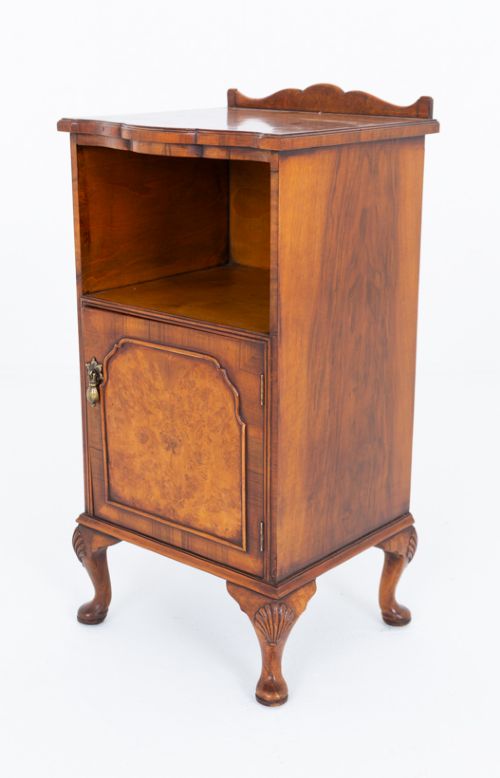


Queen Anne Revival Cupboard
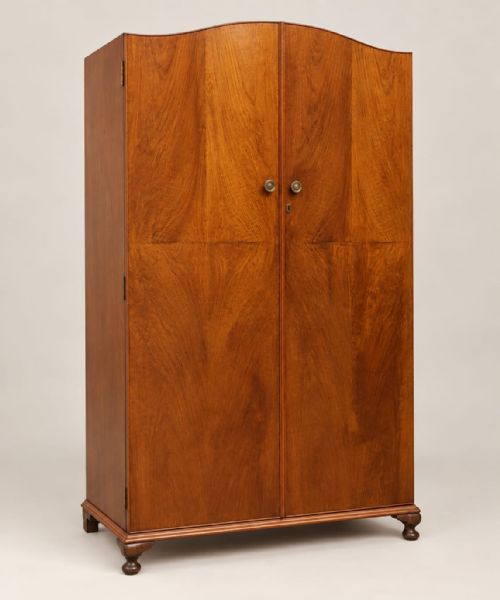
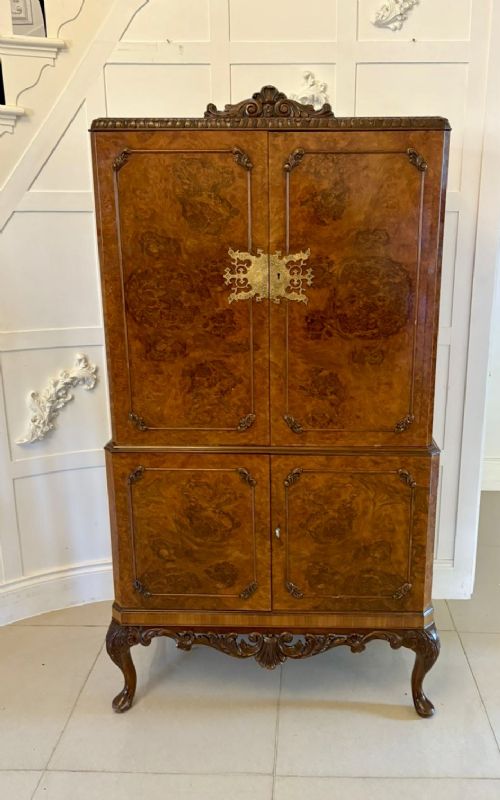
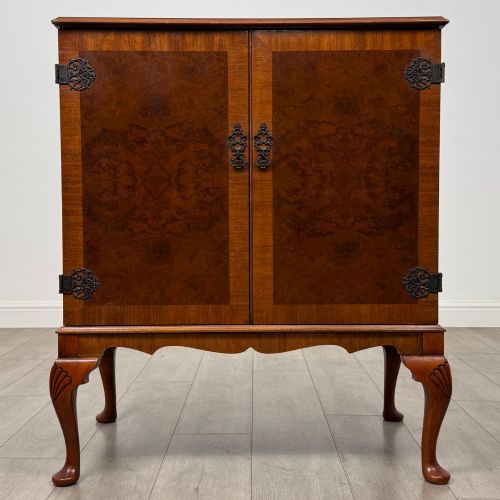
These pieces for queen anne revival cupboard bring walnut and burr walnut into a room, offering display space and fitted storage built across the early twentieth century.
Queen Anne Revival Cupboard
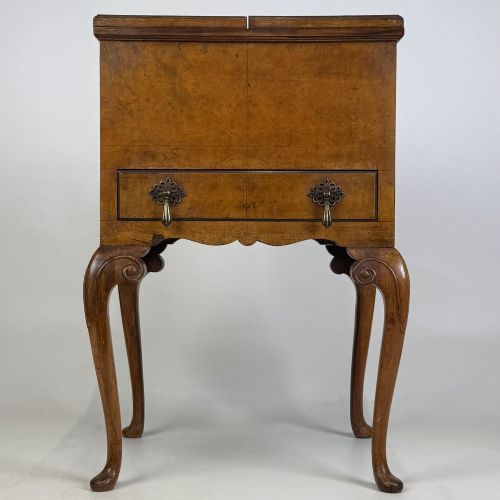
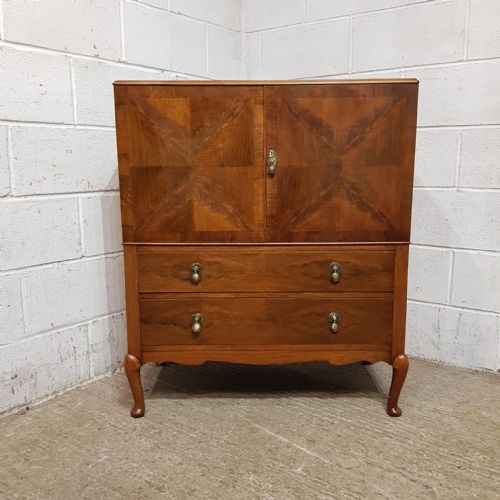
A queen anne revival cupboard takes various forms across the listings, spanning display cabinets, tallboys, side cabinets, and bedside tables. Makers constructed these pieces through the 1890s, the Edwardian era, and the 1920s and 1930s, working largely in walnut and burr walnut.
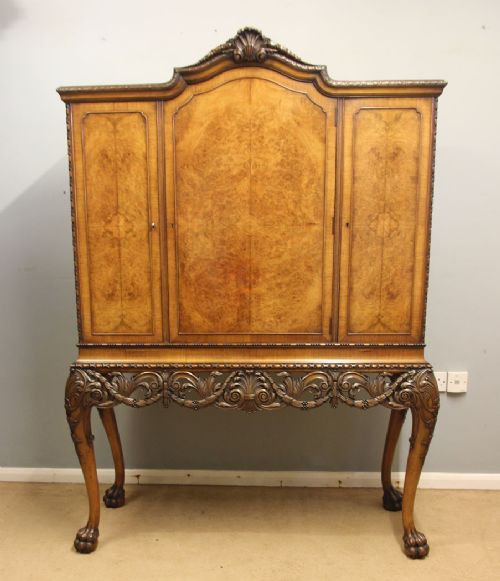
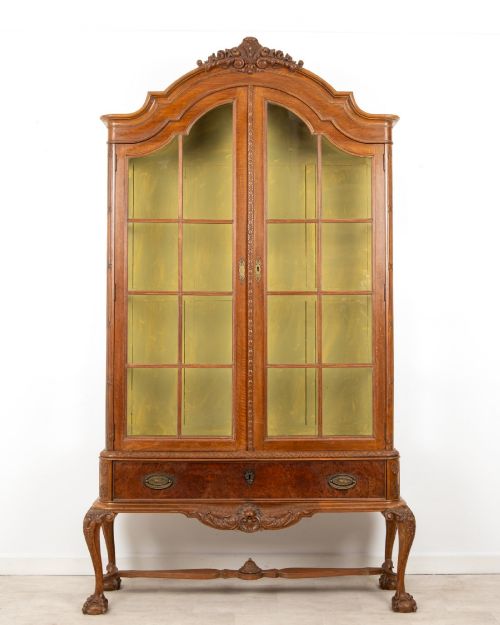
Buyers meet taller items like breakfront bookcases and two-part corner display cabinets alongside compact bedside cabinets and cabinets on stands. The design draws directly on earlier eighteenth-century aesthetics, reinterpreted during the early twentieth century with fitted interiors and glazed doors.
How they were made
Workshops relied heavily on walnut and burr walnut veneer, applying rich figured timber over solid carcases to create striking grain patterns on doors and drawer fronts. Cabinet makers incorporated glass panels for display sections and brass hardware for handles and escutcheons.
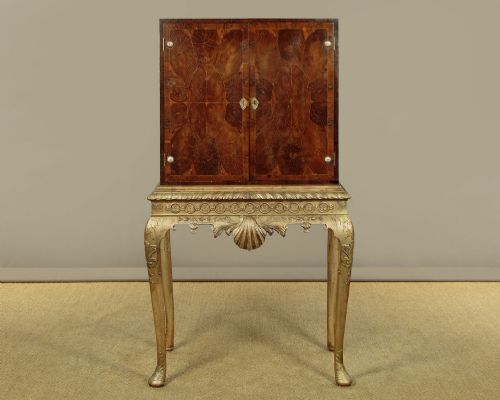
Certain specialist pieces feature silver leaf or giltwood finishes on their supporting stands, contrasting with the dark warmth of the walnut bodies. Construction methods from the Edwardian period and the 1920s balanced traditional cabinet-making with fitted internal shelving and compartmentalised storage.
Queen Anne Revival Cupboard Retail Price Guide 2026
Typical asking prices for queen anne revival cupboard among the pieces listed under this phrase on Sellingantiques today, from the lower quarter to the upper quarter. They describe what is for sale here now, not the wider market.
A solitary silver-gilt stand from 1930 proves that someone decided a walnut cupboard simply must wear silver shoes.
What varies in quality
The choice of timber creates a distinct tier in these pieces, separating simple walnut surfaces from highly figured burr walnut veneer. Selection of veneer matching across multiple doors or drawers dictates the visual harmony of the finished front.
Secondary details such as brass hardware, fine glazing bars on display doors, and the execution of carved cabriole-style elements define the upper end of the range. The integration of stands, particularly silver gilt variants from the 1930s, adds a further layer of craftsmanship.
The Queen Anne Revival Cupboard Glossary
- Burr walnut
- A wood veneer taken from the wart-like growths on walnut trees, prized for its swirling, intricate grain patterns. It forms the primary visual surface on many Edwardian and 1920s cabinets.
- Tallboy
- A tall chest of drawers or cupboard standing higher than a standard chest, often combining drawer storage with enclosed shelving. These vertical pieces maximise storage space in smaller rooms.
- Breakfront
- A cabinet design where the central section projects forward from the flanking wings. This architectural layout creates depth and breaks up the linear facade of large bookcases.
- Giltwood
- Timber that has been coated with a thin layer of gold leaf or metallic paint. It appears on the stands of specialist decorative cabinets from the interwar period.
Queen Anne Revival Cupboard: Frequently Asked Questions
What periods do these cabinets come from?
The pieces span the late nineteenth century through to the 1930s, taking in the 1890s, the Edwardian era, and the 1920s. Workshops produced these revival items across several decades.
While the style references an earlier century, the construction methods and materials align firmly with early twentieth-century cabinet making.
How are display cabinets and side cabinets different?
Display cabinets incorporate glass panels in their doors to showcase books or porcelain on internal shelves. Side cabinets rely on solid timber doors to conceal fitted storage.
Both forms utilise walnut and burr walnut veneers, but serve entirely different functions within a room.
Where were bedside cabinets used?
These small pieces stood beside beds to hold nighttime necessities within enclosed cupboards or small drawers. They offer compact storage while maintaining the walnut aesthetic of larger room furnishings.
Craftsmen scaled down the characteristic revival details to fit smaller domestic footprints.
What is a cabinet on stand?
A cabinet on stand separates the main storage body from the floor by resting it on a dedicated supporting frame. This layout lifts the visual weight of the piece.
Some twentieth-century examples incorporate silver gilt finishes on the stand to contrast with the dark walnut body above.