


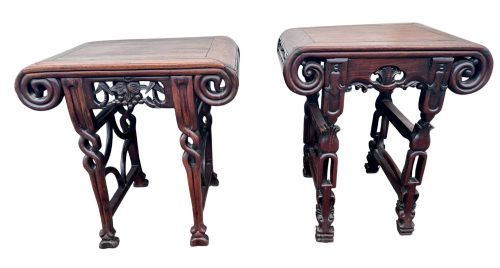


Qing Dynasty Display Stand
A qing dynasty display stand holds porcelain and plants with carved weight, bringing dense timber and cool marble into a room.
Qing Dynasty Display Stand
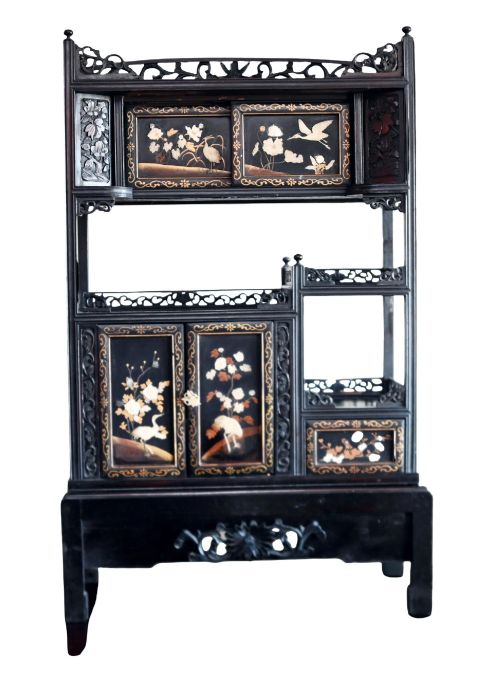
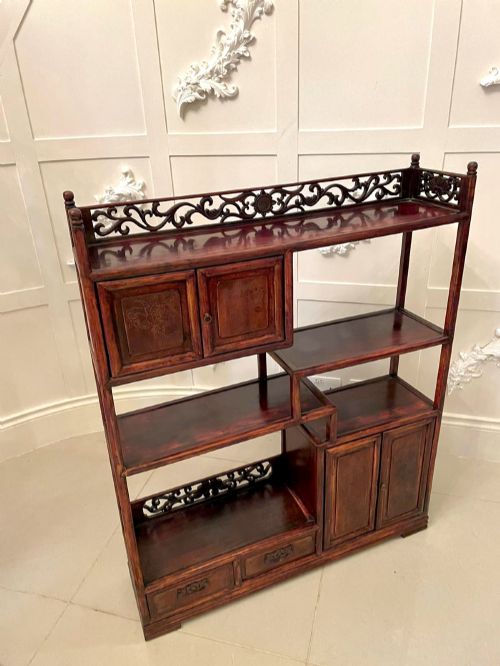
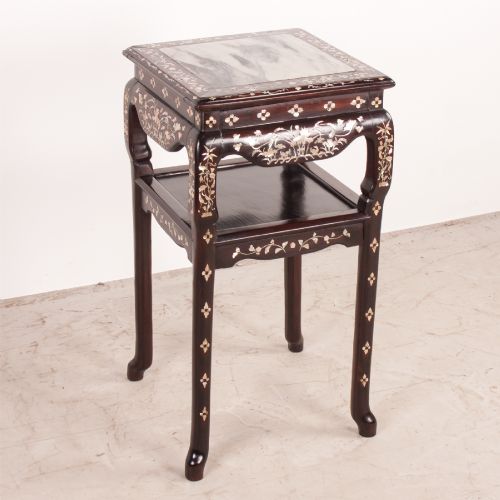
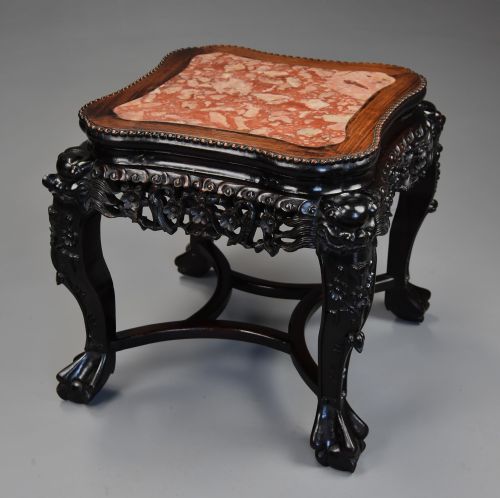
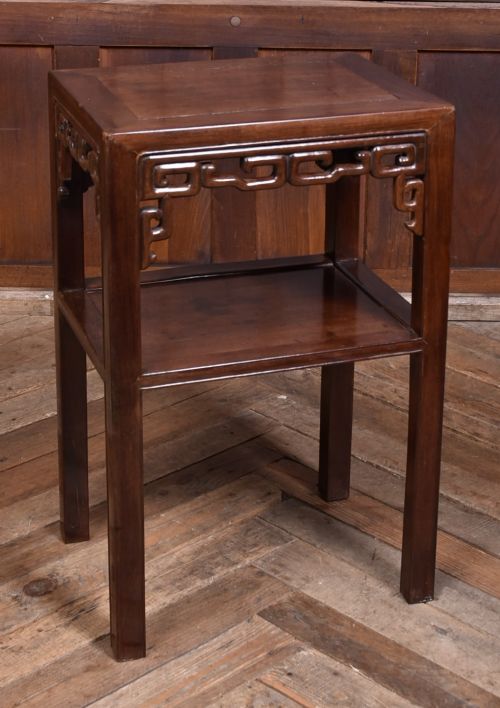
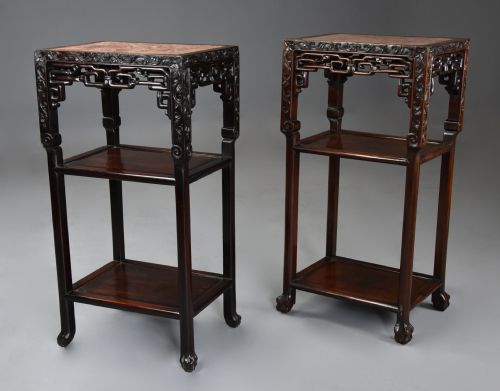
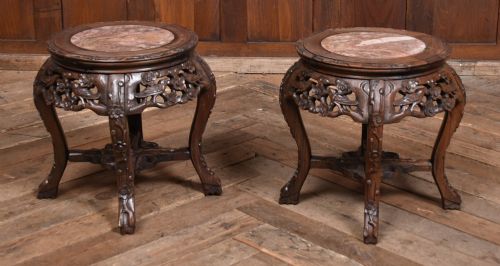
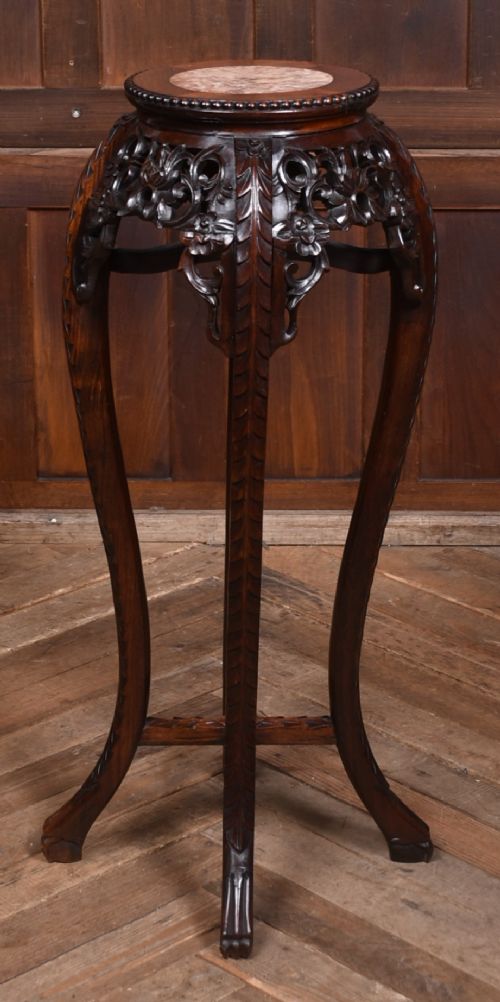
A qing dynasty display stand takes many forms across the selection, from tall plant pedestals and low pot tables to occasional tables and tiered display cabinets. These pieces serve to elevate decorative objects, vessels and jardinières within domestic spaces.
The versions most common here date from the nineteenth century, including pieces marked by Victorian import periods as well as direct Qing Dynasty and Chinese Export styles. Forms range from simple square and rectangular low tables to asymmetrical stands and freestanding pedestals.
Makers utilised dense timbers and fitted them with stone or porcelain panels to create stable platforms for heavy ceramic bowls and bronze vases.
How They Were Made
Construction relies on dense tropical timbers such as hardwood, rosewood, hongmu and padouk, joined with traditional carpentry techniques that support heavy weights without metal fixings. Carved decoration often frames the apron and legs with plant or animal motifs.
Insects, birds and floral elements appear alongside mother-of-pearl inlay and ebonised surfaces. Tops are frequently inset with smooth marble or rouge marble panels, and some examples incorporate porcelain panels or brass details.
Several stands feature dragon lantern designs ready to guard your favourite floral arrangement.
What Varies in Quality
The depth and crispness of the carving dictate much of the character, distinguishing fluidly undercut foliage from shallow, mechanical scoring. Timber selection also matters, with denser grain and heavier weight marking out superior examples.
The fit of the inset marble or porcelain panel within the wooden frame shows the maker's precision, alongside the structural rigidity of the joints across multi-tiered pedestals and tall plant stands.
The Qing Dynasty Display Stand Glossary
- Hongmu
- A dense tropical hardwood favoured for traditional Chinese furniture and display stands. It takes a dark, rich polish.
- Jardiniere stand
- A tall or low table specifically designed to hold a heavy plant container or ceramic bowl. These pieces feature sturdy tops to bear damp ceramic weight.
- Padouk
- A heavy, durable reddish-brown timber utilised in nineteenth-century cabinet making. It provides a stable base for intricate carving.
- Rouge marble
- A deep red variety of marble with white or grey veining, frequently set into the tops of nineteenth-century tables and stands.
Qing Dynasty Display Stand: Frequently Asked Questions
How were these stands used?
These pieces supported heavy porcelain vessels, bronze vases and large plants in traditional interiors. Their sturdy construction allowed them to bear significant weight safely.
Today they function effectively as lamp tables, side tables or independent decorative pedestals in contemporary rooms.
What woods do I look for?
The selection consists primarily of dense Asian hardwoods including rosewood, hongmu and padouk. These heavy timbers provide the structural strength needed for marble-inset tops.
Ebonised finishes and occasional lacquered surfaces also appear across nineteenth-century examples.
Are the marble tops original?
Nineteenth-century stands frequently incorporated inset marble or rouge marble panels to provide a cool, durable surface for damp pots and hot tea vessels. The stone sits flush within a wooden channel cut into the frame.
Close inspection of the surrounding timber jointing helps confirm the relationship between the stone and the base.