

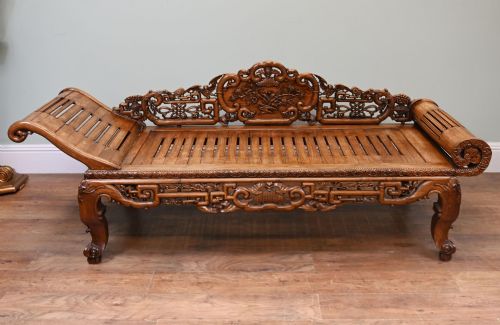


Qing Dynasty Daybed
A qing dynasty daybed offers substantial seating and sleeping platforms, grounding large rooms with traditional joinery and carved timber work.
Qing Dynasty Daybed
A qing dynasty daybed encompasses low platform beds, opium beds, marriage beds, and carved benches originating from various centuries.
These items arrive from periods spanning the eighteenth century through to the early twentieth century, including pieces built in the nineteenth century and around nineteen hundred.
Forms include scroll-end kang tables, four-poster beds, childs beds, and sofas that function as low seating or daybeds within modern spaces.
How they were made
Construction relies heavily on dense hardwoods, elm, pine, and huanghuali wood, joined with traditional framing methods that require minimal metal fasteners.
Surfaces are often finished with red lacquer or carved ornamentation, while certain forms incorporate brass accents, marble inlays, or rattan webbing.
Qing Dynasty Daybed Retail Price Guide 2026
Typical asking prices for qing dynasty daybed among the pieces listed under this phrase on Sellingantiques today, from the lower quarter to the upper quarter. They describe what is for sale here now, not the wider market.
Current listings feature materials including hardwood, elm, brass, lacquered wood, lacquer, marble, rattan, and pine across various centuries.
What varies in quality
Quality separates through the integrity of the timber framing and the depth of the hand-carved panels depicting dragons or scroll ends.
The preservation of original red lacquered finishes and the tightness of historical joinery dictate the standing of individual examples.
The Qing Dynasty Daybed Glossary
- Kang
- A heated brick platform in traditional Chinese homes, often paired with low tables or daybeds for sitting and resting.
- Huali
- A fragrant, richly figured hardwood utilised in traditional Chinese furniture making for its strength and grain.
- Opium bed
- A low resting platform with raised railings, historically used for lounging, smoking, or casual entertaining.
Qing Dynasty Daybed: Frequently Asked Questions
Where should a daybed go?
These platforms suit spacious living areas, garden rooms, or large bedrooms where they function as statement seating or lounging spots.
Position them away from direct heat sources to protect the dried timber and historical lacquer finishes from cracking.
How do I clean the wood?
Dust the surfaces regularly with a soft, dry cloth to prevent dirt accumulation in the carved crevices and joints.
Avoid liquid polishes or harsh chemical cleaners that can damage the antique lacquer and dry timber.
Are these beds comfortable for sleeping?
Original platforms were designed for firm sitting or resting rather than modern mattress softness.
Adding a custom-made cotton or linen floor pad provides adequate support for everyday lounging.
How are different periods identified?
Dating relies on assessing the timber shrinkage, tool marks, wear patterns, and the complexity of the carved motifs.
Nineteenth-century examples often display heavier hardwood framing, whereas earlier items show distinct joinery signatures.