


Purple Gold Ring
A purple gold ring brings together rich violet stones and warm precious metal across periods spanning the Georgian era to the mid-twentieth century.
Purple Gold Ring
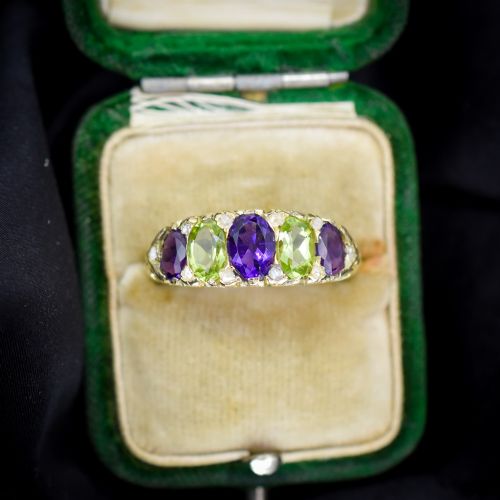
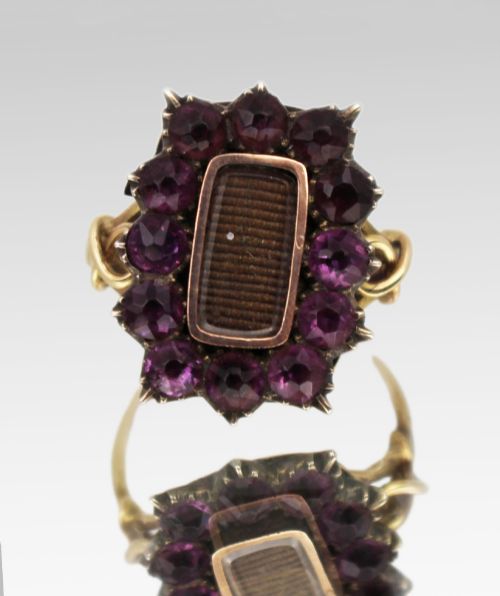
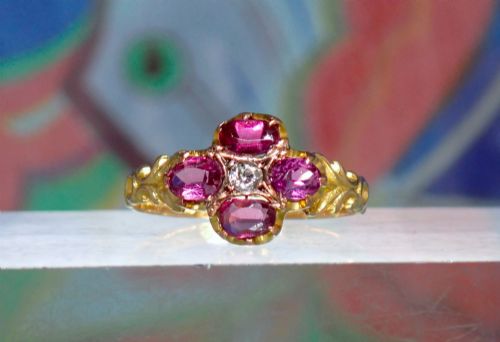
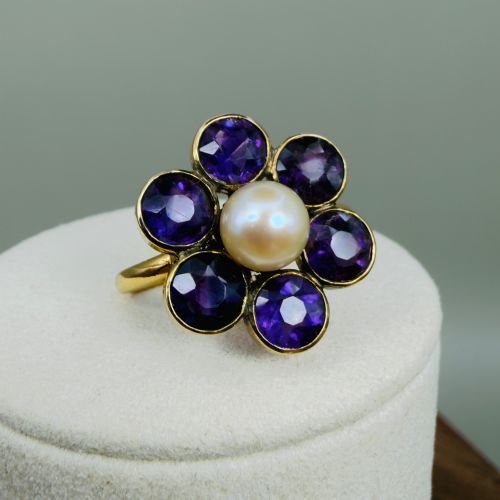
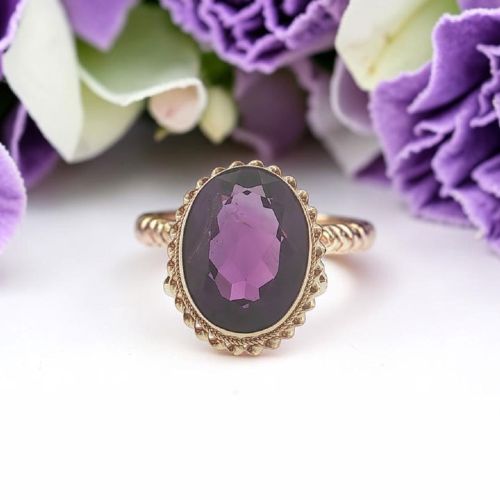
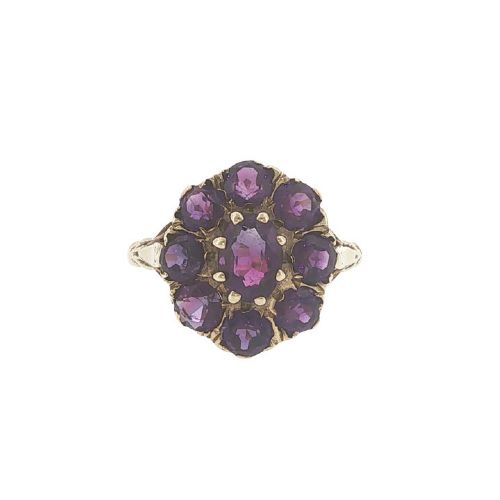
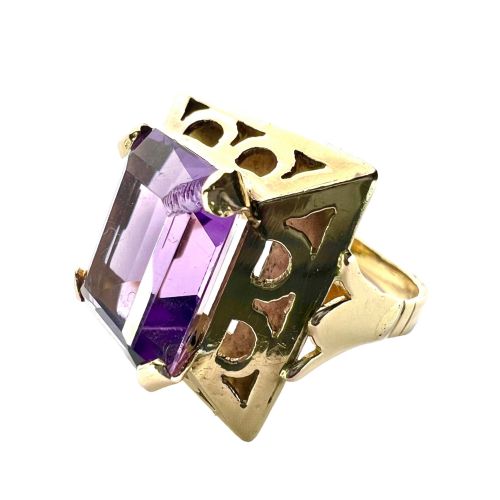
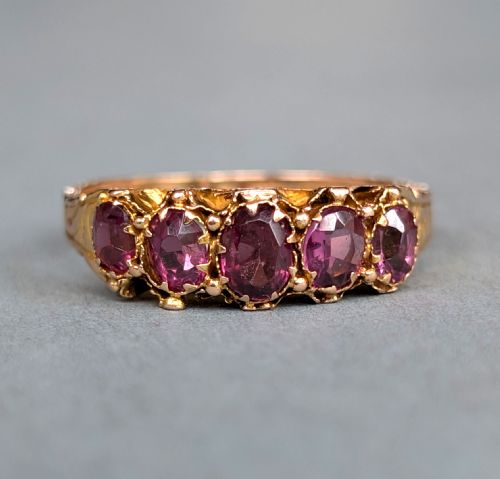
A purple gold ring encompasses antique cluster designs, bold cocktail pieces, and clean solitaires set in yellow, rose, or white gold. The selections here range from Victorian mourning and garnet pieces to mid-century amethyst showstoppers and Art Deco geometric settings.
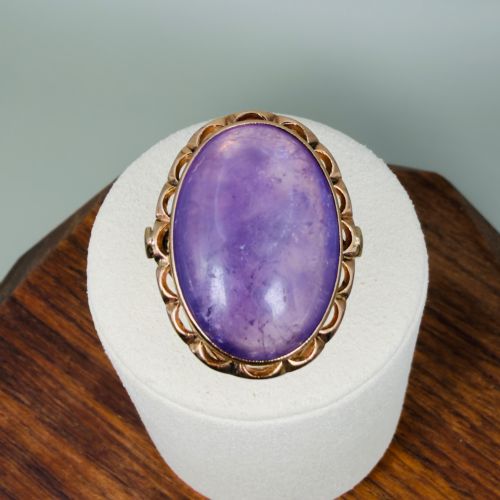
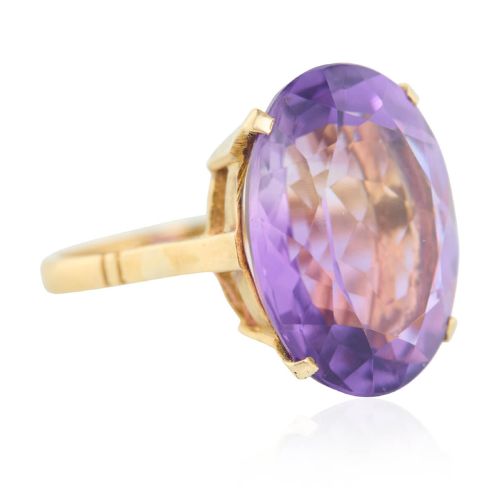
Victorian and Edwardian examples frequently pair purple gems with pearls or diamonds in delicate halo arrangements. Later vintage and mid-century items lean towards massive faceted or cabochon stones mounted in substantial nine-carat or fourteen-carat mounts.
Materials and construction
Goldsmiths utilised varying purities of gold, including nine-carat, fifteen-carat, and eighteen-carat alloys, shaping the metal to support substantial claw and bezel settings. Stones are secured by hand-worked prongs or enclosed in closed backs on older mourning examples.
The violet stones themselves include natural amethyst, almandine garnet, lavender jade, and purple sapphire, often accented with small old-cut or rose-cut diamonds. Paste and glass substitutes also appear in period pieces, offering alternative visual depth.
Stone sizes range from modest single-stone solitaires to massive specimen amethysts exceeding twenty-eight carats.
Assessing quality
Quality rests in the depth of colour and clarity of the central purple stone, alongside the weight and integrity of the gold mount. Heavy stone weight and clean faceting distinguish grander cocktail rings from simpler daily wear.
The precision of the claw work and the integration of supporting diamond or pearl halos indicate the original maker's skill. Hallmarks stamped into the gold band provide reliable confirmation of metal purity and assay office origin.
The Purple Gold Ring Glossary
- Cabochon
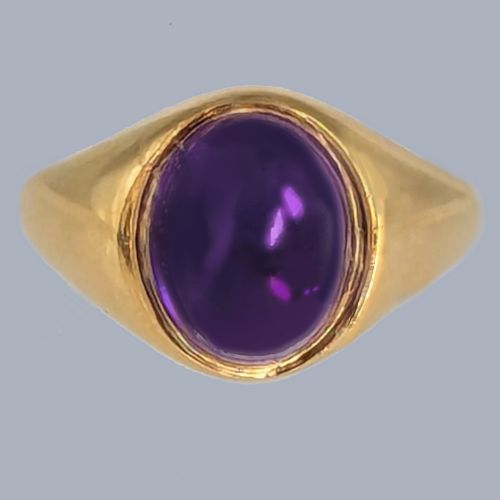
- A gem shaped and polished with a smooth, convex domed surface rather than faceted. This cut is typical for softer stones like lavender jade or select amethysts.
- Cluster ring
- A ring featuring a central prominent stone surrounded by a tighter group of smaller gems. This layout maximises visual impact and light reflection.
- Mourning ring
- A commemorative piece of jewellery containing hair, enamel, or dark stones such as garnet or amethyst. These items served to remember deceased loved ones.
- Solitaire
- A ring set with a single gemstone, allowing the colour and cut of the stone to dominate the design. These appear across multiple twentieth-century decades.
Purple Gold Ring: Frequently Asked Questions
How do I care for antique gold rings?
Clean these pieces gently with warm soapy water and a soft brush, avoiding harsh chemical dips that damage softer gems. Store them individually in lined boxes to prevent scratches on the gold band.
Prongs and settings should undergo regular inspection by a professional jeweller to ensure stones remain secure in their original mountings.
What periods do these rings cover?
The available selection spans from early Georgian and Victorian examples through Edwardian, Art Deco, and mid-century modern eras. Each period brings distinct metal colours and gemstone cutting styles.
Earlier nineteenth-century pieces often feature closed-back settings or mourning motifs, while twentieth-century iterations favour grander solitaire and cocktail proportions.
Are amethysts the only purple stones used?
Amethyst is the most common purple gem present, but the listings also incorporate almandine garnet, lavender jade, purple sapphire, and glass paste. Each mineral brings a distinct tone and weight to the finished piece.
Corundum and spinel variations also occur, expanding the range of violet hues beyond standard quartz.
How can I tell the gold purity?
British hallmarks stamped on the inner band indicate the exact gold karat, ranging from nine-carat up to eighteen-carat alloys. These small punch marks often reveal the assay town and manufacturing year.
Unmarked or foreign pieces rely on professional acid testing or specific colour tones to determine the gold content.