





Provincial Oak Wardrobe
A provincial oak wardrobe brings substantial storage and honest timber into a room, spanning rustic French armoires and sturdy English cupboards.
Provincial Oak Wardrobe
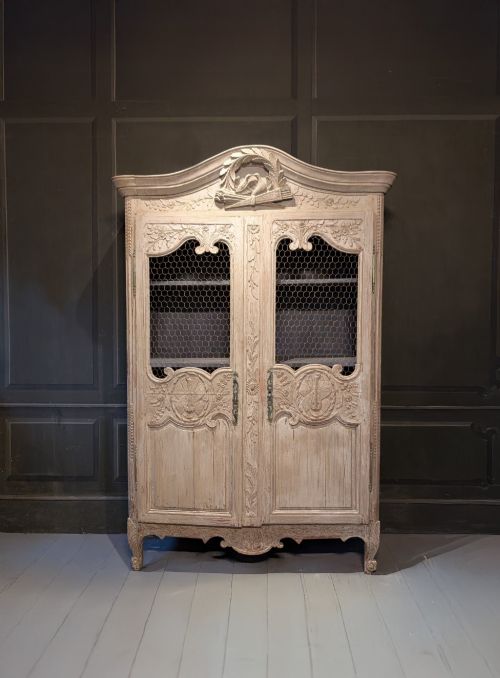
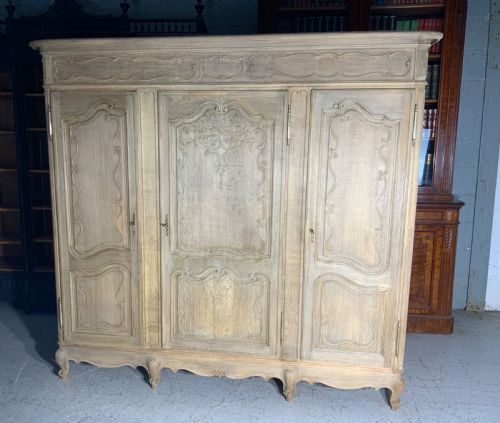
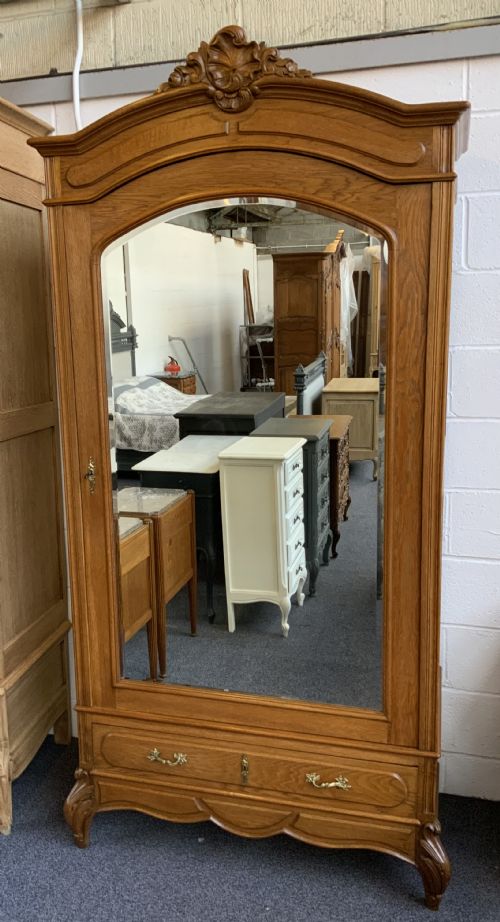
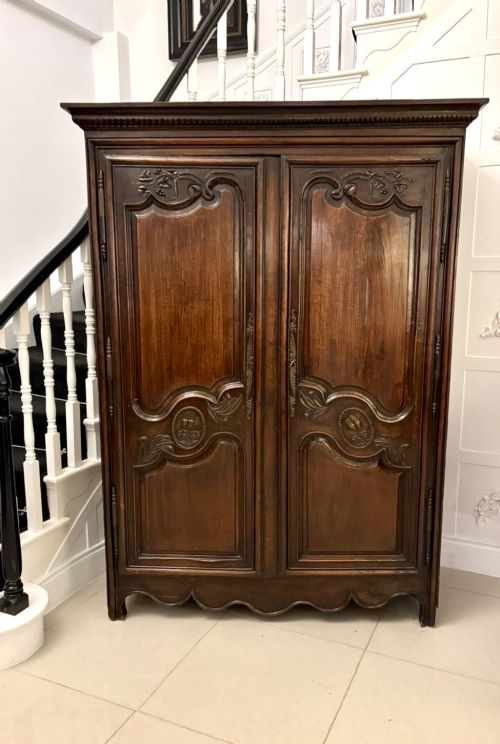
A provincial oak wardrobe encompasses large storage pieces built for regional homes, including French armoires, bonnetieres, and housekeeper's cupboards. These items originate predominantly from the eighteenth and nineteenth centuries, alongside early twentieth-century interpretations in bleached or carved finishes.
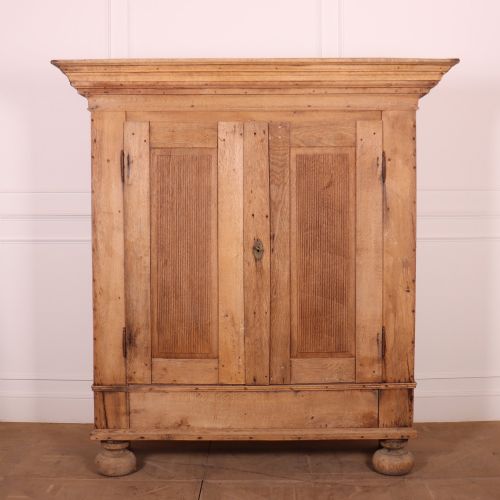
Buyers encounter single, double, and triple door formats, as well as specialised variants like flat pack designs or low cupboards. French provincial examples often display regional carving or Louis XV taste, while British country pieces favour utilitarian construction in solid oak.
Materials and construction
Makers utilised solid oak for the primary carcases, panels, and doors, occasionally incorporating walnut or secondary timbers for internal components. Iron and brass hardware, such as hinges and escutcheons, secured the heavy doors and added functional detail.
Joinery relied on traditional hand-cut methods, with panelled construction allowing the timber to expand and contract naturally. Surfaces were left bare, waxed, painted, or finished with later bleaching treatments to alter the tone of the wood.
Provincial Oak Wardrobe Retail Price Guide 2026
Typical asking prices for provincial oak wardrobe among the pieces listed under this phrase on Sellingantiques today, from the lower quarter to the upper quarter. They describe what is for sale here now, not the wider market.
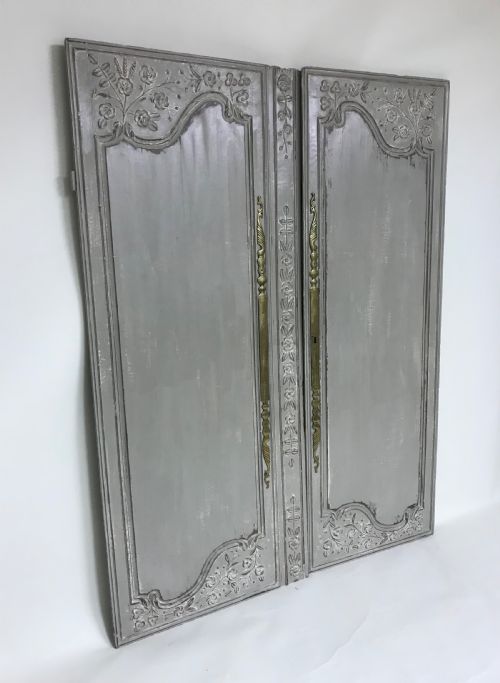
Several listings feature flat pack designs from around eighteen hundred, proving that self-assembly furniture troubled rural households long before the modern era.
Judging quality in oak furniture
Quality rests on the depth of the timber figure, the crispness of any hand-carved ornamentation, and the integrity of the original construction. Pieces retain greater merit when timber choices remain consistent across secondary surfaces and internal shelving.
Proportions dictate visual balance, separating grand architectural armoires from simpler utility cupboards. The survival of original iron or brass hinges and operational locks also distinguishes better-preserved examples.
The Provincial Oak Wardrobe Glossary
- Armoire
- A large upright cupboard or wardrobe, traditionally used for storing garments and linens. French regional examples often feature deep cornices and panelled doors.
- Bonnetiere
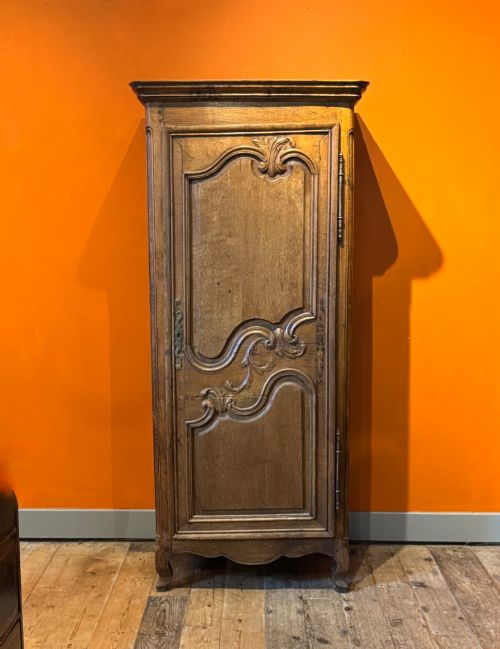
- A tall, narrow single-door cupboard originally designed in France for storing headwear and Sunday caps. These pieces suit narrower wall spaces.
- Bleached oak
- Oak timber treated to lighten its natural dark or golden tone, creating a pale surface finish. This treatment appears frequently on twentieth-century pieces.
- Louis XV taste
- A decorative style characterised by asymmetrical curves, naturalistic carving, and scrollwork. It influences the shaping of door panels and crest rails on later furniture.
- Housekeeper's cupboard
- A large storage piece with enclosed upper sections and lower drawers or cupboards. They served functional roles in country house domestic quarters.
Provincial Oak Wardrobe: Frequently Asked Questions
What is a provincial oak wardrobe?
A provincial oak wardrobe is a heavy storage cabinet built outside major urban centres, primarily in France and Britain, using native oak timber.
These pieces range from tall armoires and bonnetieres to low cupboards, reflecting the domestic storage needs of rural households over several centuries.
How do I date an oak armoire?
Dating relies on examining the joinery methods, tool marks, hardware, and overall stylistic motifs present in the woodwork.
Eighteenth-century examples typically show hand- cleft panels and wrought iron hinges, whereas nineteenth and twentieth-century versions introduce machine-sawn timber and different fastening techniques.
Can these wardrobes be dismantled?
Many large armoires and cupboards were constructed to be taken apart for transport and installation in rooms with low access.
Pegged joints and knockdown panels allowed provincial cabinetmakers to move bulky furniture between rural properties with relative ease.
Where should I place an oak armoire?
These large cabinets require stable wall space and sufficient clearance for wide-opening doors in bedrooms or hallways.
Keeping them away from direct heat sources helps protect the solid oak timber and historic panel construction from splitting.