



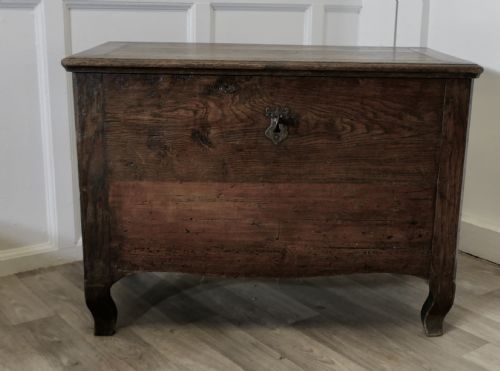
Provincial Oak Trunk
These provincial oak trunk pieces are sturdy regional chests built for daily utility, offering honest domestic storage with centuries of character.
Provincial Oak Trunk
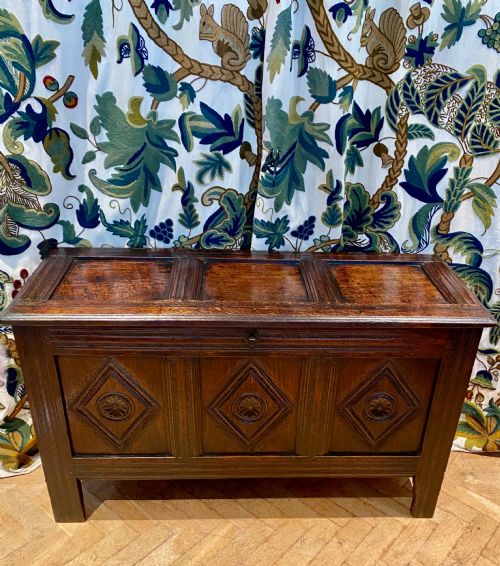
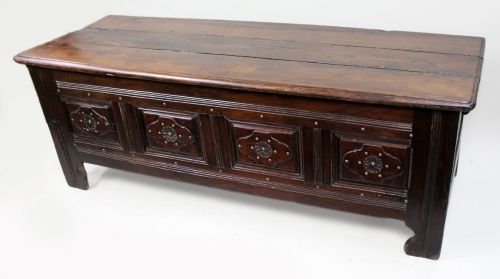
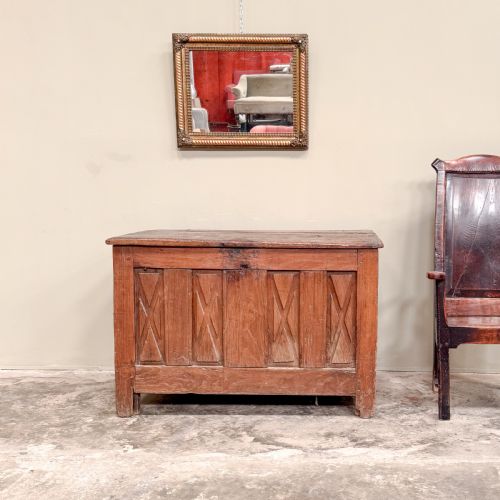
When you search for provincial oak trunk, you are looking at utilitarian storage chests produced across various regions during the seventeenth, eighteenth, and nineteenth centuries. These pieces encompass coffers, strong boxes, and miniature boxes designed for household storage.
The versions you are most likely to meet on this page originate from English and French traditions, often reflecting vernacular styles such as Georgian, Jacobean, and French country designs. Alongside standard coffers, the selection includes related forms like a coffer bach and a serpentine commode with a lift top.
How they were made
Makers utilised solid timber, predominantly oak, supplemented by secondary woods such as pine and walnut where appropriate for internal components. Structural integrity relied on heavy joinery and thick boards rather than delicate framing.
Hardware played a functional role in construction, incorporating wrought iron and brass for hinges, locks, and protective corner mounts. Decorative elements often included wood inlay, ebonised wood details, and surface carving executed directly into the primary timber.
Provincial Oak Trunk Retail Price Guide 2026
Typical asking prices for provincial oak trunk among the pieces listed under this phrase on Sellingantiques today, from the lower quarter to the upper quarter. They describe what is for sale here now, not the wider market.
Listings span the seventeenth, eighteenth, and nineteenth centuries, featuring French provincial, Georgian, and Jacobean styles.
What varies in quality
Quality in these pieces rests upon the integrity of the original construction and the depth of the regional carving. Finer examples display harmonious proportions, integrated candle boxes, and minimal later alterations to the timber or hardware.
The treatment of surfaces and secondary materials also distinguishes the work, with superior pieces retaining patination and original joining methods. Heavier carving and more complex regional stylistic traits generally indicate a higher standard of provincial craftsmanship.
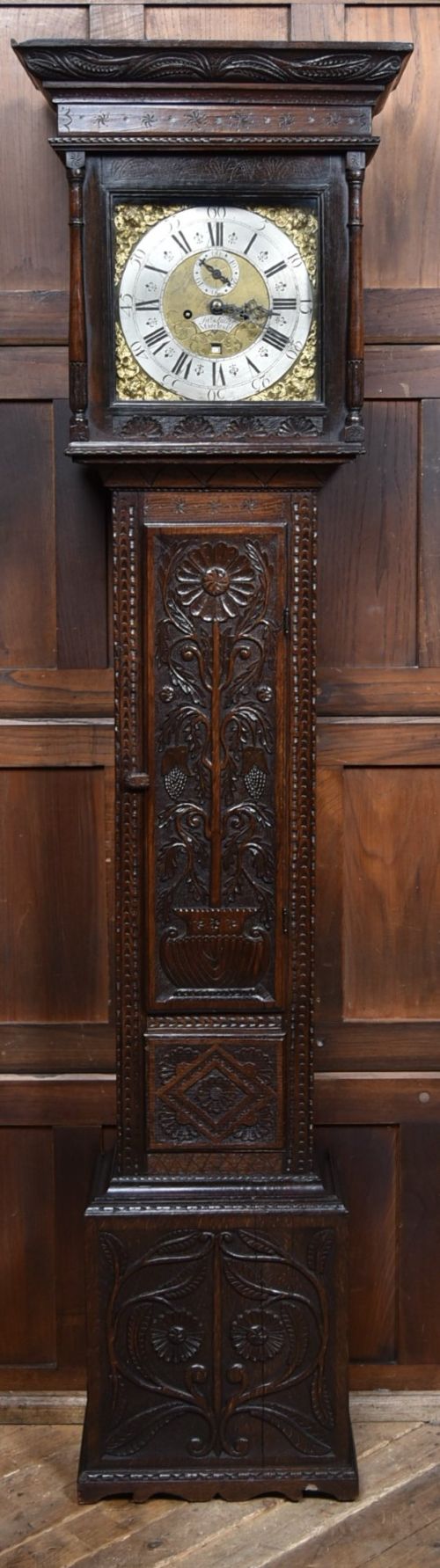
Jn Smith Macclesfd
The Provincial Oak Trunk Glossary
- Coffer
- A large wooden chest traditionally used for storing valuables or household goods. Most examples feature a hinged lid and sturdy boarded construction.
- Coffer bach
- A small Welsh chest, translating literally from Welsh as little coffer. These miniature versions typically incorporate a drawer beneath the main compartment.
- Vernacular
- Architecture or furniture built by local craftsmen using traditional regional methods and materials. These pieces prioritise practical utility over metropolitan high-style design.
- Ebonised
- Wood treated with a chemical stain or finish to imitate ebony. This dark finish provides high-contrast decorative detail on period furniture.
- Candle box
- A small internal compartment built into the interior of a chest. It kept candles separate from general storage and protected them from damage.
Provincial Oak Trunk: Frequently Asked Questions
What is a provincial oak trunk?
A provincial oak trunk is a heavy storage chest made outside major metropolitan centres, usually during the seventeenth or eighteenth centuries. These items served practical domestic purposes, storing everything from linens to legal documents.
Craftsmen built them using locally sourced timber, resulting in regional variations in style and construction. They remain appreciated today for their solid utility and authentic period character.
How were these chests used historically?
Historically, households utilised these chests to secure valuable belongings, clothing, and foodstuffs against dampness and theft. The inclusion of internal candle boxes or strong box mechanisms provided designated space for smaller items.
In many homes, a large coffer also doubled as seating or a table surface when space was limited. Their robust build allowed them to withstand decades of heavy domestic service.
How do I identify seventeenth-century pieces?
Seventeenth-century pieces typically exhibit heavier framing, pegged joinery, and characteristic geometric or panelled carving styles associated with the Jacobean period. The timber often shows deep patination developed over centuries of exposure.
Checking the construction methods inside the chest reveals hand-riven boards and primitive fastening techniques distinct from later manufacturing eras.
How do I care for antique oak furniture?
Caring for antique oak involves placing the piece away from direct heat sources and rapid temperature fluctuations to prevent timber splitting. Maintaining a stable indoor environment preserves the natural moisture of the wood.
Occasional application of appropriate wax polish helps protect the surface and nourish the historic patination without sealing the pores of the timber.