

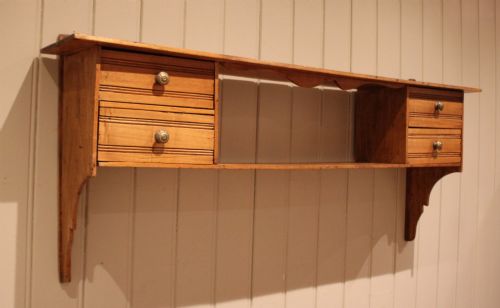
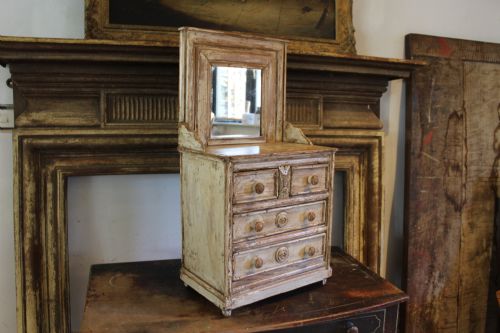


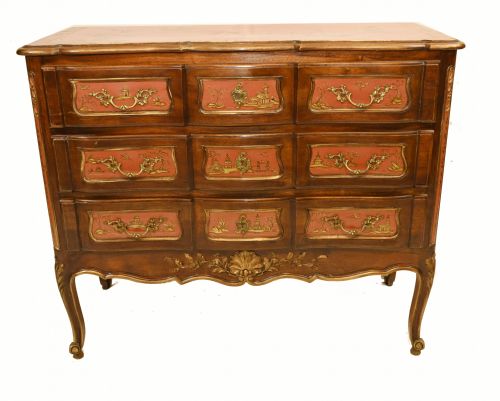
Provincial Drawer Unit
These provincial drawer unit pieces bring regional French utility and modest scale into a room, offering practical storage with genuine character.
Provincial Drawer Unit
A provincial drawer unit represents regional domestic storage, encompassing everything from miniature apprentice chests and drapers' banks to full-scale commodes and washstands. These pieces serve functional roles in bedrooms, hallways and studies where smaller footprints suit daily requirements.
French origin dominates the examples on this page, spanning the nineteenth century alongside pieces dated around nineteen-ten. Buyers regularly encounter oak, mahogany and pine constructions, often paired with marble tops or painted finishes that reflect local vernacular furniture traditions.
Specialised variations such as cartonnier filing cabinets and butchers blocks demonstrate how utilitarian storage adapted to specific trades and domestic spaces. Each format retains the straightforward proportions characteristic of provincial craftsmanship.
Materials and construction methods
Makers utilised solid timbers such as oak, mahogany, palisander and pine to build these provincial drawer unit examples, frequently applying paint or lacquer finishes. Carved ornamentation, brass hardware and inset marble surfaces provide structural durability alongside decorative contrast.
Iron forging and leather detailing appear on specific utilitarian formats like washstands and filing cabinets, showing how mixed media supported practical function. Construction relied on traditional joinery techniques suited to regional workshops rather than industrial mass production.
Provincial Drawer Unit Retail Price Guide 2026
Typical asking prices for provincial drawer unit among the pieces listed under this phrase on Sellingantiques today, from the lower quarter to the upper quarter. They describe what is for sale here now, not the wider market.
Listings span the nineteenth century up to nineteen-ten, recording materials from brass and glass to mahogany, marble and painted wood.
Distinguishing quality across examples
The distinction between standard and superior pieces rests on timber selection, surface preservation and the integrity of original hardware. Richly figured veneers, well-preserved marble tops and intact lacquer or paint layers elevate the visual presence of a piece.
Refined carving work and thoughtful proportioning separate domestic items made by skilled regional cabinetmakers from simpler utilitarian storage. Original brass handles and uncompromised drawer construction indicate sustained care over generations of use.
Trussant and Cie
The Provincial Drawer Unit Glossary
- Commode
- A low chest of drawers or cabinet designed for domestic storage. These pieces frequently feature multiple drawer tiers and decorative hardware.
- Cartonnier
- A set of pigeonholes or drawers specifically designed for storing papers and documents. Such filing cabinets often incorporate leather details.
- Apprentice chest
- A small-scale model constructed by a craftsman to demonstrate skill. These miniature chests replicate full-size furniture proportions precisely.
- Palisander
- A dense, heavily figured exotic hardwood utilised for fine cabinetry. Its rich grain patterns appear on select nineteenth-century chests.
Provincial Drawer Unit: Frequently Asked Questions
What is a provincial drawer unit?
A provincial drawer unit is a regional piece of storage furniture originating outside major urban centres, typically featuring simpler lines and local timbers.
These items range from miniature apprentice chests to drapers' banks and commodes designed for everyday domestic utility.
How were nineteenth-century washstands used?
Nineteenth-century washstands provided a dedicated station for personal washing before plumbed bathrooms became standard in homes.
They commonly featured marble tops to resist water damage and integrated lower shelves or drawers for washing accessories.
Where do these pieces originate?
The pieces collected here stem primarily from French provincial traditions across the nineteenth century and the early twentieth century.
Regional workshops adapted national styles to local materials, resulting in distinct regional variations in wood choice and decorative finish.
How should I clean a marble-topped chest?
Marble surfaces require gentle cleaning with mild, pH-neutral soap and warm water to avoid etching the stone.
Avoid acidic substances and abrasive scouring pads that can dull the polished finish over time.