


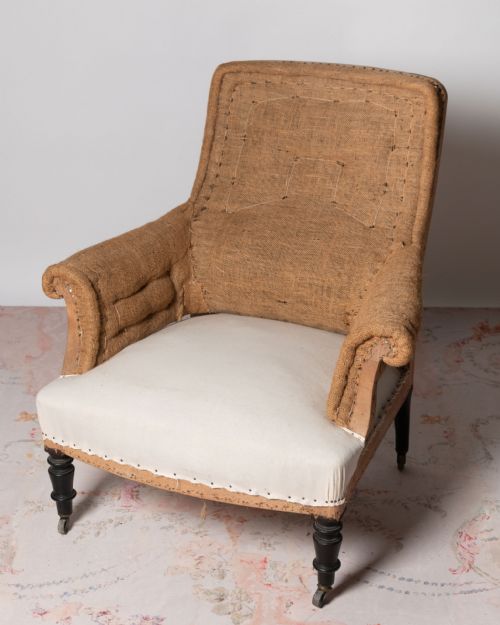
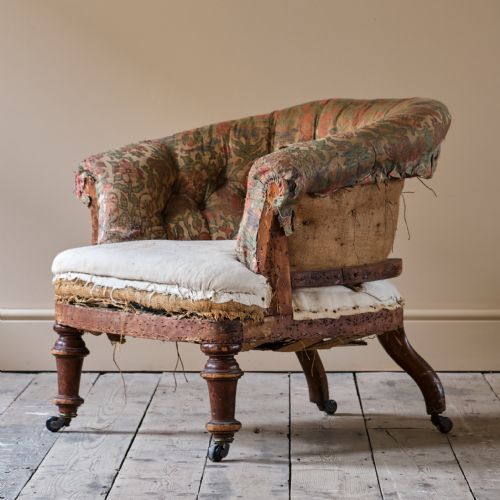
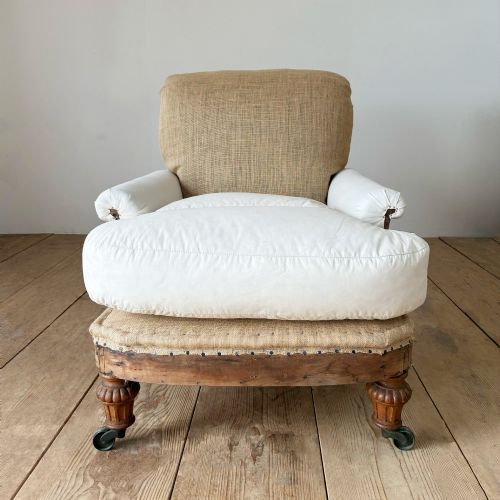


Project Armchair Frame
A project armchair frame offers the rare chance to build a bespoke seat from bare timber using authentic period forms.
Project Armchair Frame
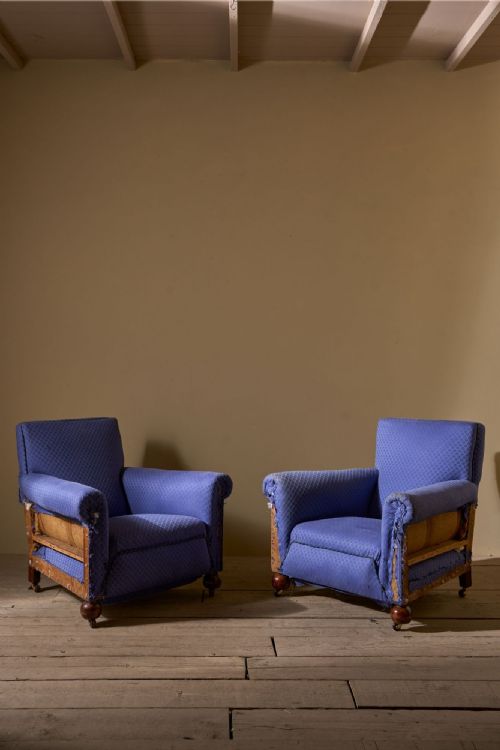
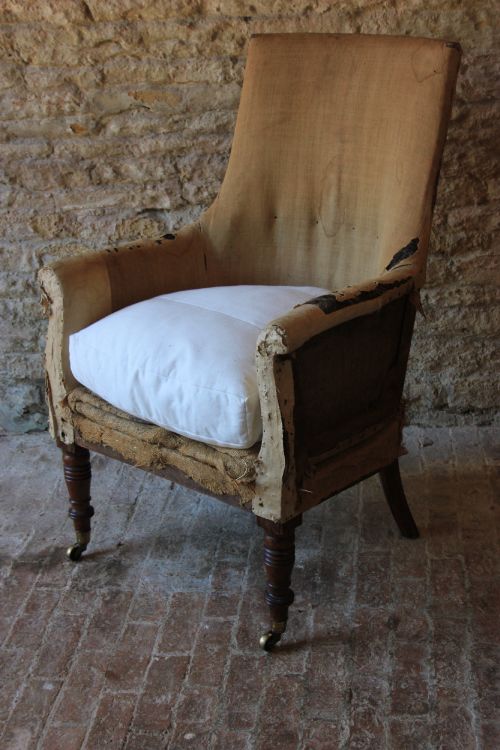
A project armchair frame represents the foundational skeleton of a seat awaiting complete restoration and new upholstery. When searching for a project armchair frame, buyers encounter structural forms originating from the Regency, Georgian, Victorian, Edwardian, and Art Deco periods.
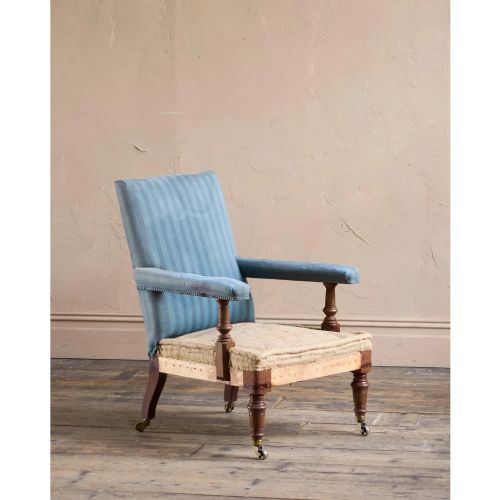
The selections available span open elbow library chairs, tub backs, barrel backs, winged armchairs, and club chairs. Most pieces survive from the nineteenth century, including specific iterations like Gainsborough chairs and Gillows productions.
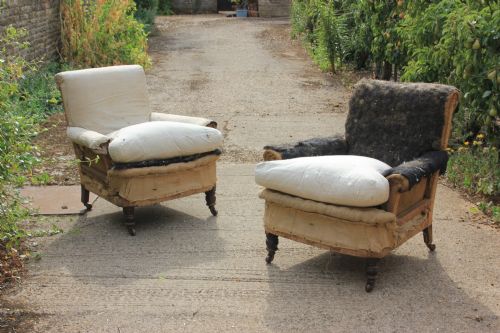
Buyers frequently find frameworks stripped down to bare timber and webbing, ready for traditional stuffing and fabric selection. These skeletons reveal the underlying craftsmanship before top covers obscure the joinery.
Materials and construction methods
Makers built these structural skeletons primarily using solid timber such as mahogany and beech. Mahogany provided dense strength for exposed show-wood arms and legs, while beech offered robust concealed framing for internal stress points.
Traditional upholstery techniques utilised durable materials like horsehair, hessian, and brass tacks secured directly to the wooden rails. Layers of cotton and calico formed the foundational padding over springs or webbed bases before final top covers were applied.
Project Armchair Frame Retail Price Guide 2026
Typical asking prices for project armchair frame among the pieces listed under this phrase on Sellingantiques today, from the lower quarter to the upper quarter. They describe what is for sale here now, not the wider market.
Listings feature frames spanning the Regency period through to the 1930s, constructed predominantly in mahogany and beech with cotton and horsehair remnants.
Markers of structural quality
Quality in an un-upholstered frame rests entirely upon the integrity of the timber joinery and the purity of the silhouette. Finely carved arm terminals, elegant cabriole or tapered legs, and tight mortise and tenon joints distinguish superior workshop output from standard utility pieces.
The presence of maker stamps or signatures on the wooden rails elevates a piece significantly. Furthermore, original brass castors and untouched timber patination indicate a well-preserved survivor that requires minimal structural intervention.
Morison and Co·Gillows·Howard And Sons
The Project Armchair Frame Glossary
- Gainsborough chair
- An upholstered armchair with a wide seat, padded armrests, and an open space below the arm supports, popular during the eighteenth and nineteenth centuries.
- Tub back armchair
- A curved seating form where the back rail sweeps continuously down to form enclosed, padded arms.
- Hessian
- A coarse woven fabric made from jute fibres, traditionally used beneath padding to hold stuffing securely in place.
- Horsehair
- Traditional stuffing material prized for its springiness and durability in period upholstery work.
- Show-wood
- Polished or carved timber portions of a chair frame left intentionally visible outside the upholstered areas.
Project Armchair Frame: Frequently Asked Questions
What is a project armchair frame?
A project armchair frame is an antique wooden seating skeleton stripped of its fabric and padding, sold specifically for complete restoration.
Buyers purchase these frames to choose their own upholstery materials and fabrics, matching historical accuracy or personal interior design schemes.
Can I reupholster these frames myself?
Reupholstering a period frame requires traditional skills using materials like hessian, horsehair, and webbing to rebuild the internal layers correctly.
Many buyers commission professional upholsterers to handle the complex spring tying and stuffing required for antique chair frames.
How do I date an armchair frame?
Dating relies on stylistic clues in the bare woodwork, such as Regency curves, Victorian proportions, or Edwardian structural forms.
Maker stamps on the wooden rails or specific construction techniques also help pinpoint the exact era of manufacture.