





Prism Ceiling Light
These prism ceiling light fixtures gather and scatter the room's illumination through cut glass and crystal.
Prism Ceiling Light
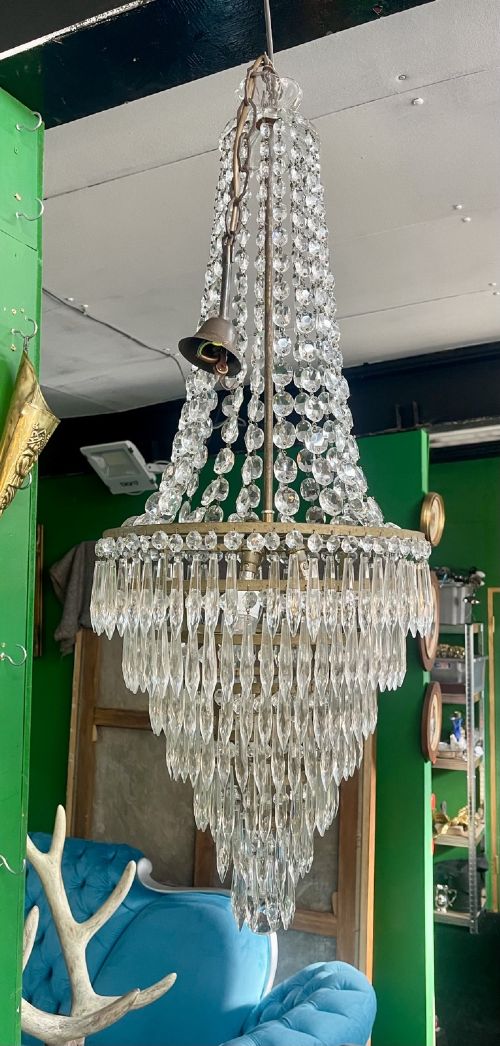
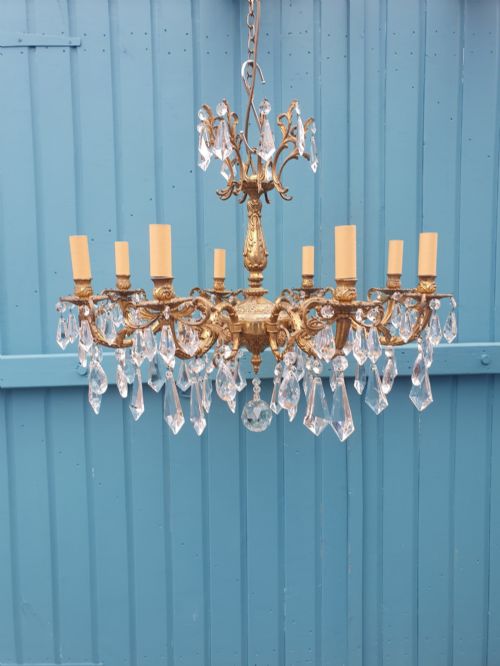
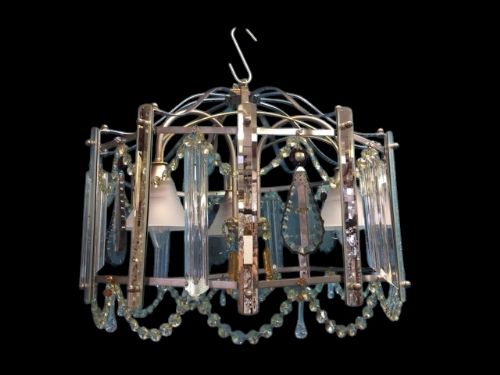
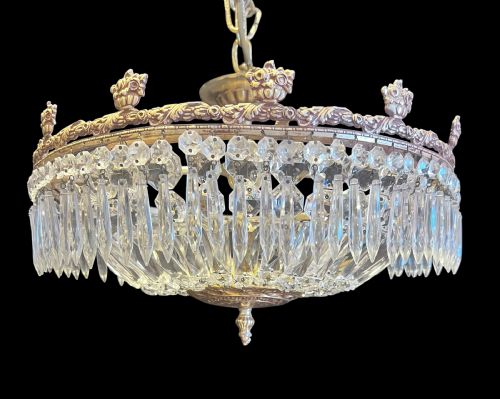
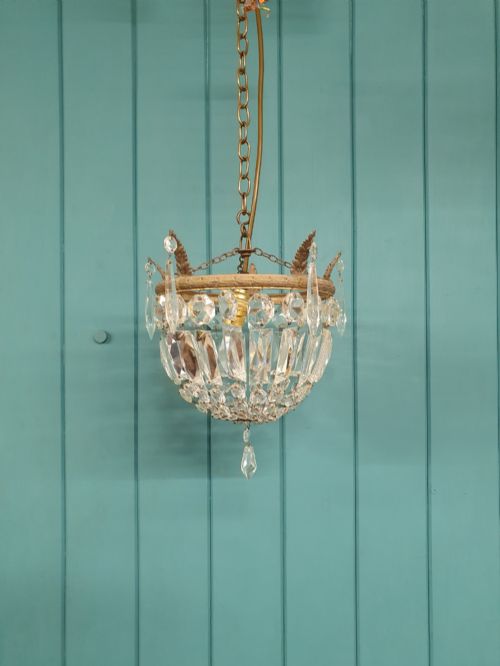
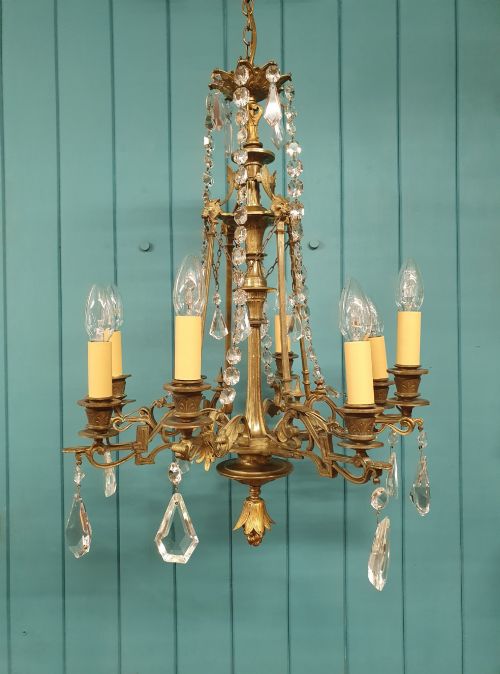
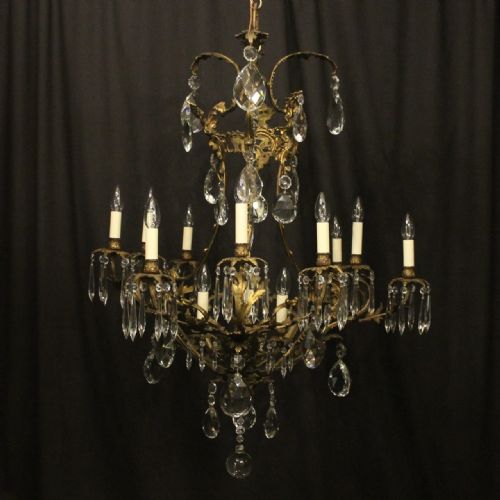
A prism ceiling light typically takes the form of a chandelier, pendant, or plafoniere designed to refract light through faceted glass drops. When you search for prism ceiling light, you encounter various configurations ranging from compact bag chandeliers to multi-tiered French Empire examples.
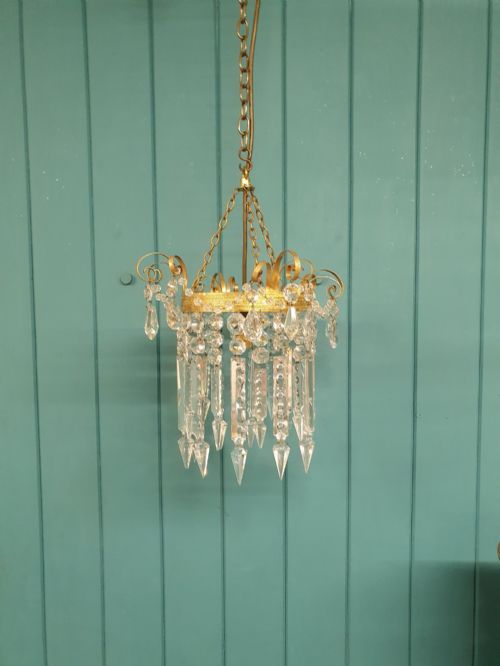
The materials span brass, gilt brass, and gilded bronze frames carrying heavy cut crystal and glass drops. Edwardian spike chandeliers and early twentieth-century lustre styles dominate the selections currently visible on the page.
Origins stretch from nineteenth-century pieces through the Edwardian era into the nineteen-twenties and thirties. French chateau and Art Deco styling frequently inform the metalwork supporting the glass.
Materials and Construction
Frames are cast or spun in brass, gilt brass, and gilded bronze, occasionally incorporating decorative elements like lion masks. These metal structures hold the weight of numerous glass and crystal drops, arranged in tents, waterfalls, or cages.
Prisms, coffin drops, oblong drips, and lustres are shaped from cut glass and crystal, then suspended from the metal armature using wire loops or pins. Blue prisms sometimes appear at the top and centre of bead chandelier arrangements to add contrast.
Prism Ceiling Light Retail Price Guide 2026
Typical asking prices for prism ceiling light among the pieces listed under this phrase on Sellingantiques today, from the lower quarter to the upper quarter. They describe what is for sale here now, not the wider market.
Listings span the nineteenth century, the Edwardian era, and the nineteen-twenties and thirties, utilising brass, gilt bronze, and cut crystal.
Distinctions in Quality
Quality rests upon the clarity and cutting of the glass drops alongside the weight of the metal frame. Finer examples utilise heavy cast gilded bronze or gilt brass rather than lighter metal alloys, paired with sharp-edged cut crystal that refracts light cleanly.
The complexity of the assembly also defines the standard, distinguishing simple single-tier spike designs from elaborate multi-armed tent and waterfall chandeliers carrying hundreds of hand-hung drops.
The Prism Ceiling Light Glossary
- Plafonier
- A ceiling-mounted light fixture that sits relatively flush against the ceiling surface. These often feature brass frames holding glass panels or crystal drops.
- Lustre
- A glass pendant or drop hung from a chandelier to reflect and refract light. They appear in various lengths and shapes across early twentieth-century fixtures.
- Coffin prism
- A long, flat-faced glass drop with a pointed lower end, resembling the traditional shape of a coffin. These are characteristic of Edwardian prism chandeliers.
- Tent and waterfall
- A chandelier configuration where glass beads form an upper tent shape that cascades down into a wider waterfall of hanging drops. This style is frequently seen in French antique lighting.
- Spike chandelier
- A compact hanging light featuring radiating arms or drops terminating in pointed configurations. They are often found in smaller sizes suitable for hallways.
Prism Ceiling Light: Frequently Asked Questions
How do I clean a crystal chandelier?
Cleaning requires a gentle solution applied by hand to each individual glass drop and metal arm. Removing the prisms allows for thorough washing without damaging the surrounding frame.
Careful drying prevents water spots from dulling the cut glass facets. Rehanging the drops in their exact positions maintains the balance of the fixture.
What rooms suit a prism ceiling light?
Smaller spike and bag chandeliers suit hallways, landings, and compact rooms where low ceilings demand modest proportions. Their reflective glass brightens confined spaces effectively.
Larger tent and waterfall chandeliers require higher ceilings to accommodate their drop length and visual weight. Dining rooms and living spaces provide appropriate settings for multi-armed fixtures.
How do I date an antique chandelier?
Dating relies on examining the metal casting techniques, screw threads, and wiring methods used in the frame. Edwardian and early twentieth-century pieces often display specific drop shapes like coffin prisms and oblong drips.
French Empire and Art Deco styles introduce distinct decorative motifs that align with their respective periods. Comparing the metal patina and glass cutting style helps narrow the decade of manufacture.
Are these lights wired for modern use?
Most antique ceiling fixtures arrive with wiring of varying ages that may require updating for contemporary electrical standards. A qualified electrician can safely adapt the internal fittings to accept modern bulbs.
Checking the lamp holders and internal channels ensures compatibility with current safety regulations. Professional rewiring preserves the antique frame while ensuring reliable daily operation.