

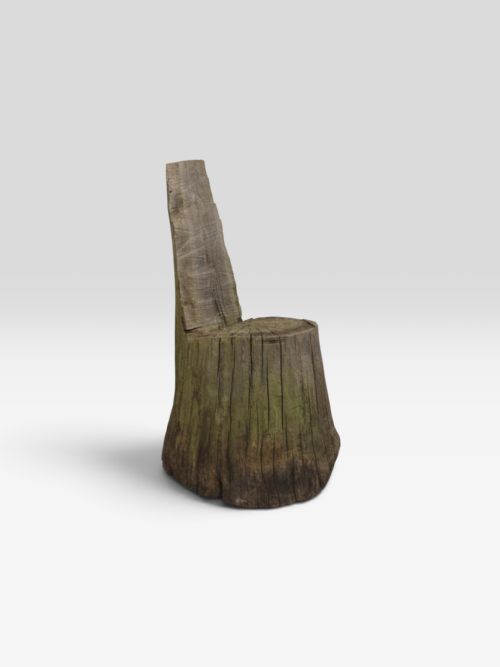
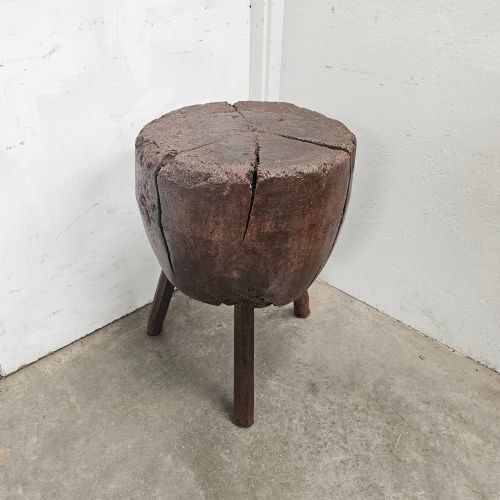


Primitive Wood Trunk
These primitive wood trunk pieces are honest country items formed directly from timber, offering buyers raw utility and genuine folk character.
Primitive Wood Trunk
When you search for a primitive wood trunk, you encounter robust domestic and utilitarian items hewn straight from timber. The selection spans seating, serving blocks, and containers derived from natural forms.
Most examples you meet on this page date from the nineteenth century or the Edwardian era, alongside occasional seventeenth-century pieces. Forms range from dug-out chairs and tree seats to heavy chopping blocks and rustic chests.
Geographic origins vary from French and Swedish workshops to Welsh country houses, reflecting rural traditions across Europe. Each object retains the direct marks of its making, prioritising function above ornament.
Materials and construction methods
The makers relied on solid timber such as oak, beech, sycamore, and general wood without complex joinery. Many items begin as a hollowed tree trunk, creating solid dug-out seats, heavy chopping blocks, and thick-walled planters.
Surface treatments remain simple, appearing as bare natural wood, aged painted finishes, or retained bark. Structural reinforcement occasionally involves heavy wire, keeping the vernacular construction intact without modern fastenings.
Primitive Wood Trunk Retail Price Guide 2026
Typical asking prices for primitive wood trunk among the pieces listed under this phrase on Sellingantiques today, from the lower quarter to the upper quarter. They describe what is for sale here now, not the wider market.
Listings feature items spanning the seventeenth century through to the Edwardian period, utilising oak, beech, sycamore, and painted timber.
Judging quality in primitive pieces
Quality rests in the proportional weight of the timber and the directness of the tool marks left by the maker. A better piece shows purposeful hollowing and honest proportion rather than clumsy alteration.
The integrity of the original surface separates superior examples from lesser items. Retained original paint or deep patination from decades of use adds considerably to the visual weight of a trunk or block.
The Primitive Wood Trunk Glossary
- Dug out
- A method of construction where a single solid tree trunk is hollowed out to form the body of a chair, seat, or vessel. This technique produces heavy, monolithic items without conventional joints.
- Vernacular
- Everyday objects made by local craftspeople for practical local use rather than high-style workshop production. These pieces follow regional traditions rather than metropolitan fashions.
- Game block
- A heavy timber block traditionally used in the preparation of game and meat in rural kitchens. They are usually cut from thick sections of hardwood like beech or oak.
- Primitive
- A descriptive term for items created with basic tools and simple techniques, lacking formal academic design. It highlights the direct connection between maker, material, and function.
- Cofer
- A traditional wooden chest used for storage, often constructed with heavy paneling or solid board sides. Early examples display regional framing methods.
Primitive Wood Trunk: Frequently Asked Questions
What is a primitive wood trunk?
It is a utilitarian item hewn directly from timber, such as a dug-out seat, chest, or heavy chopping block.
These pieces prioritise function and retain the raw character of the natural wood.
How were these items used originally?
They served practical roles in rural domestic life, from heavy kitchen preparation to seating by the hearth.
Some functioned as storage chests for household textiles or as garden planters.
How do I date a primitive trunk?
Dating relies on tool marks, timber choice, regional style, and construction methods.
Nineteenth-century pieces often show simpler pit-sawing or adze work compared to earlier seventeenth-century framed chests.
How do I live with primitive wood items?
Their heavy forms and raw timber textures suit both rustic interiors and modern minimalist spaces as focal points.
Keep them away from direct heat sources to prevent the solid wood from splitting.