




Primitive Portrait
These primitive portrait works offer the direct, unvarnished gaze of earlier lives, captured by hands that worked outside the formal academies.
Primitive Portrait
A primitive portrait captures a person, child, or animal through an unpolished lens that values character over academic proportion. These works emerge from folk art traditions spanning the nineteenth and early twentieth centuries, alongside later pieces adopting seventeenth-century styles.
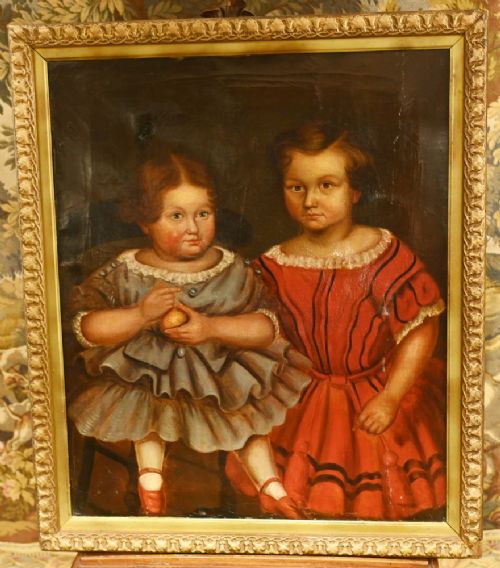
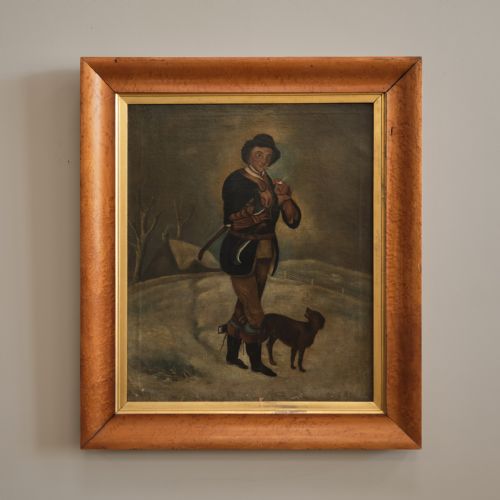
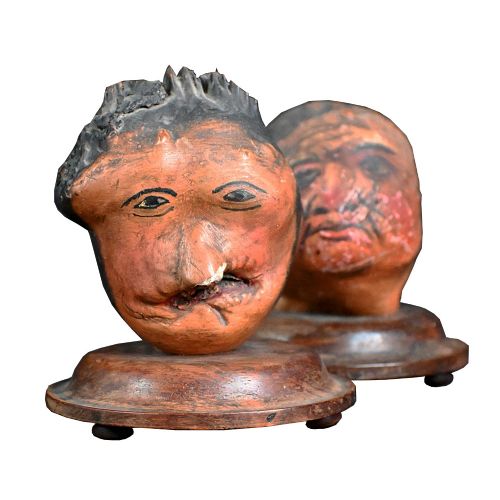
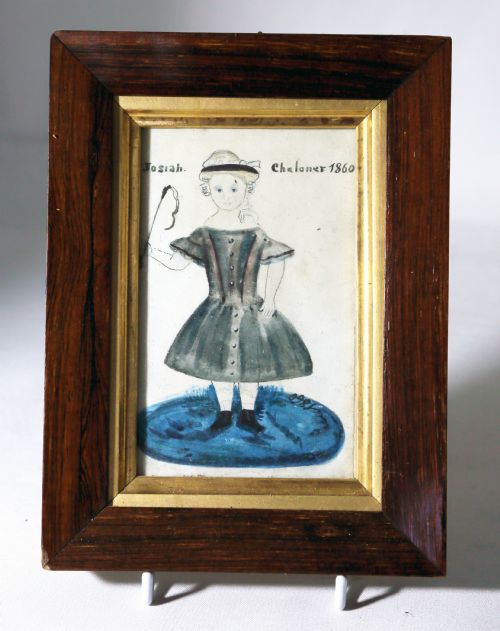
The format varies from oil paintings on canvas and wood panels to watercolours on paper. Subjects range from young children and gentlemen to dogs and carved wooden heads.
Most examples found here date from the nineteenth century, reflecting regional British and American folk traditions. The subjects are rendered with a distinct directness that draws the eye to the sitter's expression.
Materials and methods
Painters used oil paint on canvas, wood, and timber substrates, applying pigment with straightforward brushwork. Watercolours were also employed on paper, often housed within timber frames such as rosewood.
Carved wood provides a three-dimensional medium for portraiture, seen in folk art heads shaped from timber. These methods rely on basic tools and local materials rather than specialised studio supplies.
Primitive Portrait Retail Price Guide 2026
Typical asking prices for primitive portrait among the pieces listed under this phrase on Sellingantiques today, from the lower quarter to the upper quarter. They describe what is for sale here now, not the wider market.
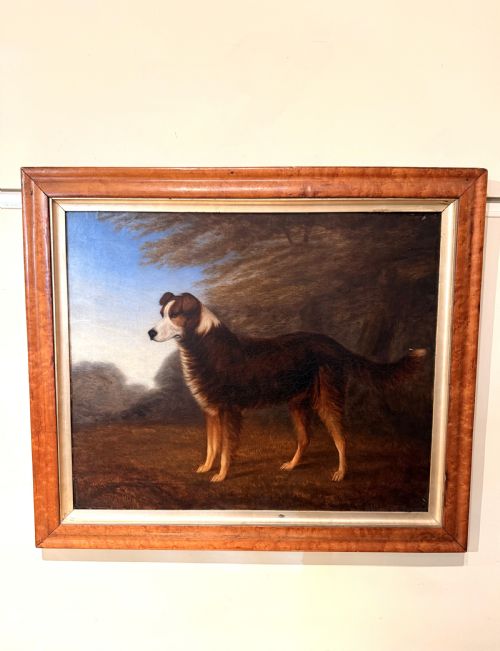
One listed portrait captures an observant dog looking out from the nineteenth century with absolute seriousness.
Distinctions in quality
The strength of a primitive portrait lies in the conviction of the brushwork or carving and the intensity of the sitter's presence. Weaker examples lean towards generic repetition, while stronger pieces capture an arresting, individual likeness despite technical limitations.
Materials and framing contribute to the overall integrity of the piece, with period frames like rosewood adding historical context to works on paper.
The Primitive Portrait Glossary
- Folk art
- Artistic work created within a traditional culture by self-taught or untrained makers. This style prioritises bold expression over academic rules of perspective and anatomy.
- Naive
- A descriptor for art characterised by a childlike simplicity of perspective and detail. It often indicates a maker working outside established academic traditions.
- Oil on canvas
- A painting medium where pigments are bound with drying oils and applied to stretched fabric. It is one of the primary surfaces for nineteenth-century portraiture.
- Watercolour
- A painting method where fine pigment is suspended in a water-based solution on paper. These works require protective framing under glass to survive intact.
Primitive Portrait: Frequently Asked Questions
What is a primitive portrait?
A primitive portrait is a painting, drawing, or carving created by a non-academic maker who prioritised expression over strict proportions. These works date mainly from the nineteenth century and capture sitters with direct honesty.
Such pieces reflect regional folk art traditions and offer a glimpse into the appearance and lives of everyday people from earlier eras.
How were these portraits used?
These portraits served as household likenesses, commemorating family members, children, or beloved animals before the widespread availability of photography. They hung in domestic spaces to record personal history.
Carved heads and framed paintings alike functioned as both personal mementoes and decorative objects within period homes.
How do I live with a primitive portrait?
These works suit various interiors, bringing warmth and character to neutral walls or traditional room schemes. Hang them away from direct sunlight to protect pigments, particularly watercolours on paper.
Pairing oil paintings and carved wood pieces with simple furnishings allows the unpretentious nature of the artwork to stand out.
How do I tell periods apart?
Dating relies on material clues such as the weave of the canvas, the type of timber used for panels or frames, and the style of dress worn by the sitter. Nineteenth-century examples often feature distinct folk clothing and pigments.
Inscriptions on the reverse or within the composition, along with framing materials like rosewood, provide further chronological context.