



Primitive Oak Seat
A primitive oak seat brings the honest hand of the country carpenter straight into a modern room.
Primitive Oak Seat
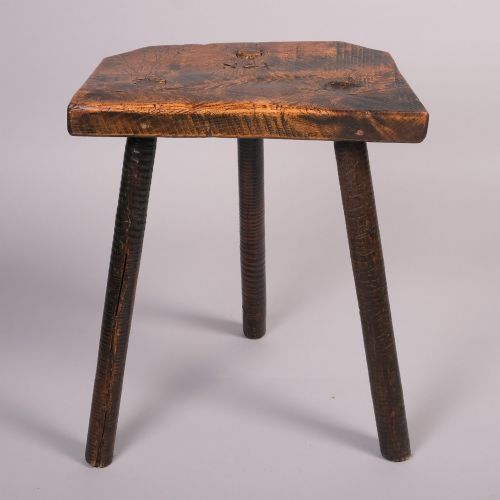
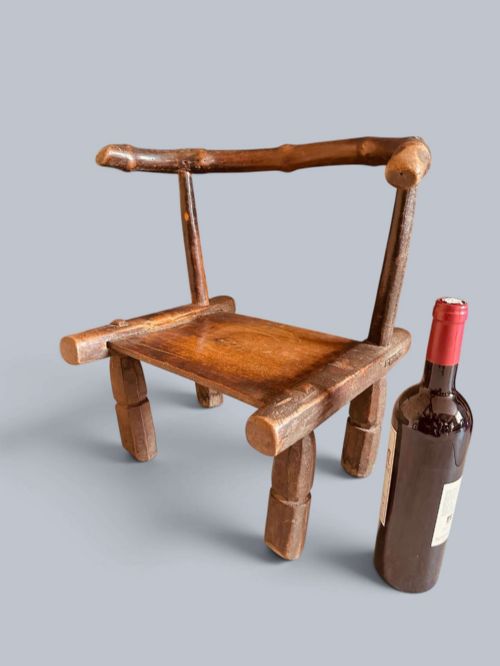
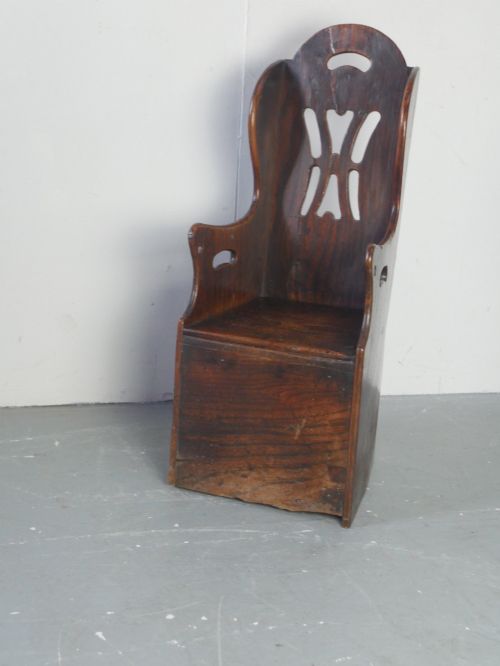
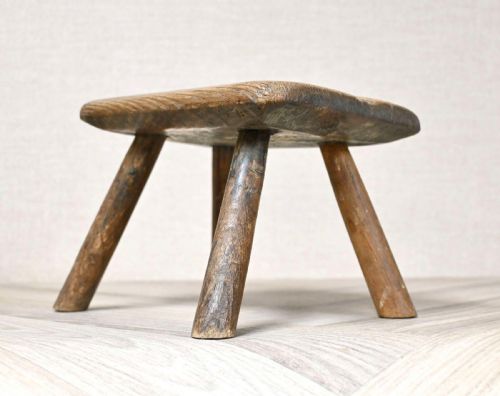
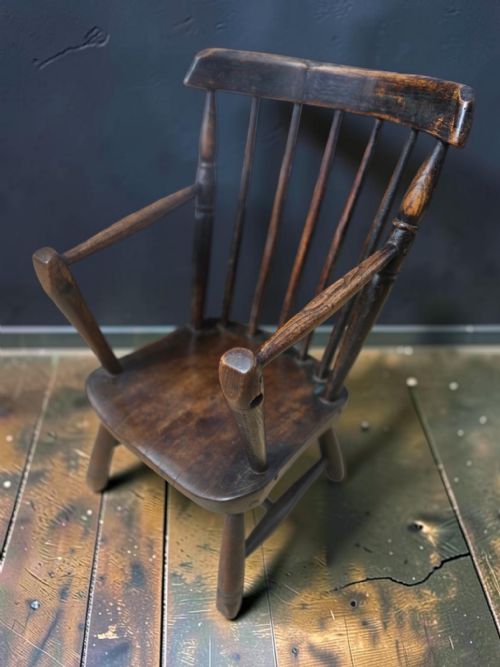
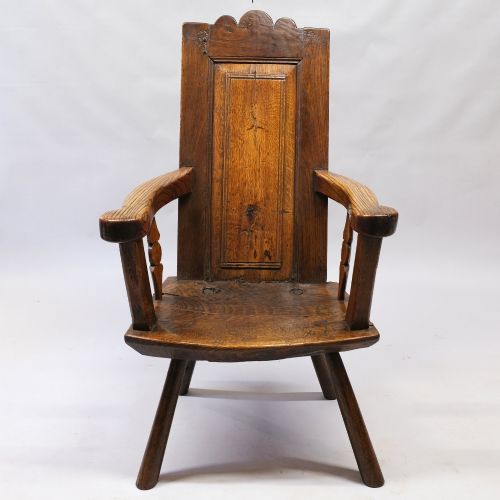
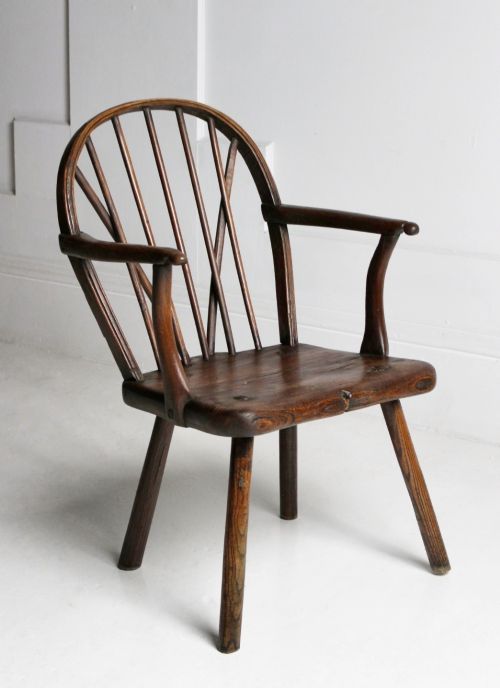
A primitive oak seat represents the unpretentious domestic furniture built across English and Welsh rural workshops during the eighteenth and nineteenth centuries. These pieces encompass sturdy armchairs, children's high chairs, hearth stools, and stick backs shaped by local makers for everyday use.
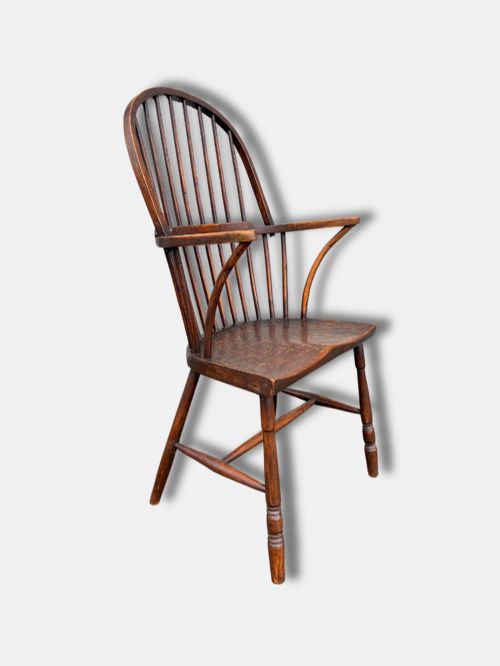
The selection on this page leans heavily into vernacular country forms, including hoop-back Windsor armchairs, panel-backed designs, and rustic children's furniture. Oak often teams with elm, ash, and yew, creating varied regional textures from the Georgian era through to the early twentieth century.
Materials and Construction
Makers utilised solid timber straight from the woodland, combining oak with resilient woods like elm for seats and ash or yew for spindles and bent parts. This mixed-wood approach ensured that each structural component performed its specific task, with tough hardwoods resisting the heavy wear of farmhouse life.
Construction relied on traditional joinery methods such as wedged tenons, drilled stick-back sockets, and carved solid timber blocks for dug-out chairs. Surfaces often show the direct tool marks of drawknives, adzes, and spoon augers, leaving an authentic record of the carpenter's hand.
Primitive Oak Seat Retail Price Guide 2026
Typical asking prices for primitive oak seat among the pieces listed under this phrase on Sellingantiques today, from the lower quarter to the upper quarter. They describe what is for sale here now, not the wider market.
Some nineteenth-century child seats preserve stubborn splashes of old paint that generations of sticky fingers failed to shift.
Judging Quality and Character
Quality rests in the harmony of proportion and the integrity of the original construction rather than decorative polish. A superior piece displays balanced lines and comfortable bodily proportions, whether it is a full-sized armchair or a miniature child's chair.
The survival of original surfaces, such as early painted finishes or deep patination built through generations of handling, elevates a piece significantly. Retaining the uncompromised integrity of the primary timber without excessive modern intervention marks the difference between ordinary utilitarian survivals and exceptional folk art.
The Primitive Oak Seat Glossary
- Stick back
- A chair design where turned spindles or plain round sticks are tenoned directly into a solid wooden seat rather than framed in a traditional backrest. This method simplifies construction while offering robust structural support.
- Comb back
- A Windsor chair variation featuring a low back topped by a crest rail that resembles the teeth of a comb, with spindles rising through it. It provides a distinct regional silhouette common in country workshops.
- Vernacular
- Architecture and furniture built by local artisans using regional materials and traditional techniques, independent of high-style metropolitan fashions. It prioritises local utility and availability above prevailing court trends.
- Dug-out
- Furniture formed by hollowing out a single massive log of solid timber to create the seat and body. This ancient technique requires immense physical labour with an adze and chisel.
- Windsor
- A chair built with a heavy solid timber seat into which the legs and back spindles are separately socketed. Regional variants developed distinct hoop, comb, or panel back arrangements.
Primitive Oak Seat: Frequently Asked Questions
What is a primitive oak seat?
A primitive oak seat is a piece of vernacular country furniture made by local carpenters using solid timber like oak, elm, and ash. These items include Windsor armchairs, children's high chairs, stools, and settles designed for practical farmhouse use.
They reflect regional woodworking traditions from the eighteenth and nineteenth centuries, often displaying simple stick-back or dug-out construction without urban stylistic pretensions.
How do I date a country chair?
Dating relies on observing construction details, tool marks, timber shrinkage, and the evolution of regional forms like panel backs or hoop-back stick chairs. Eighteenth-century pieces often show broader proportions and deeper hand-cut patination.
Later nineteenth-century examples might incorporate softer secondary timbers or machine-sawn components alongside traditional hand-rived spindles.
Are these seats comfortable to use?
Many country seats were ergonomically shaped by makers who carved solid elm or oak seats to fit the human body. Windsor chairs and comb-back designs offer surprising support through flexible spindles and sculpted seating depressions.
One should expect rustic proportions and fixed heights tailored to historical domestic spaces rather than modern adjustable upholstery.
Where were these chairs made?
These pieces originated in rural workshops across English and Welsh regions, with distinct local styles emerging from areas like the West Country and Carmarthenshire. Country carpenters sourced local timber from nearby woodlands to supply surrounding farms and villages.
Regional vernacular traditions dictated whether a maker used a hoop-back, a solid panel, or natural timber forms.