

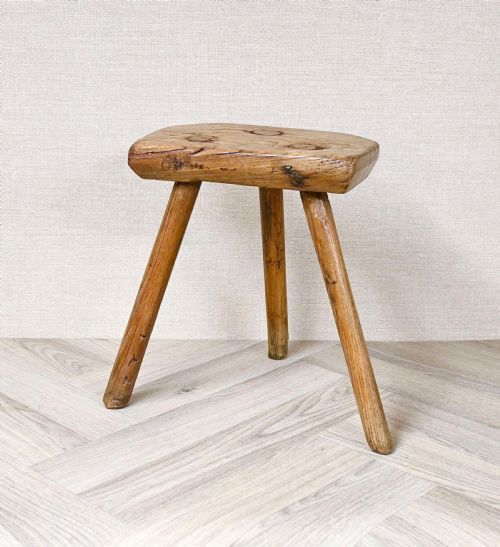


Primitive Milking Stool
These primitive milking stool pieces are utilitarian domestic seats built for purpose, offering buyers honest vernacular character and unpretentious historic craft.
Primitive Milking Stool
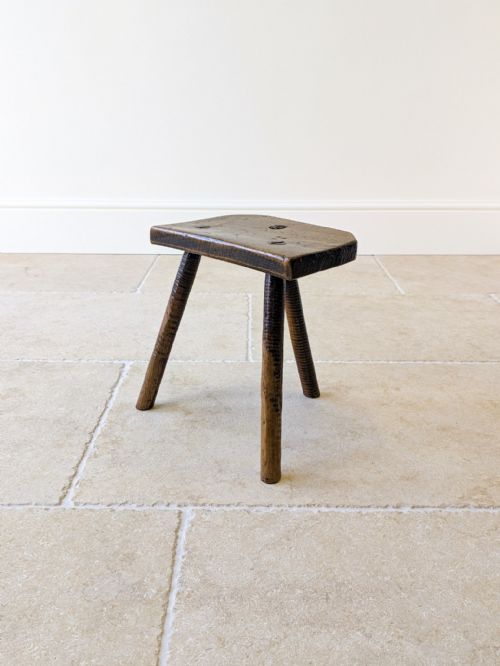
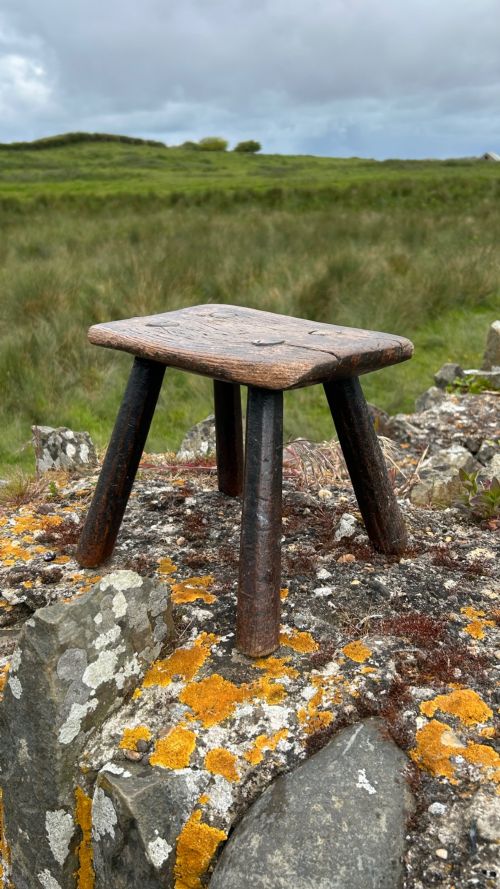
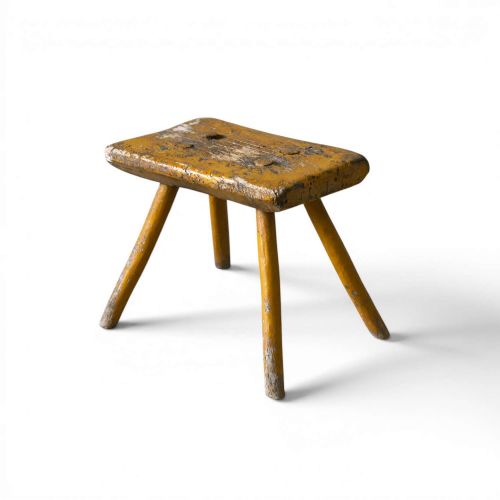
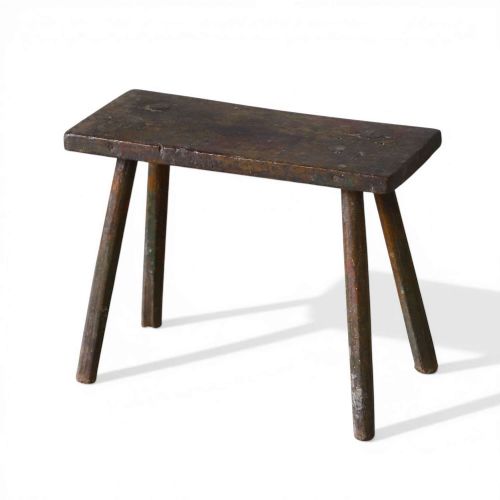
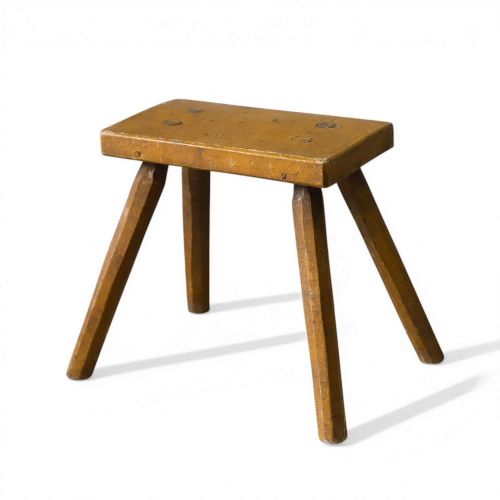
A primitive milking stool is a low, functional seat created for agricultural labour, constructed by country craftsmen using whatever timber was locally available. The examples found here span the eighteenth and nineteenth centuries, taking forms such as three-legged hedgerow designs, small French and Eastern European variants, and diminutive children's seats.
Most pieces on this page lean towards rustic vernacular and folk art styles, displaying simple lines shaped by daily utility rather than high-fashion cabinetmaking. Buyers encounter regional variations from British workshops alongside continental examples finished in original paint.
How they were made
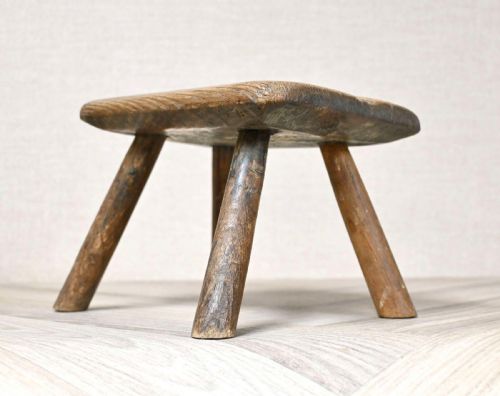
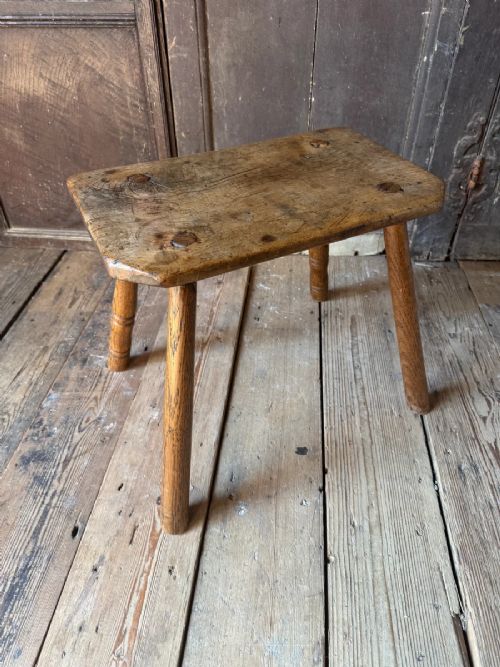
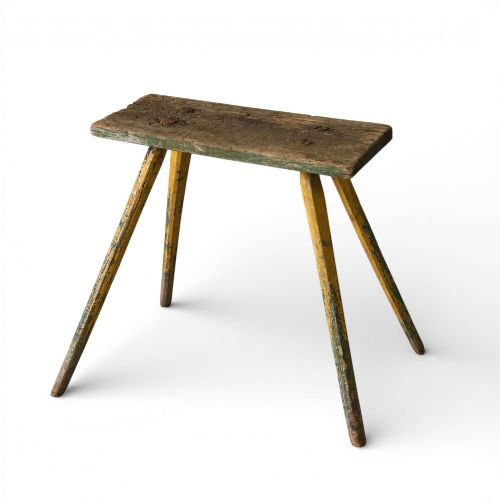
These items are shaped from solid hardwoods and softwoods including oak, ash, sycamore, pine, elm, and fruitwood, often utilising natural forms and carved wooden blocks for the seats. Legs are typically splayed and joined to the underside using simple carpentry techniques such as bodged or wedged tenons.
Many survivors retain evidence of working life, including blacksmith-made iron repairs, original ochre, yellow, or green paint, and surface wear from decades of agricultural use.
Primitive Milking Stool Retail Price Guide 2026
Typical asking prices for primitive milking stool among the pieces listed under this phrase on Sellingantiques today, from the lower quarter to the upper quarter. They describe what is for sale here now, not the wider market.
Listings span the eighteenth and nineteenth centuries, featuring timbers such as oak, ash, sycamore, pine, and fruitwood alongside painted finishes.
What varies in quality
Quality in these domestic objects rests on the integrity of the original construction, the harmony of the timber's natural grain, and the survival of untouched surfaces. A piece with strong proportions and honest structural repairs holds greater integrity than one altered or overly cleaned by later hands.
The presence of untouched historic paint or a deeply sculpted seat elevates a piece, distinguishing basic utility items from those possessing distinct sculptural presence.
The Primitive Milking Stool Glossary
- Vernacular
- Built by local tradesmen or rural makers using traditional regional methods rather than following metropolitan pattern books. This term describes objects made for domestic or agricultural work.
- Splayed legs
- Angled outwards to provide stability on uneven earthen floors or farmyards. This construction method prevents the seat from tipping during daily use.
- Hedgerow timber
- Wood harvested directly from local hedgerows or woodlands by the maker. It often includes naturally curved branches suited for structural legs.
- Bodger
- A traditional pole-lathe turner who produced chair legs and components in the woods. Their output formed the basis of many rural seating pieces.
Primitive Milking Stool: Frequently Asked Questions
Were these seats actually used for milking?
Many of these low three-legged forms were built for agricultural tasks including milking, where stability on uneven ground was essential.
Over time, these versatile items moved indoors for hearthside seating or general household tasks.
How do I spot original paint?
Original paint shows natural wear, craquelure, and fading consistent with age and exposure to light. Later overpainting tends to sit heavily in corners and lacks the worn patina of working surfaces.
Why do most have three legs?
Three legs naturally find stability on irregular ground, making them practical for outdoor farmyards and barns.
This simple geometry also prevented the stool from rocking on uneven floors.
How should I care for historic timber?
Keep these pieces away from direct heat sources and sudden humidity changes to prevent the old wood from splitting. A light application of appropriate wax helps nourish dry timber without altering the surface finish.