





Porcelain Powder Jar
A porcelain powder jar brings the charming vanity customs of the early twentieth century directly to the modern dressing table.
Porcelain Powder Jar
A porcelain powder jar serves as a decorative and functional vessel for cosmetics, frequently appearing alongside dressing table accessories from the Edwardian era and the 1930s. These pieces often take the form of powder bowls, vanity jars, and trinket boxes designed to hold loose powder or puffs.
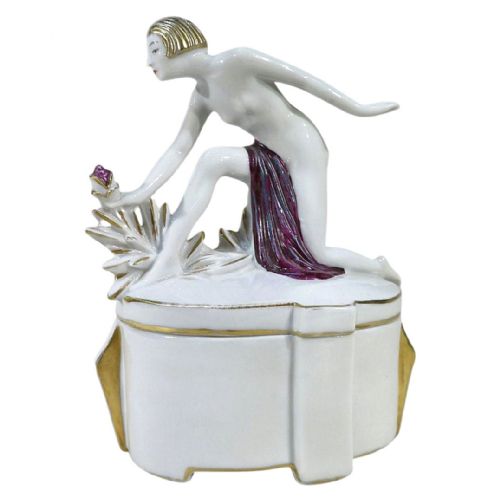
The most common examples on this page date from the Art Deco period and frequently incorporate ceramic half dolls or figural models of flapper girls, Pierrots, and jesters. Originating largely from French, German, and Austrian potteries, these vessels combine practical storage with playful figural sculpture.
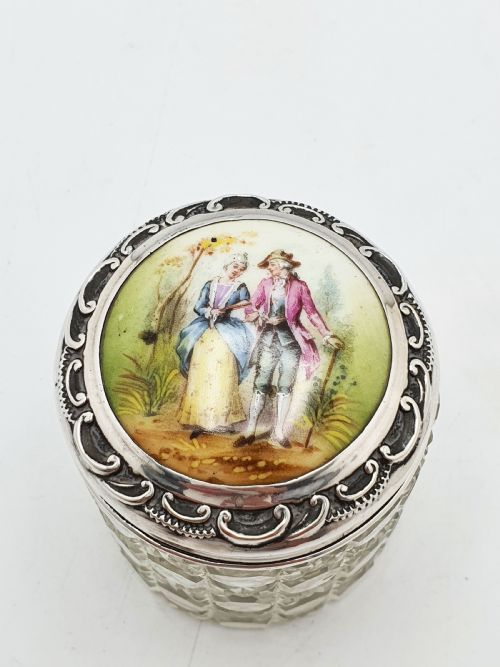
Earlier pieces from the Edwardian period skew toward sterling silver mounted cut glass with hand-painted porcelain plaques rather than standalone figural ceramics. Alongside these, nineteenth-century examples appear as powder blue vases with ormolu mounts, demonstrating the wide variety of forms associated with the search phrase.
Materials and manufacture
The construction of these jars relies heavily on moulded ceramic and porcelain bodies, frequently decorated with hand-painted enamel details, black dragon motifs, and Chinoiserie styles. Figures and lids are cast in separate sections, uniting the upper sculptural half doll with the lower bowl or jar container.
Metal and glass elements frequently supplement the porcelain, utilising sterling silver mounts, cut glass bodies, and gilt or gold leaf highlights. Ormolu mounts appear on larger nineteenth-century vessels, adding structural weight and decorative contrast to the smooth ceramic glaze.
Porcelain Powder Jar Retail Price Guide 2026
Typical asking prices for porcelain powder jar among the pieces listed under this phrase on Sellingantiques today, from the lower quarter to the upper quarter. They describe what is for sale here now, not the wider market.
Materials documented across the inventory include porcelain, glaze, ceramic, gold leaf, gilt, enamel, sterling silver, and cut glass.
Factors of quality
The integrity of the materials also dictates the standing of a piece, particularly where delicate ceramic extremities, silver mountings, or original glass bodies are involved. Clean, unblemished glazes and well-preserved enamel or gilt details elevate the overall execution of the work.
Meissen·Fasold & Stuach·Limoges
The Porcelain Powder Jar Glossary
- Half doll
- A ceramic figure modelled from the waist up, historically utilised as a decorative cover for powder jars, tea cosies, and whisk brooms. They became immensely popular during the Art Deco period for dressing table wares.
- Flapper girl
- A cultural archetype of the 1920s and 1930s characterised by short hair and modern fashions, frequently depicted in ceramic on powder box lids. These figures capture the liberated spirit of the interwar years.
- Ormolu
- Gilt bronze mounted onto decorative objects and furniture, providing a bright golden finish. It appears on nineteenth-century vessels to accent porcelain bodies.
- Chinoiserie
- European artistic styles reflecting Chinese decorative motifs, seen on porcelain pieces with black dragon designs. This aesthetic influenced ceramics and decorative objects across multiple periods.
- Sterling silver
- A silver alloy containing substantial pure silver by mass, often utilised for hallmarked mounts on Edwardian vanity jars and cut glass containers.
Porcelain Powder Jar: Frequently Asked Questions
What is a powder jar used for?
These ceramic and porcelain vessels were designed to hold loose face powder on a dressing table or vanity. They often included a dedicated powder puff for cosmetic application.
Beyond their initial function, they served as decorative trinket boxes for small personal items and jewellery.
How do I date a porcelain powder jar?
Dating relies on stylistic clues, such as the distinct geometric clothing and bobbed hairstyles of 1930s Art Deco flapper figures. Edwardian pieces often lean towards sterling silver mounts and cut glass rather than full figural ceramics.
Maker marks stamped or painted on the base also help identify specific European potteries and production eras.
Where were most vintage powder jars made?
A significant portion of figural powder jars originates from European ceramic centres in Germany, France, and Austria during the early twentieth century. Factories such as Limoges and Meissen produced notable decorative wares during these decades.
Artisan workshops across these regions exported vast quantities of novelty vanity accessories globally.
How should I display a powder jar?
These pieces suit placement on dressing tables, mantelpieces, or enclosed glass cabinets where their detailed ceramic modelling can be appreciated. Because many consist of a separate lid and bowl, stability of the surface is essential.
Keeping them away from direct sunlight protects any hand-painted enamel colours and gilt highlights from fading over time.