



Porcelain Plaque Sideboard
A porcelain plaque sideboard combines timber furniture with painted ceramic panels, offering a striking display piece for formal rooms.
Porcelain Plaque Sideboard
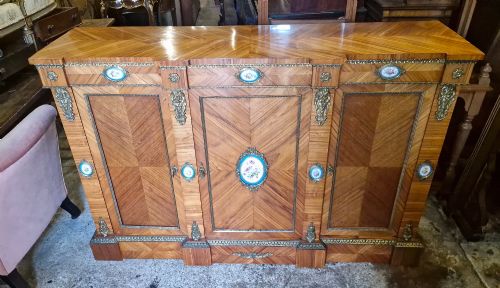
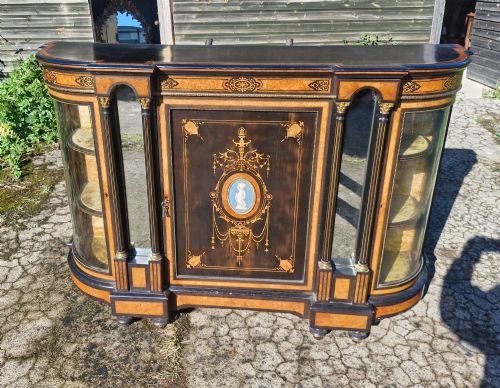
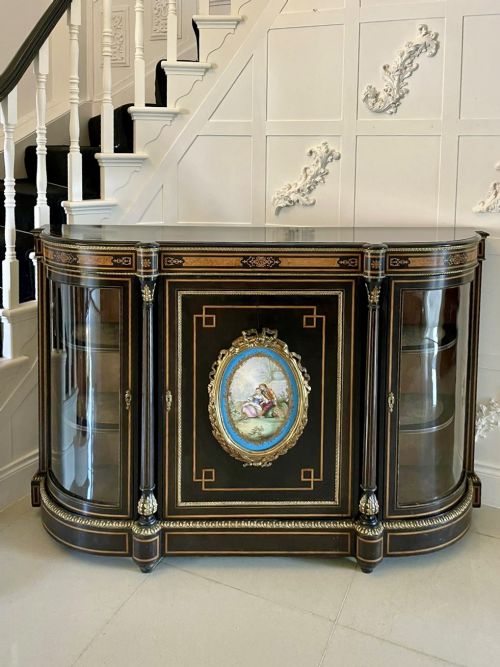
A porcelain plaque sideboard, often listed as a credenza or side cabinet, sits low against a wall and serves both display and storage purposes. These items date primarily from the Victorian era and the nineteenth century, reflecting nineteenth-century revival styles and French chateau influences.
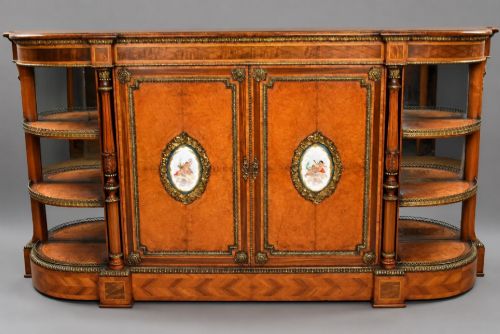
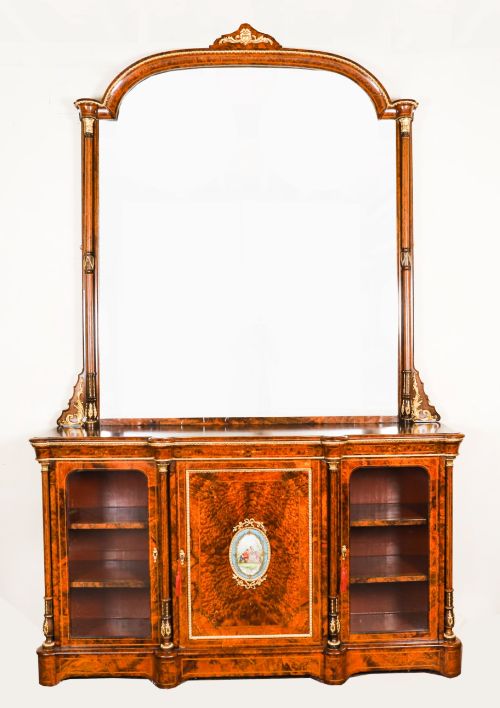
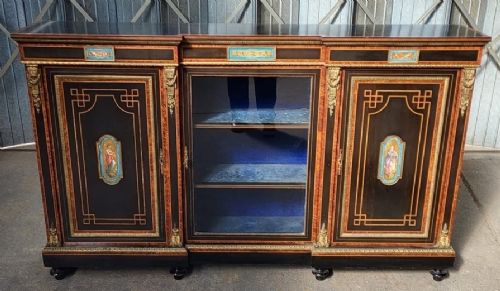
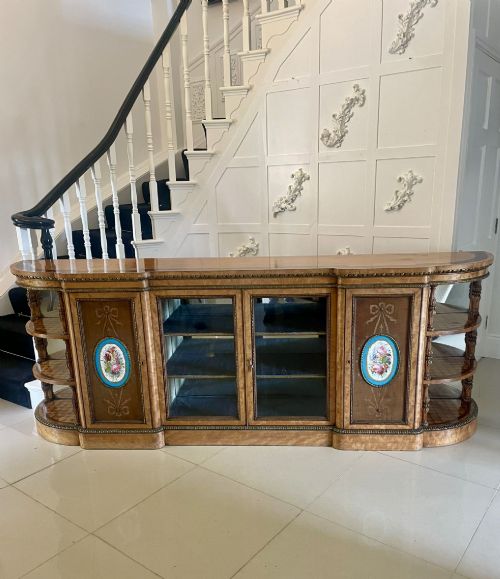
The form typically incorporates central doors flanked by curved glass display sections, featuring inset porcelain plaques within the wooden framing. Walnut, burr walnut, ebonised wood, and amboyna form the primary carcasses for these pieces.
How they were made
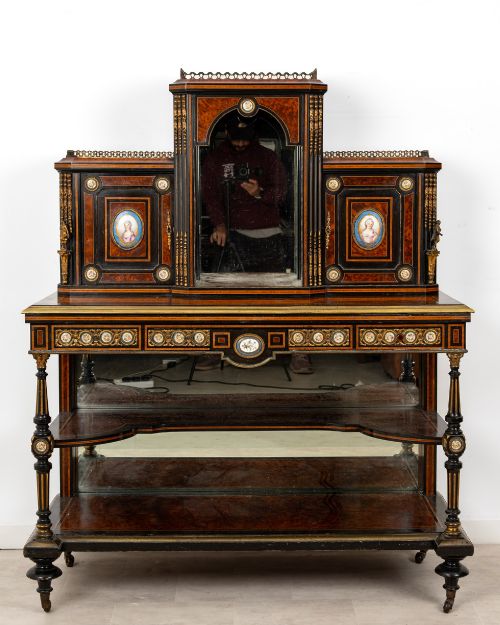
Cabinet makers utilised rich timbers like burr walnut, satinwood, and coromandel, often applying marquetry inlay alongside ebonised finishes. Ormolu mounts in cast brass provided decorative borders and architectural emphasis around the timber panels and ceramic plaques.
Painted porcelain plaques, frequently associated with Sevres, were set directly into the wooden framework or mounted within ormolu frames. Glass panels were shaped to fit curved side cabinets and mirror-back credenzas.
Porcelain Plaque Sideboard Retail Price Guide 2026
Typical asking prices for porcelain plaque sideboard among the pieces listed under this phrase on Sellingantiques today, from the lower quarter to the upper quarter. They describe what is for sale here now, not the wider market.
Listings feature nineteenth-century furniture predominantly in Victorian and Napoleon III styles, constructed from burr walnut, ebonised wood, and amboyna.
What varies in quality
The refinement of the painted porcelain plaques and the intricacy of the marquetry inlay determine the standard of the piece. Finer examples display superior timber selection with highly figured burr walnut or amboyna veneers.
The weight and detail of the ormolu mounts, together with the precision of the cabinet joinery, separate standard production from more ambitious workshop output.
Lamb of Manchester
The Porcelain Plaque Sideboard Glossary
- Ormolu
- Gilded bronze or brass mounts applied to furniture for decorative effect. It frames panels and highlights structural corners.
- Marquetry
- Inlaid wood veneers arranged in pictorial or geometric patterns. Makers used contrasting timbers to create decorative surface designs.
- Sevres
- A famous French porcelain factory whose ceramic plaques were mounted onto nineteenth-century furniture. These painted plaques serve as focal points on cabinets and credenzas.
Porcelain Plaque Sideboard: Frequently Asked Questions
What is a porcelain plaque sideboard?
A porcelain plaque sideboard is a low nineteenth-century display cabinet or credenza adorned with painted ceramic inserts. These pieces combine figured timbers with decorative metal mounts.
They were designed for formal reception rooms to display decorative objects while offering enclosed storage space.
Where were these cabinets made?
These cabinets were produced in both English and French workshops during the nineteenth century. English makers worked extensively in burr walnut and coromandel.
French makers often utilised ebonised finishes and amboyna, drawing inspiration from Louis XVI and Napoleon III revival styles.
How do I date a credenza?
Dating relies on timber choices, construction techniques, and stylistic markers associated with the Victorian period and the nineteenth century. Ormolu mounts and inlay patterns help narrow the decade of production.
French pieces from this era often align with circa dates provided by surviving construction evidence.
How do I care for burr walnut?
Burr walnut requires stable indoor humidity away from direct sunlight to prevent veneer cracking and fading. Gentle dusting with a dry cloth maintains the polished surface.
Avoid chemical polishes that can damage historic finishes and delicate marquetry work.