





Porcelain Fish Dish
A porcelain fish dish brings the natural world to the table, offering painted marine scenes and sculptural aquatic forms for display and service.
Porcelain Fish Dish
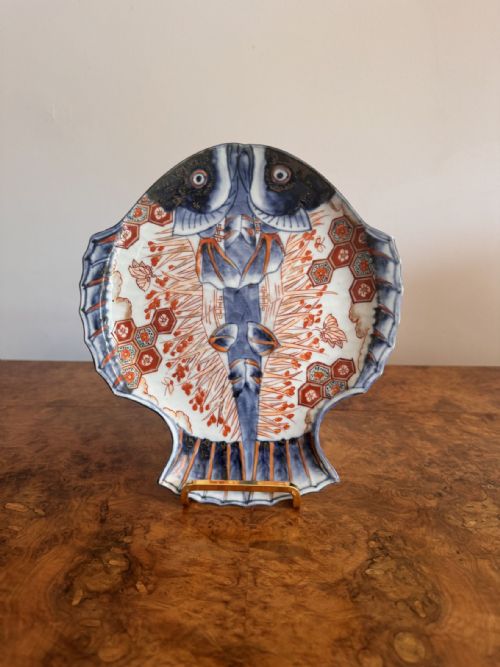
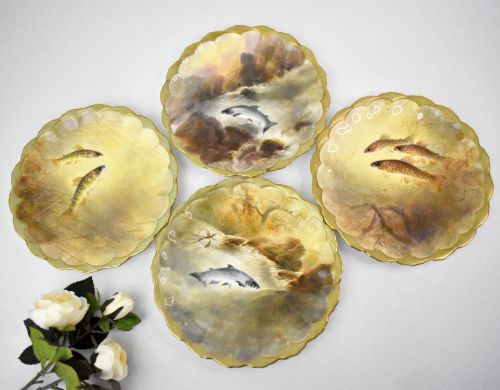
A porcelain fish dish takes several forms across the inventory, appearing as shaped cabinet plates, decorative dishes, serving dishes, and chargers. These pieces span periods from the nineteenth century through the Edwardian era, the nineteen-tens, and into Art Deco design.
The origin of these pieces reaches across European factories and Asian traditions. English manufacturers such as Royal Doulton, Royal Worcester, Royal Crown Derby, and Caughley sit alongside Japanese Meiji period Arita and Imari wares and Chinese Qing dynasty celadon pieces.
How they were made
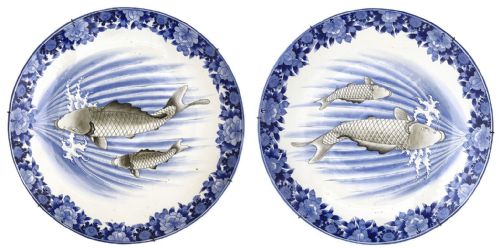
Makers shaped ceramic and bone china into naturalistic forms or flat planes before applying enamel and cobalt blue underglaze. Artisans used gold leaf accents to highlight rims and decorative motifs on specific plates.
Painting required steady brushwork, demonstrated in the hand-painted fruit and fish scenes signed by artists. Glazes such as celadon provided a smooth, translucent surface over carved or moulded twin fish designs.
Porcelain Fish Dish Retail Price Guide 2026
Typical asking prices for porcelain fish dish among the pieces listed under this phrase on Sellingantiques today, from the lower quarter to the upper quarter. They describe what is for sale here now, not the wider market.
Some nineteenth-century makers went so far as to give their porcelain fish twin tails and bulging ceramic eyes just to confuse the cat.
What varies in quality
The standard of painting determines much of the distinction between pieces, with named artist attribution elevating the work. Detail in the brushwork of the scales and fins separates standard production items from finer studio output.
The complexity of the form influences the piece, with sculptural fish shapes and moulded twin fish motifs requiring greater skill than standard flat plates. Factory marks and period provenance also distinguish the origin of the manufacture.
Royal Doulton·Royal Worcester·Royal Crown Derby·Royal Copenhagen·Caughley
The Porcelain Fish Dish Glossary
- Celadon glaze
- A pale green or grey-green glaze applied to ceramic ware, often associated with Chinese stonewares and porcelain. It frequently highlights carved relief decoration underneath.
- Imari
- A style of Japanese porcelain decorated in underglaze blue, iron red, and gold. It gained popularity for export during the Meiji period.
- Underglaze blue
- A decoration painted directly onto the raw ceramic body using cobalt oxide before the transparent glaze is applied. The piece is then fired at a high temperature.
- Pickle dish
- A small serving vessel used at the dining table for condiments or small portions. Eighteenth-century examples often took leaf or fish forms.
Porcelain Fish Dish: Frequently Asked Questions
What were porcelain fish dishes used for?
These pieces served specific courses at formal dinners, holding fish or seafood dishes, or functioned as decorative chargers and cabinet plates on display.
Over time, many shifted from active dining service to decorative wall mounting or display within cabinets due to their painted surface details.
How do I care for an antique fish dish?
Wash antique porcelain by hand in warm water using mild soap, avoiding dishwashers and harsh abrasive sponges that damage enamel and gold leaf.
Keep pieces away from direct sunlight to preserve the vibrancy of hand-painted overglaze enamels and cobalt blue decoration.
How do I tell Japanese Meiji pieces apart?
Japanese Meiji period pieces often feature cobalt blue and white designs or Imari palettes, frequently bearing studio marks or reign indicators on the base.
Comparing the potting weight and the composition of the blue pigment helps distinguish nineteenth-century Japanese export porcelain from European imitations.
Are all fish dishes shaped like fish?
Not all pieces take a sculptural animal form, as many are standard circular plates, oval serving dishes, or chargers decorated with painted fish scenes.
Examples shaped like fish or leaves utilise the natural contour of the creature to form the edge of the ceramic dish.