




Porcelain Desk Inkstand
These porcelain desk inkstand pieces combine practical writing gear with fine ceramic art, bringing useful elegance to any desktop.
Porcelain Desk Inkstand
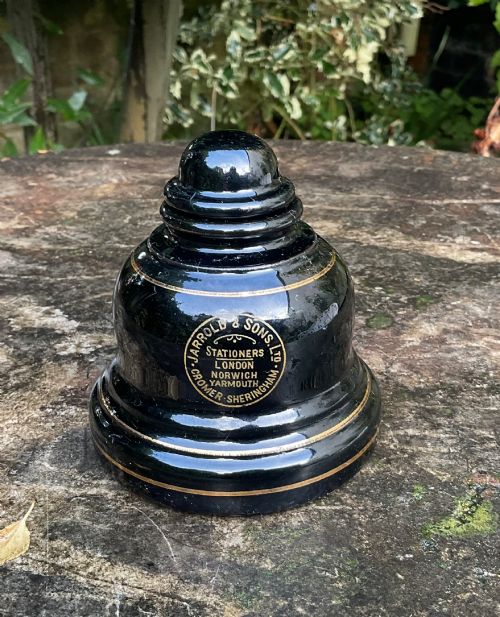
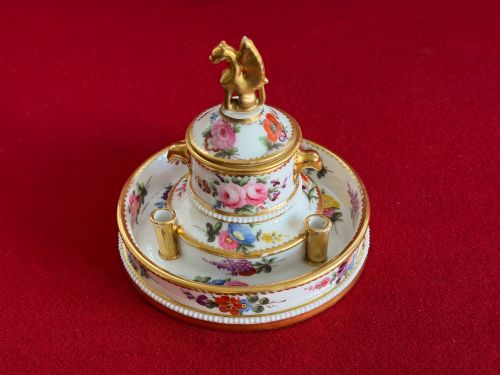
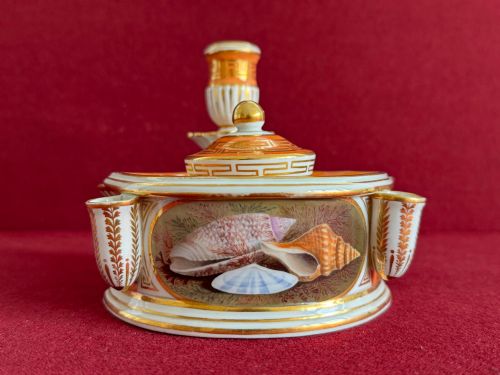
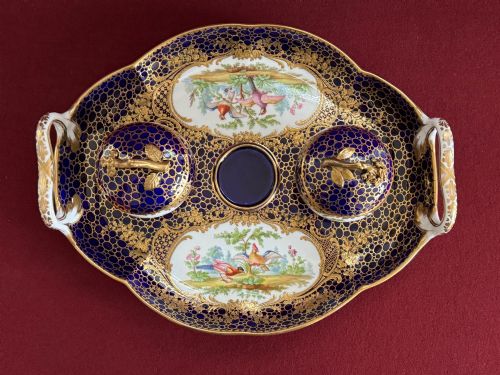
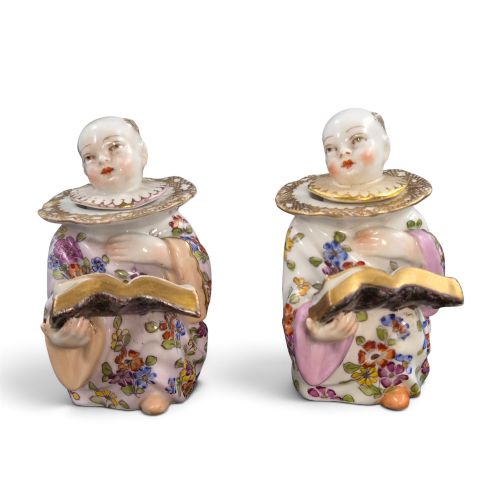
A porcelain desk inkstand serves as a fitted desktop receptacle designed to hold ink and quills, bringing together utility and decorative ceramic artistry. When exploring this selection, buyers frequently encounter pieces dating from the Georgian, Regency, and Victorian periods, alongside later continental examples.
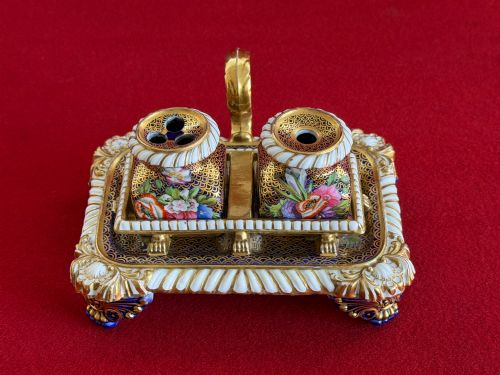
The objects take various forms, ranging from single inkwells and quill holders to grand three-piece desk sets featuring hand-painted ceramic inserts. These items often incorporate associated materials like brass stands and gold leaf accents to complement the ceramic body.
How they were made
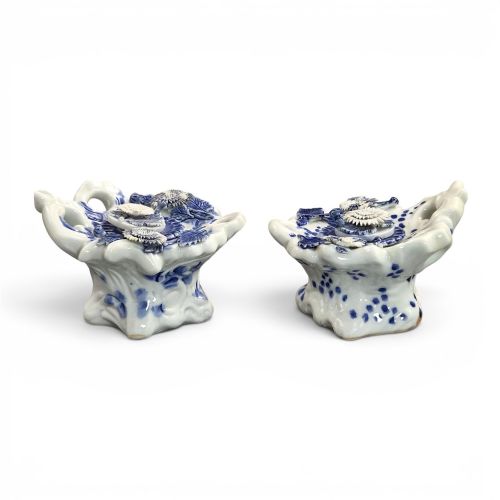
The creation of these pieces relies on ceramic materials such as porcelain, bone china, earthenware, and Dutch Delft, often enhanced by cobalt glaze and enamel work. Artisans frequently applied gold leaf highlights and mounted the ceramic reservoirs onto brass bases for added stability and contrast.
Moulding and hand-painting techniques define the surface decoration, seen in Chinoiserie motifs, Rococo Revival styling, and detailed floral patterns like the Schneeballen cover technique. Makers utilised specialised firing processes to achieve the vibrant colours and durable glazed surfaces characteristic of nineteenth-century desk accessories.
Porcelain Desk Inkstand Retail Price Guide 2026
Typical asking prices for porcelain desk inkstand among the pieces listed under this phrase on Sellingantiques today, from the lower quarter to the upper quarter. They describe what is for sale here now, not the wider market.
Staffordshire greyhounds and ceramic singing boys keep watch over stray quills.
What varies in quality
Quality in these items is determined by the crispness of the porcelain moulding and the precision of the hand-painted decoration. Finer examples display delicate brushwork, secure fitting between the ceramic components and brass mounts, and well-preserved gilding.
Pieces from established factories or notable makers often exhibit superior glaze consistency and more complex structural forms, such as figural models or compartmentalised desk sets, compared to simpler utilitarian versions.
Edmé Samson·Spode·Flight Barr And Barr·Minton·Meissen
The Porcelain Desk Inkstand Glossary
- Schneeballen
- A German ceramic technique involving applied small-scale floral or petal forms densely covering the surface. This intricate method requires significant skill from the modeller.
- Chinoiserie
- A European artistic style reflecting Chinese aesthetic influences, commonly seen in painted motifs on ceramics. It gained popularity across various nineteenth-century decorative arts.
- Bone china
- A type of soft-paste porcelain incorporating bone ash, yielding a strong, milky-white body suitable for detailed casting. This material allows for thin-walled yet durable inkstand construction.
- Cobalt glaze
- A deep blue mineral pigment applied under the glaze to ceramics, capable of withstanding high kiln temperatures. It provides rich colour depth on blue and white decorative pieces.
- Quill holder
- A specialised rest integrated into a desk set or formed as a standalone figural piece to hold writing feathers. These often take whimsical animal shapes or coordinated floral designs.
Porcelain Desk Inkstand: Frequently Asked Questions
How do I clean a vintage porcelain inkstand?
Use a soft, dry cloth to remove dust from the ceramic surface and gilt details. Avoid submerging pieces with brass mounts or old adhesives in water.
Keep ink residues cleared from wells using gentle damp cotton swabs where necessary, ensuring no moisture sits on exposed brass or delicate enamel.
What is the difference between an inkwell and an inkstand?
An inkwell is a single vessel designed primarily to hold a supply of liquid ink for writing. It often forms part of a larger desk accessory.
An inkstand is a more comprehensive desk set that typically incorporates one or more inkwells alongside pen trays, quill holders, and sanders on a shared base.
Are these antique inkstands still suitable for writing?
While these pieces were originally created for daily correspondence using dip pens and liquid ink, many collectors now display them as decorative desk ornaments.
Using them with modern inks is possible if the inner ceramic reservoir is intact, though care must be taken with historic materials and precious gilding.
How can I tell a Georgian inkstand from a Victorian one?
Georgian pieces often display restrained neoclassical or early Regency styling, with simpler porcelain bodies and understated cobalt or gold decoration.
Victorian examples tend towards ornate revival styles, such as Rococo curves, figural animal supports, and more vibrant multi-coloured enamel painting.