


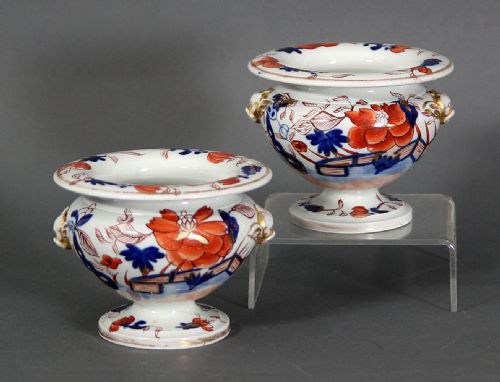


Polychrome Ironstone Urns
Polychrome ironstone urns are heavy, durable ceramic vessels adorned with vibrant enamel colours, sought after for their striking Chinoiserie decoration and substantial presence.
Polychrome Ironstone Urns
Polychrome ironstone urns encompass heavy ceramic and stoneware vases produced across the nineteenth and early twentieth centuries, including Regency, Victorian, and Edwardian examples. Buyers searching for polychrome ironstone urns generally encounter posy vases, lidded garnitures, and decorative vessels displaying elaborate ornamentation.
The objects on this page predominantly reflect Chinoiserie aesthetics, featuring motifs such as exotic birds, peonies, and patterned bands. Forms range from matched pairs of cabinet vases to single larger potpourri and Chinese-style vases.
How they were made
These vessels are formed from durable ironstone and stoneware bodies, which provide a robust foundation for elaborate decorative schemes. Potters applied vibrant enamel colours by hand, often incorporating gold leaf or gilt highlights to accentuate the intricate patterns.
A protective glaze seals the ceramic body and fixes the polychrome pigments during firing. This glazing technique preserves the brightness of the enamel colours across centuries of handling.
Polychrome Ironstone Urns Retail Price Guide 2026
Typical asking prices for polychrome ironstone urns among the pieces listed under this phrase on Sellingantiques today, from the lower quarter to the upper quarter. They describe what is for sale here now, not the wider market.
What varies in quality
Quality in these pieces depends upon the precision and complexity of the hand-painted enamel work, particularly in detailed Chinoiserie motifs like exotic birds and floral arrangements. Crisp definition in the underlying ceramic moulding also distinguishes finer production from simpler utility wares.
The presence and preservation of gold leaf or gilt highlights significantly influence the overall visual impact of each piece. Intact, carefully applied gilding elevates the status of a vessel within its period.
Mason's Ironstone·Miles Mason
The Polychrome Ironstone Urns Glossary
- Ironstone
- A heavy, durable type of ceramic or stoneware developed in the nineteenth century to imitate Chinese porcelain. It offers high resistance to chipping and damage.
- Garniture
- A set of matching vases or decorative vessels designed to be displayed together on a mantelpiece or sideboard. These sets often comprise three or five matching pieces.
- Polychrome
- Decoration employing multiple distinct enamel colours rather than a single monochrome palette. This multi-coloured approach defines the vibrant appearance of these urns.
Polychrome Ironstone Urns: Frequently Asked Questions
What periods do these urns come from?
The pieces span the nineteenth and early twentieth centuries, covering the Regency, Victorian, and Edwardian eras. Each period brings distinct nuances to the Chinoiserie decoration and vessel form.
Regency and early nineteenth-century examples often display deep historical ties to the original patent designs, whilst Edwardian pieces continue the tradition with later stylistic interpretations.
How were these decorative urns used?
Owners originally placed these vessels on mantelpieces, sideboards, and occasional tables as purely decorative centrepieces or garnitures. Smaller versions, such as posy vases and salts, served functional roles for flowers or dining.
Their robust ironstone construction meant they could withstand everyday placement in principal rooms while maintaining their vibrant appearance.
How do I care for ironstone urns?
Dust these vessels gently with a soft, dry cloth to prevent accumulation in the moulded crevices and around the hand-painted enamel details. Avoid using liquid cleaners or abrasives, which can damage the delicate gilt highlights and enamel.
Keep them positioned away from direct sunlight and damp environments to protect the historic ceramic body and surface glaze.
How do I identify Chinoiserie decoration?
Chinoiserie motifs on these pieces typically feature stylised oriental landscapes, exotic birds, and vibrant floral patterns such as peonies. These elements are rendered in bright enamel colours, frequently outlined or accented with gold leaf.
Comparing the painted birds and foliage against known nineteenth-century patterns helps confirm the specific stylistic lineage of the vessel.