






Polished Brass Hardware
Polished brass hardware brings tactile historical detail to doors and entryways through period knockers, knobs, and pulls.
Polished Brass Hardware
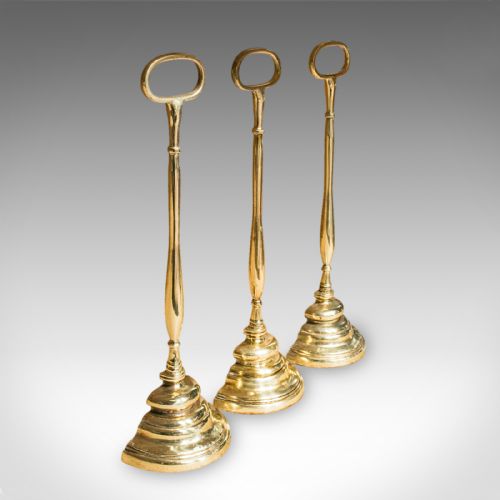
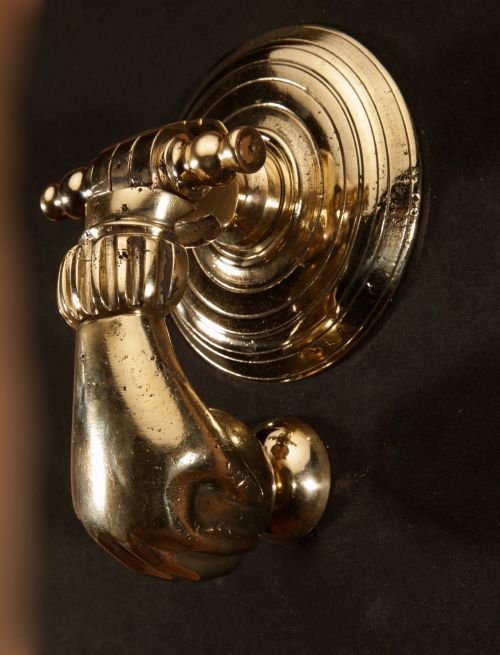
Polished brass hardware encompasses functional architectural fittings spanning Georgian, Regency, Victorian, and Edwardian periods. Pieces range from simple utilitarian door knobs to decorative knockers shaped as hands, imps, and dolphins.
Door furniture such as bell pulls, letter boxes, and centre door knobs dominate the selection. Victorian beehive knobs and Georgian oval designs appear alongside industrial maritime pieces like engine order telegraphs.
Origins include English workshops and continental makers utilising durable metal alloys. Items serve both residential entryways and interior passage doors with period-appropriate mechanisms.
Materials and construction
Foundry work relies primarily on brass, solid brass, and bronze cast in moulds to achieve intricate relief details. Secondary components incorporate iron, steel, oak, and glass for backing plates, spindles, and grips.
Surface finishing involves mechanical polishing to accentuate the warm metallic lustre of the copper and zinc alloy. Heavy-gauge casting ensures structural rigidity for items subjected to daily physical interaction.
Listings feature items cast in solid brass, bronze, and polished bronze alongside structural elements of iron, steel, oak, and glass.
Craftsmanship and preservation
Original patina and the integrity of mechanical actions dictate overall desirability. Retaining matching backplates, original keys, or period fixing screws elevates the historical integrity of the assembly.
Bloctube Controls
The Polished Brass Hardware Glossary
- Centre door knob
- A stationary handle mounted in the middle of a front door, used for pulling the door closed rather than operating a latch.
- Beehive knob
- A turned door knob featuring concentric stepped rings resembling a traditional skep hive, popular during the Victorian era.
- Bell pull
- A mechanical lever mechanism connected to an internal bell wire, positioned beside an entrance prior to the adoption of electrical buzzers.
- Engine order telegraph
- A nautical communication device used by a ship's pilot to transmit orders from the bridge to the engine room.
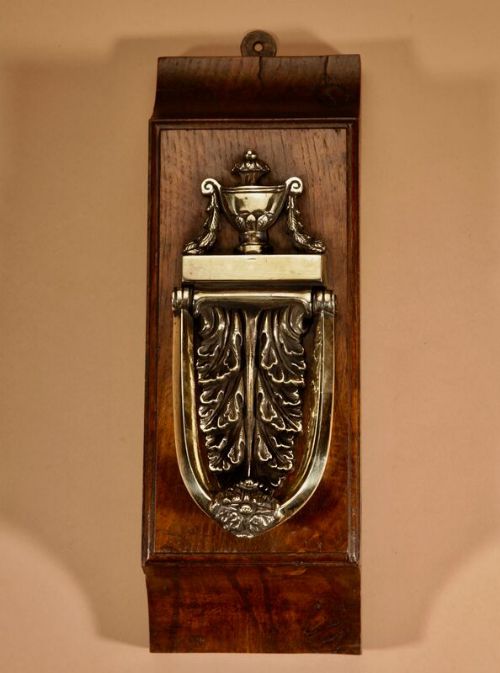
- Doctors knocker
- A heavy brass knocker historically associated with medical practitioners, featuring a distinct vertical striking bar and pivot mount.
Polished Brass Hardware: Frequently Asked Questions
How do I date a brass door knob?
Dating relies on stylistic markers such as the stepped profile of Victorian beehive designs or the geometric austerity of Georgian oval forms. Construction methods, including the type of spindle attachment and screw threads, also indicate the era of manufacture.
Matching the object type to prevailing architectural trends of periods like Regency or Edwardian provides a reliable timeframe. Secondary materials like iron cores or wooden mounts help confirm the production period.
Were these items meant for exterior use?
Many pieces, including door knockers, letter boxes, and bell pulls, were manufactured specifically for exterior front entryways to withstand weathering. Solid brass and bronze naturally resist corrosion while developing a gradual surface patina over decades of exposure.
Interior hardware such as passage door knobs and mortice locks utilised the same durable alloys for high-traffic rooms. Weather-resistant mountings ensured long-term function on external timber doors.
How should I clean polished brass hardware?
Maintenance requires gentle dusting and occasional cleaning with non-abrasive metal polishes to preserve the bright reflective finish without wearing away raised cast details. Harsh chemical agents strip historical layers and damage the underlying metal structure.
Leaving the metal unpolished allows a natural dark oxidation to form over time, which many collectors prefer for older pieces. Regular soft cloth wiping prevents dust accumulation in recessed relief areas.
Can antique hardware be fitted to modern doors?
Most period knobs and latches adapt to modern doors with minor adjustments to spindle lengths and backset measurements. Older mechanisms may require professional mortising to accommodate differing nineteenth-century box lock dimensions.
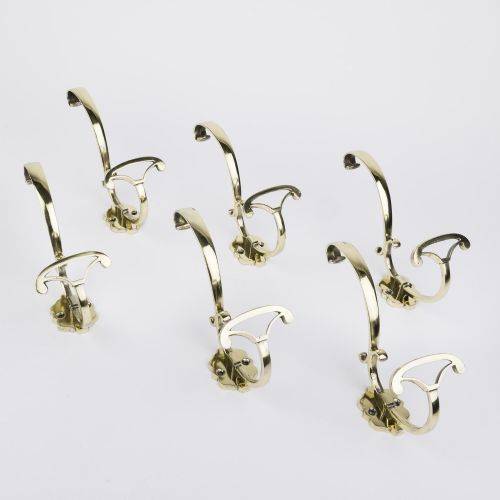
Surface-mounted items like door knockers and coat hooks attach directly using matching screw fixings without altering internal door architecture. Checking spindle thickness ensures smooth rotation in contemporary latch assemblies.