



Pocket Tobacco Holder
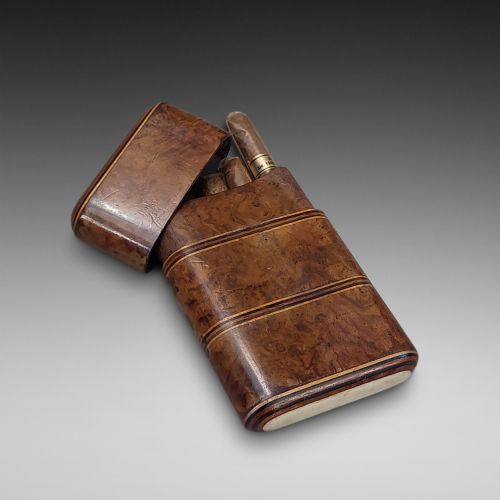
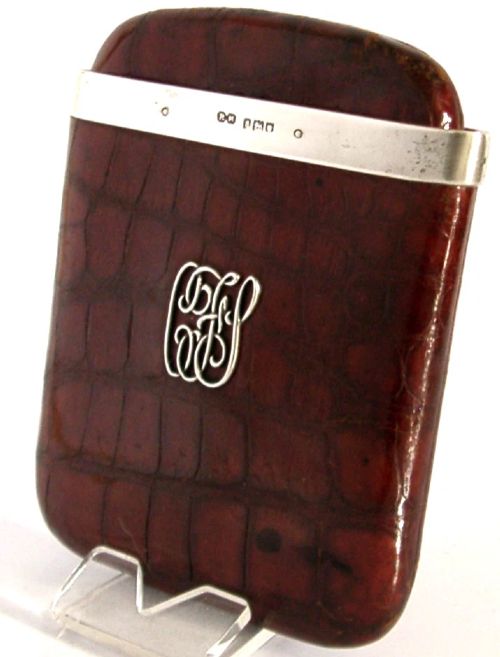
These pocket tobacco holder examples span Georgian, Victorian, and Edwardian periods, offering gentlemen functional cases crafted in silver, gold, and crocodile leather.
Pocket Tobacco Holder
A pocket tobacco holder encompasses silver cigarette cases, cigar cases, cheroot holders, and combination snuff boxes designed for personal use. These items appear across Georgian, Victorian, Edwardian, and later twentieth-century eras, reflecting changing smoking habits and portable luxuries.
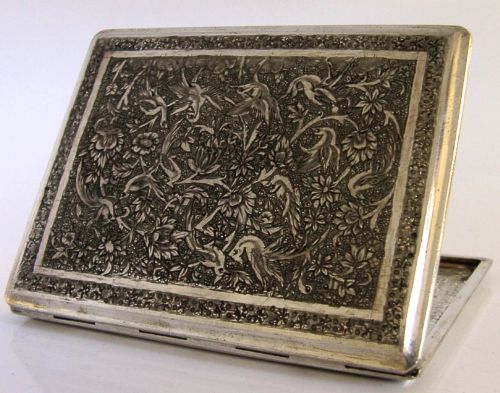
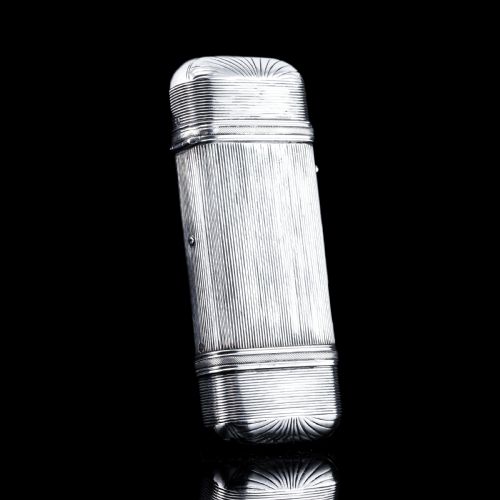
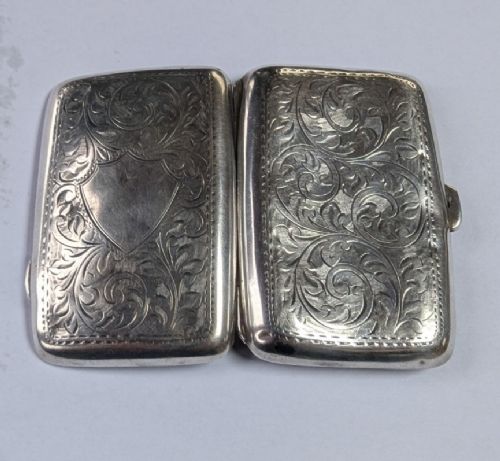
The versions most frequently encountered on this page are solid sterling silver cigar and cigarette cases, often curved to fit a pocket. They emerge from English, Dutch, Russian, Ottoman, and Soviet origins, displaying diverse regional craftsmanship.
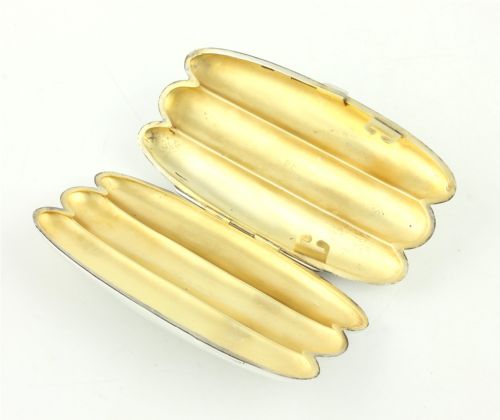
Makers utilised specialised forms like the Zimmerman cigar tube pocket humidor, the Sampson Mordan six-finger cigarette case, and double compartment snuff boxes with vestas. These practical containers served daily smoking rituals among past generations.
Materials and construction methods
Metals dominate the construction, with solid sterling silver, silver gilt, and gold gilt providing durable structures for daily carriage. Artisans also incorporated organic materials such as crocodile leather and amber alongside precious metals.
Techniques recorded in the listings include engine-turned surface patterns, reeded designs, and curved shaping designed to contour against the body. Internal gilding appears in various cases to protect the silver from tobacco oils.
Pocket Tobacco Holder Retail Price Guide 2026
Typical asking prices for pocket tobacco holder among the pieces listed under this phrase on Sellingantiques today, from the lower quarter to the upper quarter. They describe what is for sale here now, not the wider market.
Listings feature sterling silver, gold, crocodile leather, and amber across Victorian, Edwardian, and Georgian periods.
Distinctions in craftsmanship and origin
Quality varies according to the precision of the metalwork, such as crisp engine-turning and the smoothness of hinged closures. Cases featuring fully struck hallmarks and identified makers demonstrate higher workshop pedigree than unmarked items.
The choice of secondary materials, including genuine crocodile skin or integrated amber components, elevates the prestige of a piece. Structural integrity under heavy daily use further separates utilitarian containers from luxury presentation objects.
Zimmerman·The Sampson Mordan·Edward Edwards
The Pocket Tobacco Holder Glossary
- Sterling silver
- A silver alloy containing 92.5 percent pure silver by mass and 7.5 percent other metals, usually copper, ensuring structural durability for pocket items.
- Vesta
- A small pocket box designed for holding safety matches, frequently combined with snuff or tobacco compartments in Victorian accessories.
- Silver gilt
- Silver that has been coated with a thin layer of gold on its interior or exterior surfaces, protecting the base metal from tarnishing by tobacco.
- Cheroot
- A cylindrical cigar with both ends cut square, requiring dedicated slim cases or holders to prevent crushing in the pocket.
- Engine turned
- A decorative geometric pattern mechanically engraved into metal surfaces using a lathe, popular on Georgian and Victorian silver.
Pocket Tobacco Holder: Frequently Asked Questions
What is a pocket tobacco holder used for?
These items served to safely transport cigars, cigarettes, or loose tobacco in a pocket without crushing the contents.
Gentlemen carried them daily as personal accessories alongside watches and match safes.
How do I date a silver cigarette case?
Silver pieces usually carry hallmarks that indicate the assay office, standard of metal, and a specific date letter.
Stylistic cues like engine turning or curved profiles also help place an object within the Victorian or Edwardian eras.
Are these cases meant for cigarettes or cigars?
The listings include containers specifically proportioned for standard cigarettes, wider cigars, or slender cheroots.
Some larger tubes functioned as portable humidors for multiple cigars.
What materials were used besides silver?
While sterling silver dominates the selection, makers also utilised gold, gold gilt, crocodile leather, and amber.
Combination pieces might integrate brass or steel components for functional moving parts like hinges and clasps.