




Pocket Flask Cup
These pocket flask cup examples combine metal, glass, and leather for portable refreshment during travel and outdoor pursuits.
Pocket Flask Cup
When searching for a pocket flask cup, collectors encounter containers designed for carrying spirits during field sports and travel. The objects combine a primary liquid container with a detachable or collapsible drinking vessel at the base.
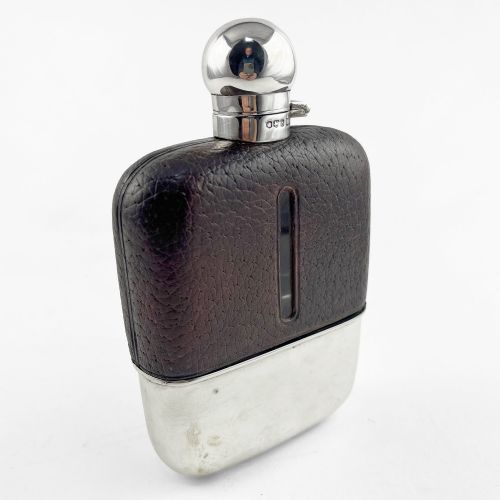
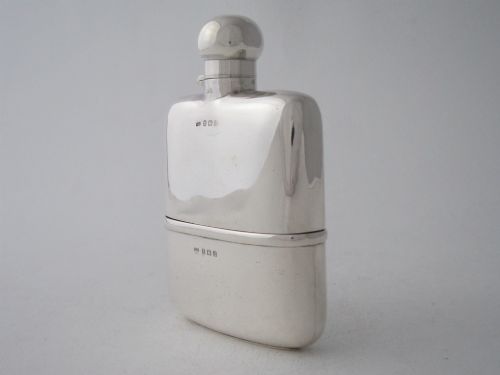
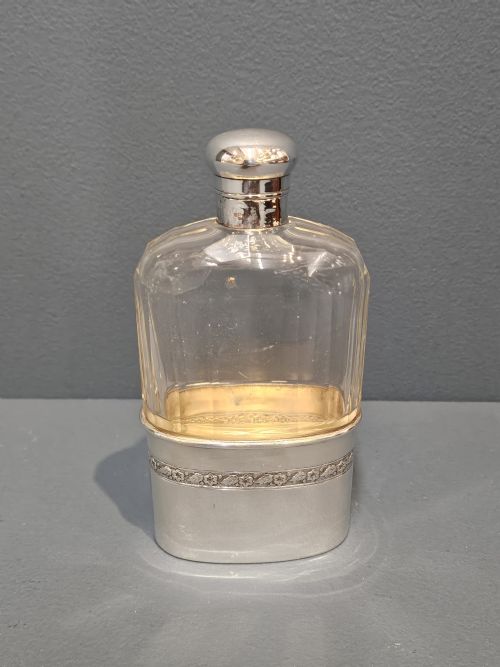
Victorian and Edwardian examples dominate the selection, alongside Art Deco and George V pieces. These items appear in various forms, including all-metal bodies, glass bodies with silver mounts, and versions wrapped in crocodile leather or skin.
Makers such as Asprey London, Hukin & Heath, James Dixon & Sons, and W A Ellwick Ltd produced these items across English assay offices including London, Birmingham, Chester, and Glasgow.
Materials and construction methods
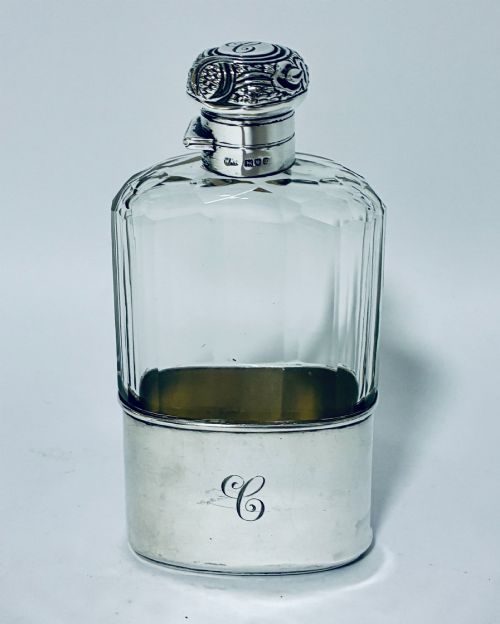
Silversmiths utilised sterling silver and silver plate for the main bodies, mounts, and cups. Cut glass and crystal formed transparent bodies that revealed the spirit level within, while internal gilding protected silver from acidic contents.
Workers wrapped bodies in crocodile leather and crocodile skin, sometimes incorporating hinged lids and screw caps. Hammered finishes and smooth polished surfaces display the hand-working techniques of late nineteenth and early twentieth-century workshops.
Pocket Flask Cup Retail Price Guide 2026
Typical asking prices for pocket flask cup among the pieces listed under this phrase on Sellingantiques today, from the lower quarter to the upper quarter. They describe what is for sale here now, not the wider market.
Materials recorded across the inventory include sterling silver, silver plate, cut glass, and crocodile leather.
Distinctions in craftsmanship and finish
The distinction between standard items and superior pieces rests in the weight of the silver, the precision of the hammered finish, and the integration of the removable cup. Heavier gauge metal and fully articulated hinges elevate a piece above simpler plated versions.
Makers who added gold wash interiors, complex cut glass patterns, and genuine crocodile skin rather than embossed leather set a higher standard. Hallmarks marking specific makers and assay towns provide documentary depth that influences desirability.
Asprey London·Hukin & Heath·James Dixon & Sons·W A Ellwick Ltd
The Pocket Flask Cup Glossary
- Sterling silver
- A silver alloy containing 92.5 percent pure silver by mass, widely utilised for durable flask mounts and cups. It bears official hallmarks denoting the assay office and year.
- Silver plate
- A base metal layer coated with a thin layer of silver, offering the appearance of solid silver at a different cost. Many Edwardian and Art Deco examples utilise this technique.
- Removable cup
- A detachable drinking vessel fitting securely over the base of the flask. It allows the owner to pour a measure without carrying a separate glass.
- Gilt
- A thin layer of gold applied to the interior surface of the silver cup or flask. This coating prevents the spirit from reacting directly with the silver.
- Cut glass
- Glass shaped by abrasive wheel grinding to produce geometric patterns. It provides weight and visual texture to spirit containers.
Pocket Flask Cup: Frequently Asked Questions
What is a pocket flask cup?
A pocket flask cup is a portable spirit container featuring an integrated drinking vessel at the base. These items were designed for travellers and sportsmen during the Victorian and Edwardian eras.
The lower section slides off or detaches to serve as a small cup for the contents. This dual function allowed people to carry and consume spirits while away from home.
How do I date a silver flask?
Dating relies primarily on the official hallmarks stamped into the metal by assay offices. These marks indicate the town, the silver standard, and a specific date letter.
Additional clues include the overall style, such as Victorian ornamentation or geometric Art Deco lines. Maker marks also help narrow down the production decade.
Why do some flasks have leather?
Leather wrapping provided a secure grip for cold or wet hands during hunting and outdoor activities. Crocodile skin and leather also added texture and visual contrast to the metal mounts.
Manufacturers used stitched cases to protect the glass or metal body from dents and scratches during travel. This material choice reflects the practical demands of field sports.
What is internal gilding?
Internal gilding is a thin coating of gold applied to the inside of silver cups and flasks. It creates a barrier between the alcohol and the silver metal.
This technique prevented the spirit from tarnishing the silver or acquiring a metallic taste over time. It is commonly found on higher quality pieces from the period.