
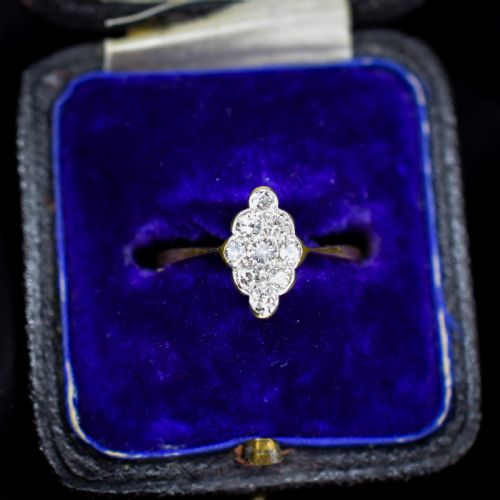


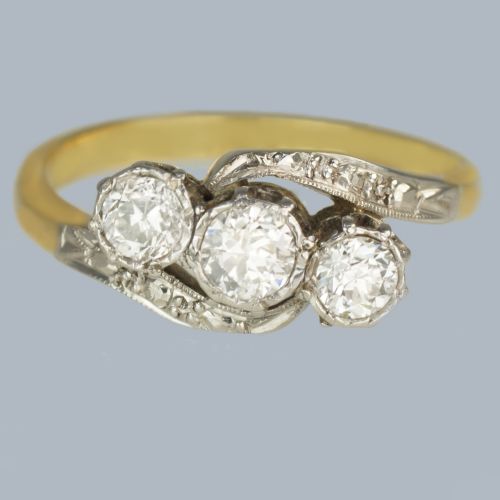


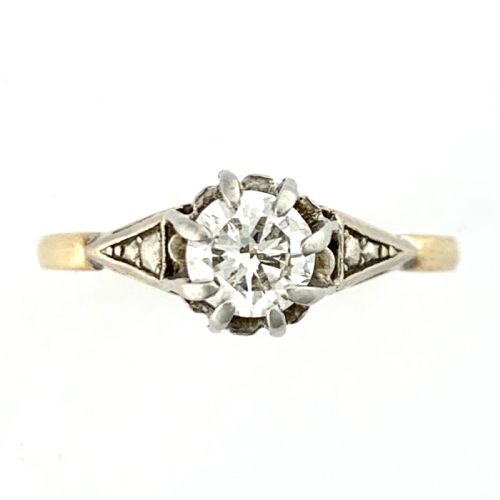


Platinum Topped Gold Ring
A platinum topped gold ring pairs a bright white metal face with a warm yellow band to catch the light.
Platinum Topped Gold Ring
A platinum topped gold ring combines a durable white metal upper setting with an 18ct yellow gold shank. The listings on this page span the Edwardian, Art Deco, and Retro periods, alongside 19th Century and mid-century examples.
Most pieces take the form of cluster rings, navette shapes, rectangle panels, and daisy designs set with old cut diamonds or yellow sapphires. Buyers searching for a platinum topped gold ring encounter engagement rings and dress rings spanning decades of craftsmanship.
Edwardian and Art Deco examples dominate the selection, showing distinct geometric and floral motifs. Each ring reflects the transition in metalwork when platinum emerged as the preferred setting for diamonds while yellow gold remained underneath.
How they were made
The construction relies on fusing thin sheets of platinum to a heavier base of 18ct yellow gold. Jewellers used this method to secure diamonds in a bright white metal without the weight or cost of a solid platinum band.
Stones are typically old cut diamonds or yellow sapphires held within detailed cluster or daisy arrangements. The metalwork often incorporates fine millegrain edges and openwork galleries characteristic of the periods.
Platinum Topped Gold Ring Retail Price Guide 2026
Typical asking prices for platinum topped gold ring among the pieces listed under this phrase on Sellingantiques today, from the lower quarter to the upper quarter. They describe what is for sale here now, not the wider market.
The listings on this site span Edwardian, Art Deco, and Retro styles, featuring 18ct yellow gold and platinum.
What varies in quality
The distinction between pieces rests on the crispness of the platinum top and the weight of the underlying gold shank. Finer examples maintain sharp geometric or floral details without wear to the precious metals.
Stone selection dictates the upper range, particularly where old cut diamonds or yellow sapphires possess greater carat weight and clear faceting. The precision of the setting work around each diamond separates standard production from finer workshop output.
The Platinum Topped Gold Ring Glossary
- Platinum topped
- A construction method where a thin layer of platinum is applied over an 18ct yellow gold base. This technique allowed jewellers to present a bright white surface for diamonds while retaining a yellow gold band.
- Old cut
- A vintage diamond cutting style characterised by a small table, high crown, and large culet. These stones display a softer, chunkier sparkle under candlelight compared to modern brilliant cuts.
- Cluster ring
- A ring design featuring a central stone surrounded by a border of smaller gemstones. This layout maximises visual impact and was favoured for engagement rings across the Edwardian and Art Deco eras.
- Navette
- A boat-shaped or marquise setting that elongates along the finger. The shape accommodates multiple diamonds in a slender silhouette.
- Millegrain
- A decorative border of tiny raised metal beads along the edge of a setting. This technique frames the stones and softens the transition between metal and gem.
Platinum Topped Gold Ring: Frequently Asked Questions
How do I date these rings?
Dating relies on stylistic clues such as Edwardian floral motifs, Art Deco geometric cluster panels, and Retro forms. The combination of platinum settings on yellow gold points primarily to the early decades of the twentieth century.
Examining the diamond cuts, such as old cut stones, provides further indication of the period in which the piece was made.
Are these suitable for daily wear?
These rings serve as engagement rings and fine dress rings designed for regular use. The strength of platinum and 18ct gold provides a durable foundation for everyday activities.
Routine checks by a jeweller help ensure the old cut diamonds remain secure within their original claw or bezel settings.
What styles are common in this selection?
Cluster rings, daisy designs, and rectangular panels appear frequently across the available inventory. Makers utilised these shapes to arrange multiple diamonds or yellow sapphires in striking geometric patterns.
Trilogy twist rings and solitaire settings also represent the predominant styles from the Edwardian and Art Deco periods.