


Platinum Set Ring
A platinum set ring brings together durable white metal and brilliant stones, offering the secure setting that collectors seek in antique and vintage jewellery.
Platinum Set Ring
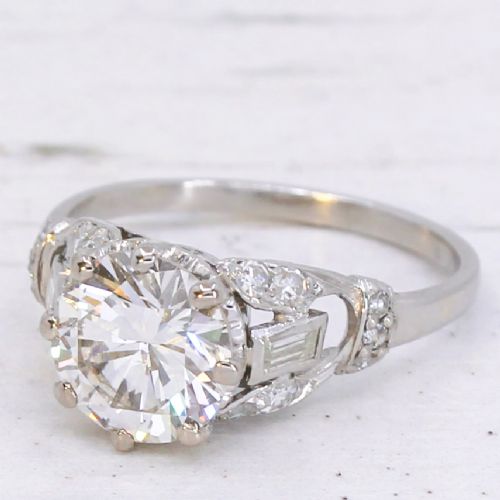
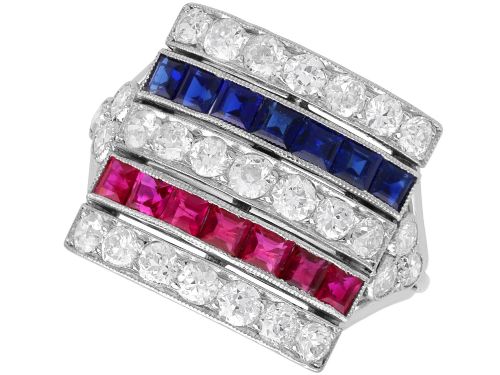
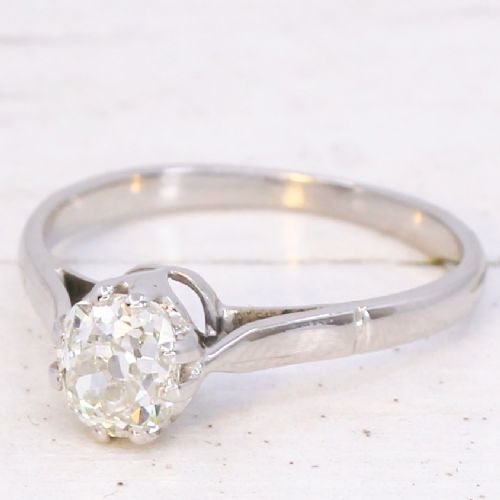
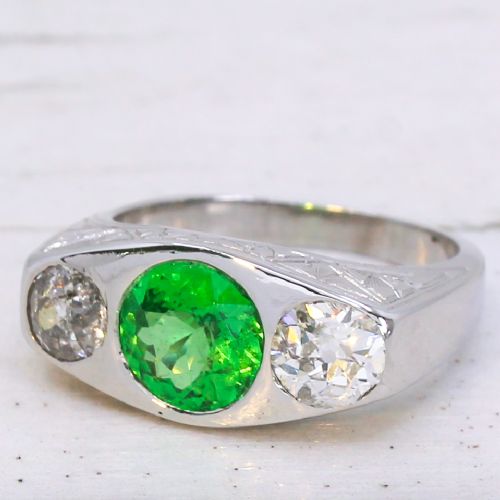
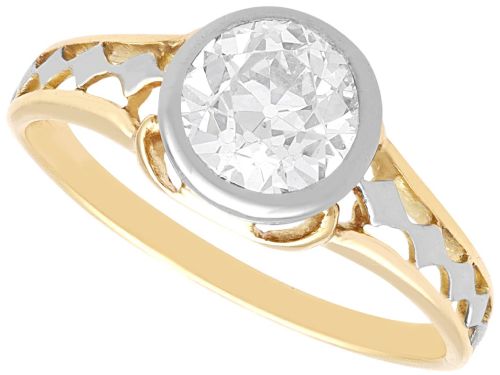
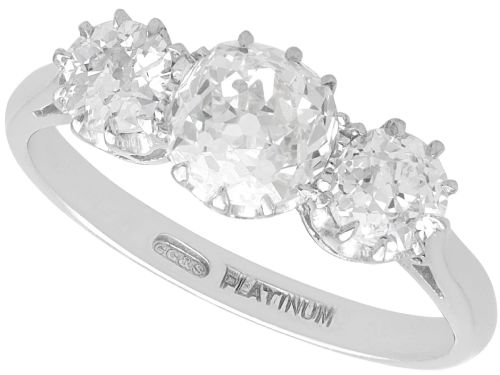
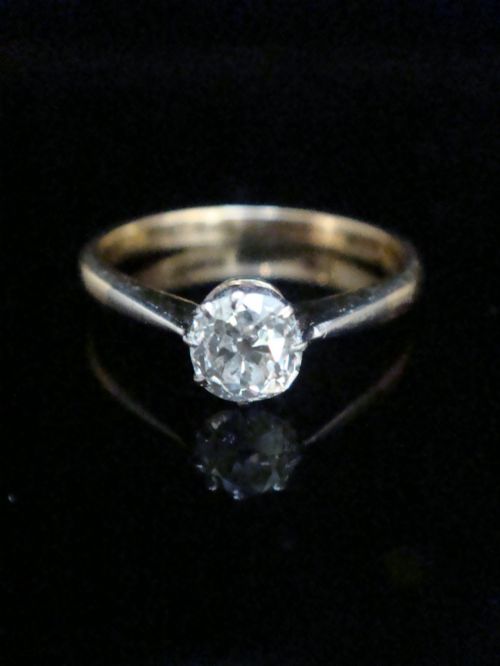
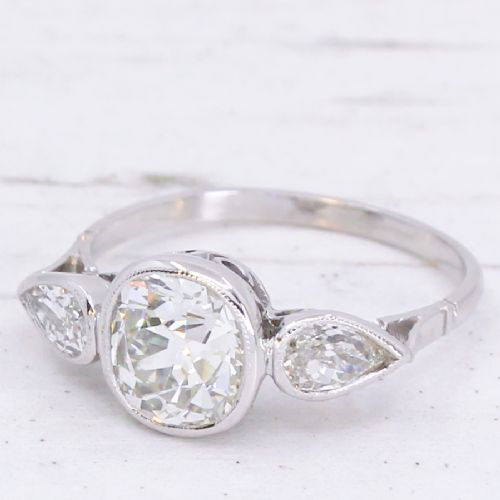
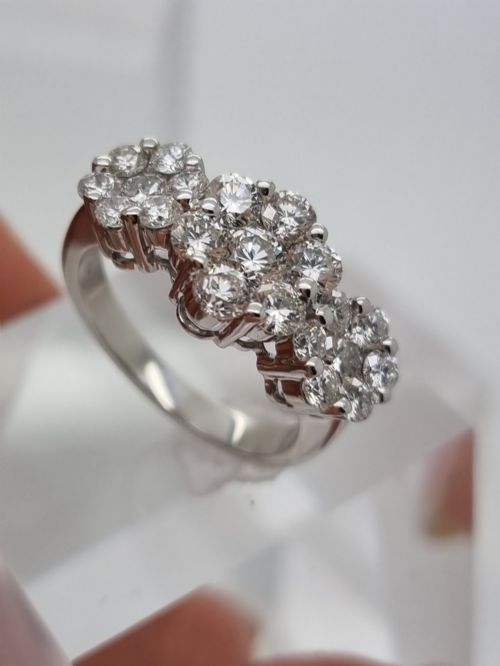
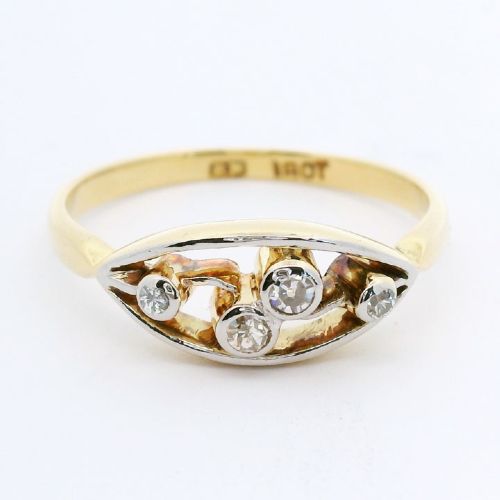
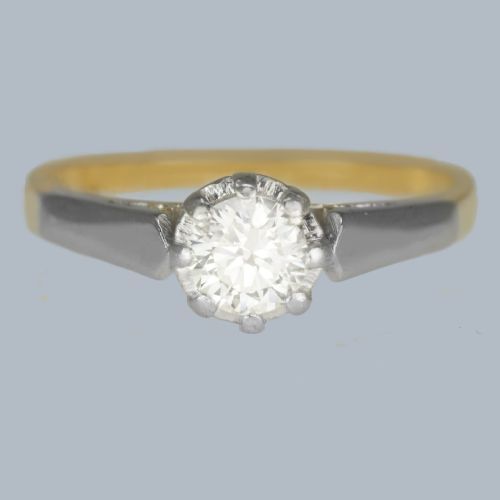
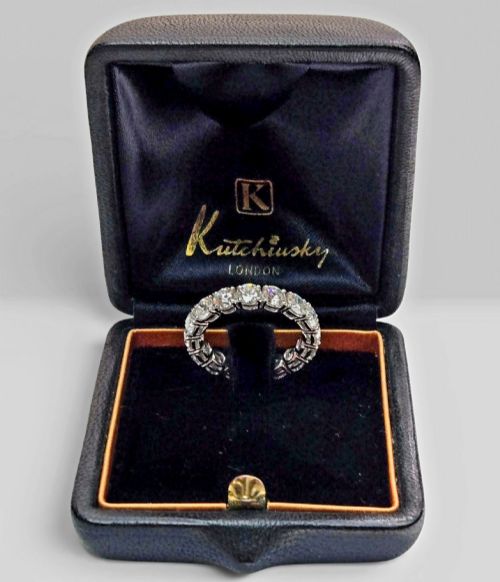
A platinum set ring combines durable metal with precious stones, taking forms such as solitaires, clusters, trilogy rings, and full eternity bands. These pieces span from the Edwardian era through the Art Deco period and into the mid-century decades.
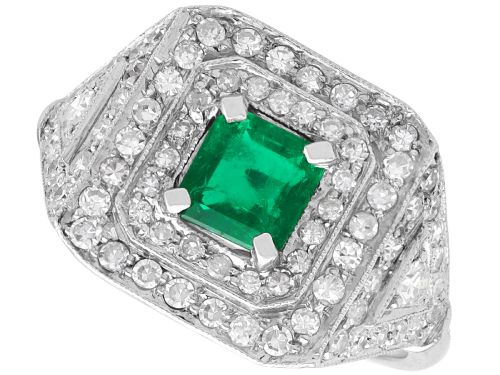
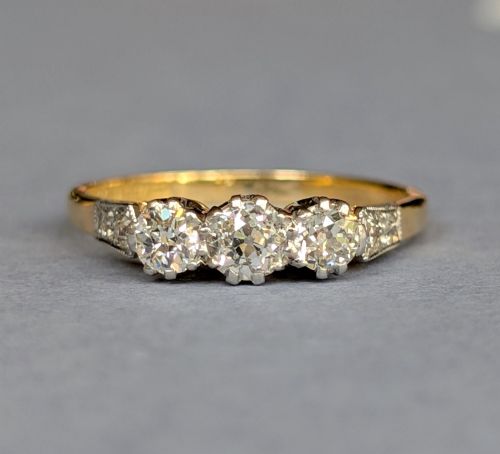
The most common versions met on this page belong to the Art Deco and Edwardian periods, where platinum meets yellow gold, white gold, or stands alone as the primary mounting metal. Engagement rings and dress rings dominate the selection, often incorporating old cut diamonds alongside sapphires, emeralds, or opals.
Materials and construction
Makers utilised platinum for its strength, allowing intricate wirework and secure claw settings to hold diamonds and coloured gemstones without excessive bulk. Combinations of platinum and 18ct gold appear frequently, using gold for the band while employing platinum for the top settings to keep white stones looking bright.
Stones are predominantly set with hand-cut diamonds featuring old European, transitional, or old cushion cuts, alongside calibre-cut sapphires and emeralds. The metalwork reflects period techniques such as millegrain edging, where small beaded borders finish the platinum settings.
Platinum Set Ring Retail Price Guide 2026
Typical asking prices for platinum set ring among the pieces listed under this phrase on Sellingantiques today, from the lower quarter to the upper quarter. They describe what is for sale here now, not the wider market.
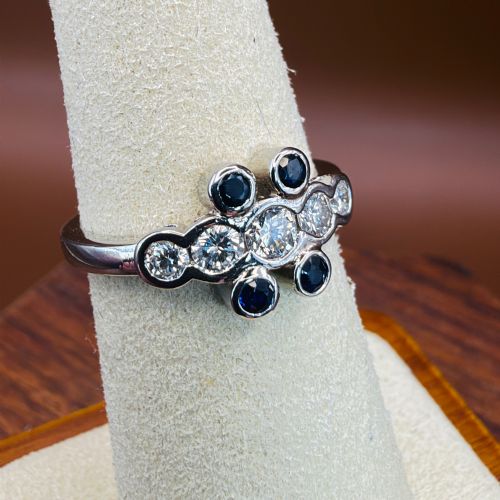
Some Edwardian crossover rings were designed to make two diamonds look like they are gently leaning in for a permanent embrace.
Distinctions in quality
Quality rests upon the proportion and calibre of the central stones relative to the mounting, alongside the precision of the hand-formed platinum work. Superior pieces display crisp millegrain detail and balanced proportions that integrate the shoulders smoothly into the main setting.
The choice and matching of secondary stones, such as the calibre-cut sapphires in cluster or eternity arrangements, dictate the refinement of the piece. Heavier gauge platinum and substantial gold shanks indicate sturdier construction designed for daily wear.
Kutchinsky
The Platinum Set Ring Glossary
- Old European cut
- A diamond cut popular from the late nineteenth century to the mid-twentieth century, characterised by a small table, high crown, and a noticeable open culet.
- Trilogy ring
- A ring featuring three main stones, traditionally symbolising the past, present, and future.
- Millegrain
- A decorative technique involving a line of tiny raised beads along the edge of a platinum setting, typical of Edwardian and Art Deco jewellery.
- Toi et Moi
- A French term meaning you and me, describing a ring style featuring two main side-by-side gemstones.
- Transitional cut
- A diamond cut bridging the older old European style and the modern brilliant cut, seen widely in pieces from the 1930s to the 1950s.
Platinum Set Ring: Frequently Asked Questions
How do I care for a platinum set ring?
Clean your platinum set ring gently using warm soapy water and a soft brush to remove everyday oils. Avoid harsh chemicals that might affect secondary gemstones like opals or emeralds.
Have the claws and settings checked periodically by a jeweller to ensure the stones remain secure within the dense metal.
Can platinum rings be resized easily?
Platinum can be resized by a skilled jeweller who has the appropriate high-temperature torch required for the metal. The process involves adding or removing a small section of the shank.
Take care with rings featuring delicate shoulder stones or full eternity bands, as altering the size of these pieces requires specialised precision.
What is the difference between Edwardian and Art Deco settings?
Edwardian platinum settings lean towards lace-like openwork, floral motifs, and delicate millegrain borders paired with yellow gold shanks. These designs emphasise flowing grace and light.
Art Deco rings introduce geometric lines, square motifs, and stark symmetry, often utilising platinum throughout the entire mounting for a uniform white finish.
Are old cut diamonds different from modern stones?
Old cut diamonds feature hand-faceting that produces smaller tables and broader facets, creating a softer candlelight sparkle rather than the bright brilliance of modern stones. Each historic cut possesses distinct individual proportions.
These diamonds were shaped by hand before standardisation, making every historic stone unique to its ring.