

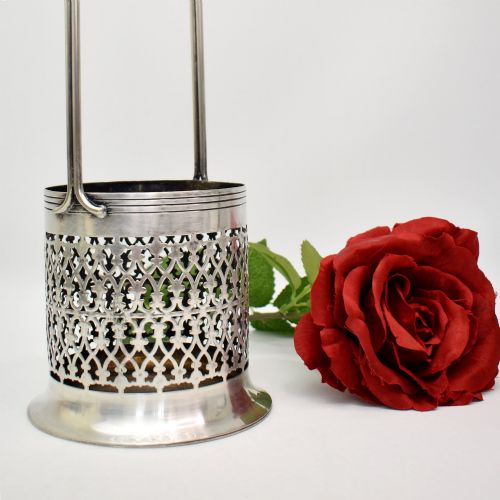


Plated Wine Coaster
A plated wine coaster protects the dining table while passing the bottle around the company with ease.
Plated Wine Coaster
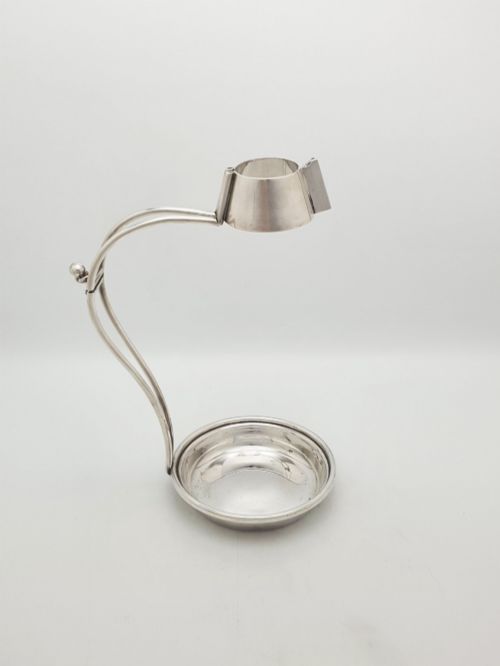
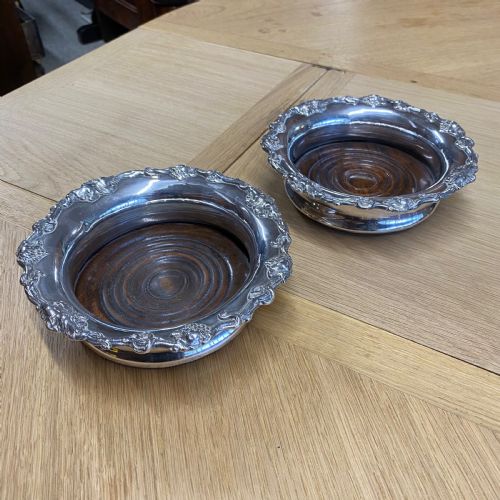
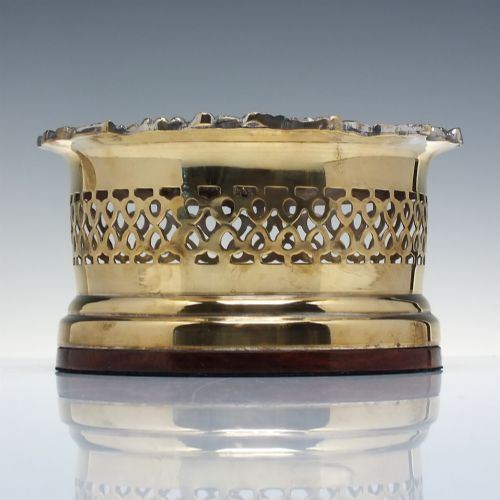
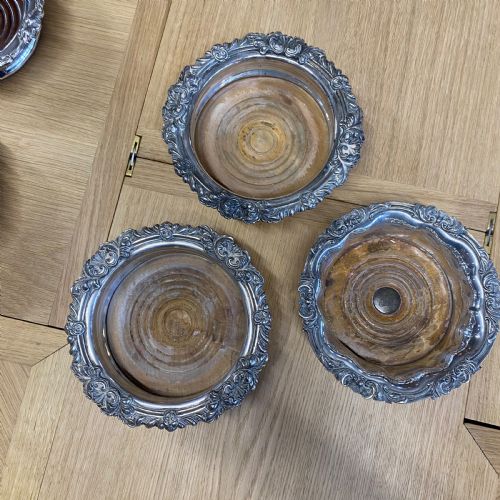
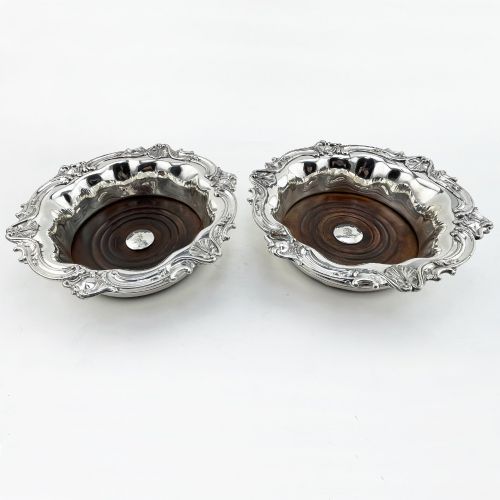
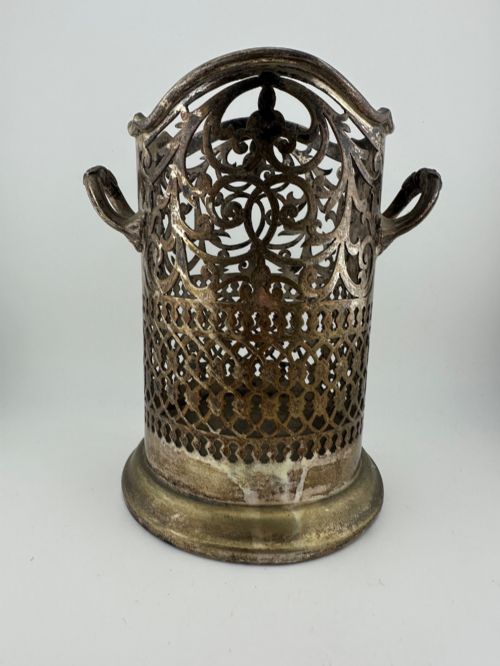
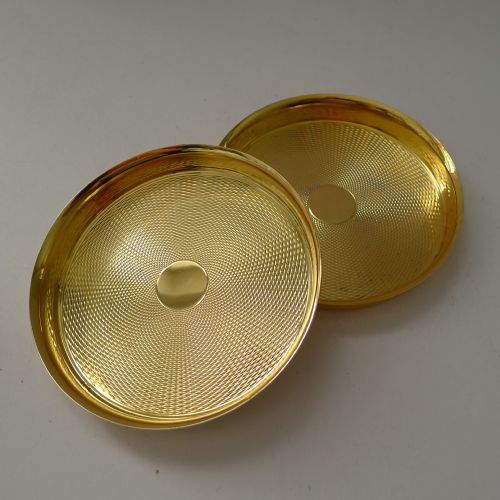
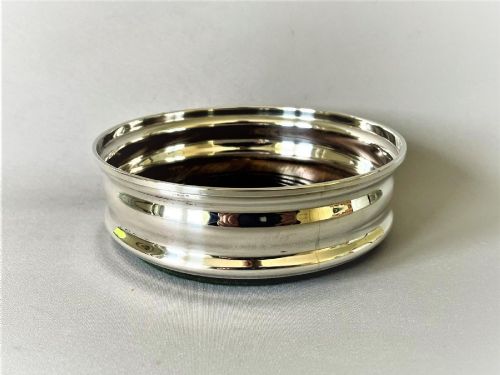
A plated wine coaster sits beneath a bottle or decanter to catch drips and slide smoothly across the dining table during dinner parties. The selections here span the Georgian, Victorian, and Edwardian eras, alongside mid-century examples from notable makers.
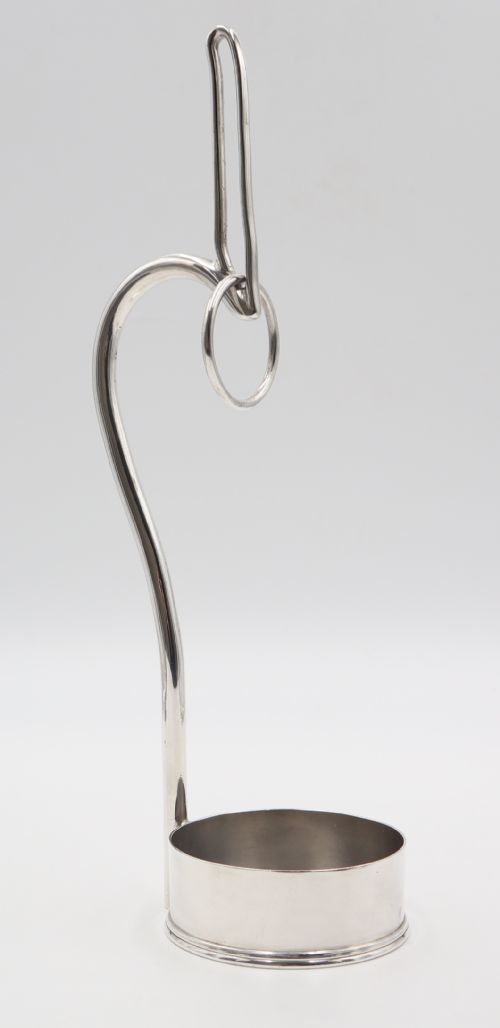
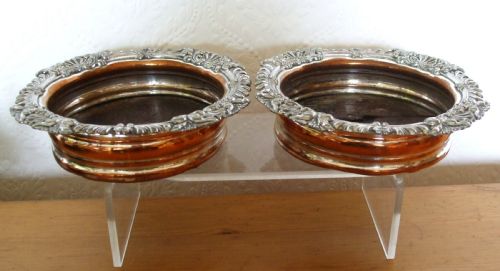
Most pieces emerge from the nineteenth and early twentieth centuries, taking the form of circular trays or sleeve-like bottle holders. Collectors encounter single items, matched pairs, and larger trolley carts designed to carry multiple bottles at once.
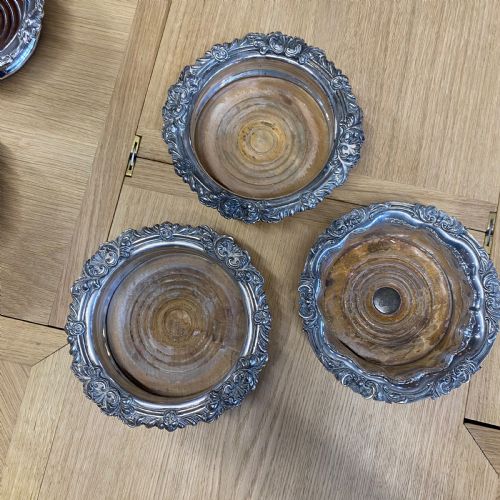
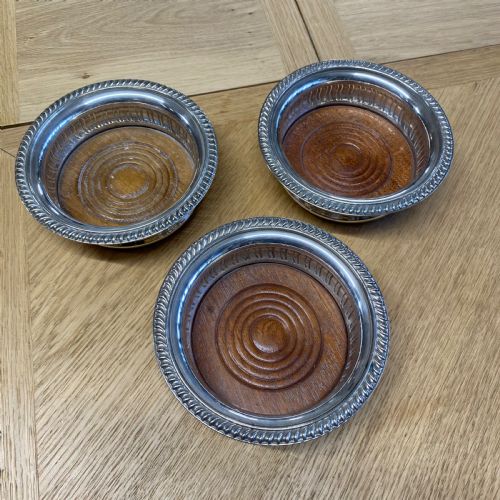
The materials reflect traditional dining traditions, combining reflective metal plating with turned wooden bases or openwork gallery rims. These items bridge the gap between practical tableware and decorative centrepieces for the home.
Materials and Construction
Makers utilised silver plate over copper, electroplated nickel silver, and Old Sheffield Plate, where a thin sheet of silver was fused to a copper base. This fusion creates subtle hints of copper showing through the highlights on older pieces.
Wooden bases, frequently fashioned from turned mahogany, provide a stable foundation inside the metal gallery walls. Piercing, embossing, and applied cast borders define the decorative metalwork seen across these items.
Plated Wine Coaster Retail Price Guide 2026
Typical asking prices for plated wine coaster among the pieces listed under this phrase on Sellingantiques today, from the lower quarter to the upper quarter. They describe what is for sale here now, not the wider market.
Some nineteenth-century versions double as pen holders or miniature planters when the dining room closes for the night.
Assessing Quality
The crispness of the chased or pierced ornamentation distinguishes higher tier examples from simpler stamped production. Heavy gauge metal provides a substantial weight that prevents the piece from feeling flimsy during daily use.
The integrity of the original plating layer dictates the visual appeal, as excessive polishing wears away the silver to reveal the base metal beneath. Maker marks and crisp hallmarks or retailer stamps indicate superior workshop origins.
Mappin & Webb·Hermes Paris·Brook and Son Edinburgh·Christofle·Rupert Favell and Co·Matthew Boulton·Maple London
The Plated Wine Coaster Glossary
- Old Sheffield Plate
- A fused bilayer metal technique where silver is combined with copper before rolling into sheets, common in Georgian items. This method leaves characteristic copper seams along cut edges.
- Electroplated Nickel Silver
- A manufacturing process introduced in the nineteenth century using an electrical current to deposit a silver coating onto a nickel alloy base. This technique replaced earlier fusion methods for mass production.
- Decanter Trolley
- A wheeled carriage fitted with one or more coaster rings designed to glide along the mahogany surface of a long dining table. These multi-bottle carriers often feature articulated handles.
- Gallery Rim
- The raised circular border surrounding the base of a coaster, frequently decorated with pierced geometric patterns or floral motifs. It holds the bottle securely in place during transit.
Plated Wine Coaster: Frequently Asked Questions
How were wine coasters used?
Hosts placed bottles or decanters inside the metal rings to protect polished wooden dining tables from ring stains and spills during meals. Diners then slid the vessels along the surface to pass wine down the length of the table.
Larger trolleys and double holders allowed multiple bottles or champagne magnums to travel together between guests without lifting heavy glass.
What is Old Sheffield Plate?
Old Sheffield Plate is an early fusing technique where a sheet of silver is bonded to a copper ingot through heat and pressure before being rolled. This creates a durable dual-layer material used extensively before electroplating.
Collectors spot genuine examples by locating the faint line of copper visible along the unplated rims or cut edges of the piece.
How do I clean silver plated coasters?
Cleaning requires a soft cloth and a gentle silver polish specifically formulated for plated items to avoid stripping the thin metal layer. Avoid abrasive scouring pads that scratch the delicate silver surface and expose the underlying base metal.
Wooden bases should be kept dry during cleaning to prevent moisture damage to the polished mahogany or turned grain.
Can I use them for modern bottles?
Most standard wine bottles and decanters fit comfortably inside nineteenth-century dimensions, though wider champagne magnums require dedicated larger holders. Measuring the interior diameter helps ensure a proper fit for contemporary bottle shapes.
They function equally well on sideboards or desks as decorative trays for small items when not in use for dining.