



Plaster Relief Medallions
Plaster relief medallions are classical wall art and framed intaglios that bring miniature sculptural mastery directly into a room.
Plaster Relief Medallions
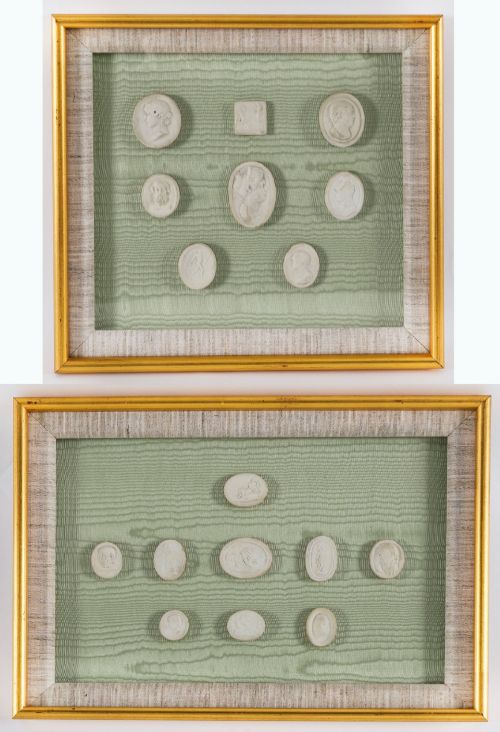
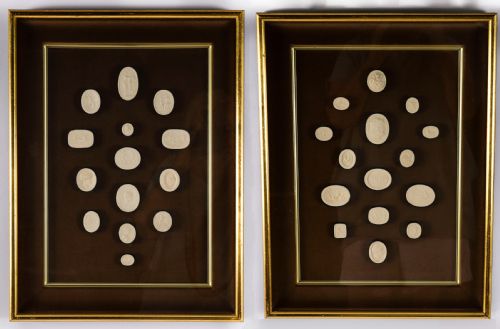
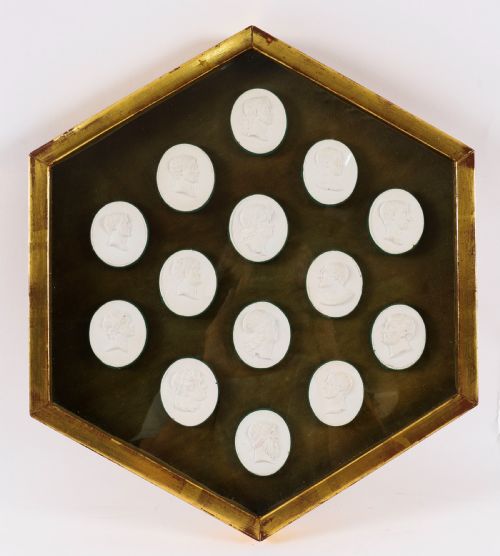
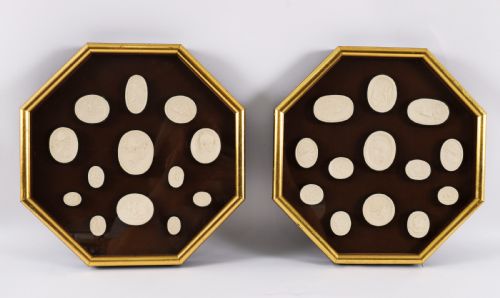
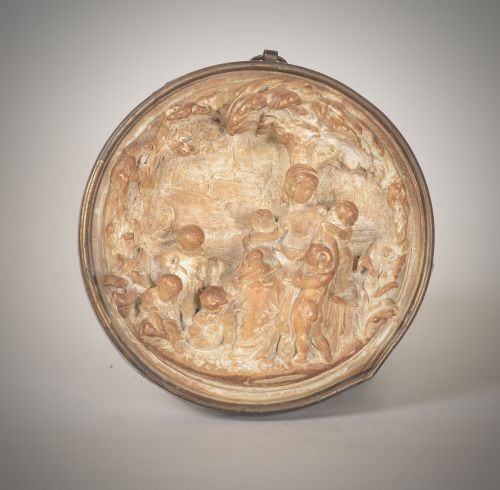
Plaster relief medallions take the form of wall art, framed wall art, wall plaques, framed artwork and framed intaglios. These pieces emerge from the 19th Century and the Edwardian period, capturing classical subjects in miniature relief.
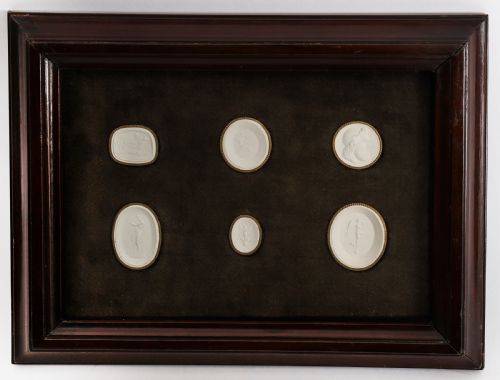
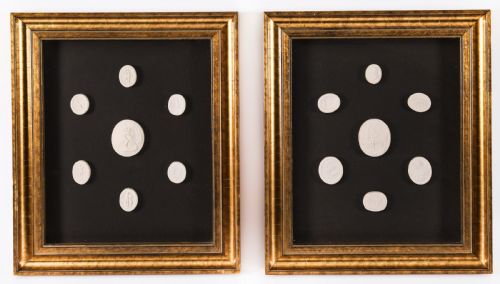
The version most commonly met on this page is the framed Grand Tour intaglio, often presented in pairs, sets or box frames. They draw inspiration from Neoclassical taste and record antique gems and cameos.
Makers such as Giovanni Liberotti appear in the evidence, alongside collections housed within gilt wood, giltwood, wood, glass, velvet, fabric and textile surrounds.
How they were made
Plaster serves as the primary material for the medallions themselves, cast to reproduce the fine detail of ancient carved stones. These crisp reliefs are then set against backgrounds of velvet, fabric or textile to contrast the bright white plaster.
Gilt wood and giltwood provide the frames for many pieces, whilst glass protects the delicate plaster casts within box frames and wall plaques. Wood forms the structural base for the frames that secure these Neoclassical compositions.
Plaster Relief Medallions Retail Price Guide 2026
Typical asking prices for plaster relief medallions among the pieces listed under this phrase on Sellingantiques today, from the lower quarter to the upper quarter. They describe what is for sale here now, not the wider market.
Travellers once carried hundreds of miniature plaster casts home in custom wooden boxes, essentially inventing the pocket-sized art gallery.
What varies in quality
The clarity of the plaster cast separates finer medallions from softer examples, as the sharpest impressions capture every nuance of the original carved gem. The arrangement and scale of the collection within the frame also influence the overall visual impact.
Framing materials and backing textiles alter the character of each piece, with giltwood surrounds and velvet mounts offering a richer presentation than simpler wood frames.
Giovanni Liberotti
The Plaster Relief Medallions Glossary
- Intaglio
- A design carved into a material so that the impression rises as a relief when cast. Plaster versions capture these sunken carvings in positive form.
- Grand Tour
- A cultural journey undertaken by wealthy young Europeans in the eighteenth and nineteenth centuries. Travellers collected plaster medallions as portable mementoes of classical art.
- Neoclassical
- A style inspired by the art and architecture of classical Greece and Rome. It defines the balanced, formal aesthetic of these nineteenth-century reliefs.
- Giltwood
- Wood carved and covered with a thin layer of gold leaf. It supplies the bright, ornate frames seen on many antique wall plaques.
- Plaster cast
- A copy of a sculpture or carving made by pouring liquid plaster into a mould. It allows intricate details to be replicated with precision.
Plaster Relief Medallions: Frequently Asked Questions
How were Grand Tour intaglios used?
Travellers collected these plaster casts during educational tours of Italy and Europe as portable galleries of classical art. They served as scholarly records and decorative souvenirs.
Collectors arranged them in wooden boxes, wall plaques or framed sets to display their knowledge of antiquity at home.
How should I hang framed intaglios?
Hang these framed artworks at eye level on a wall where natural light can reveal the subtle shadows of the plaster relief. Smaller pairs and box frames suit intimate spaces or grouped arrangements.
Keep them away from direct sunlight and damp environments to protect the delicate plaster, glass and textile backings.
How do I identify nineteenth-century pieces?
Look for the materials and framing techniques typical of the period, such as hand-carved giltwood frames and traditional textile or velvet backings. The style follows strict Neoclassical lines.
Signatures or stamps, such as those associated with Giovanni Liberotti, offer direct attribution to period workshops.