




Pitch Pine Chair
A pitch pine chair brings robust timber character and architectural presence to an interior, shaped from resinous conifer wood during the nineteenth and early twentieth centuries.
Pitch Pine Chair
When you search for a pitch pine chair, you encounter seating fashioned from a durable, highly figured softwood known for its prominent grain and resinous content. The pieces recorded here span the nineteenth century and into 1920, reflecting periods when this dense timber gained favour for architectural and ecclesiastical use.
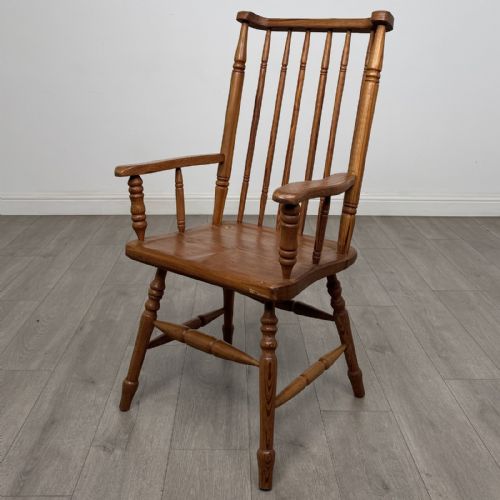
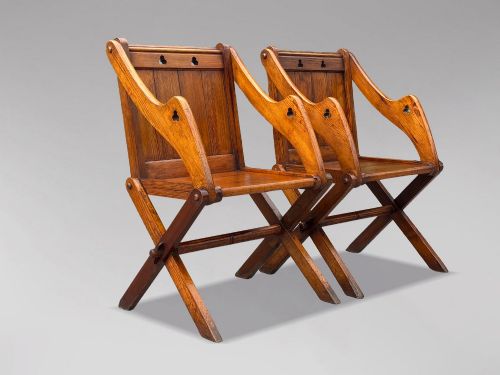
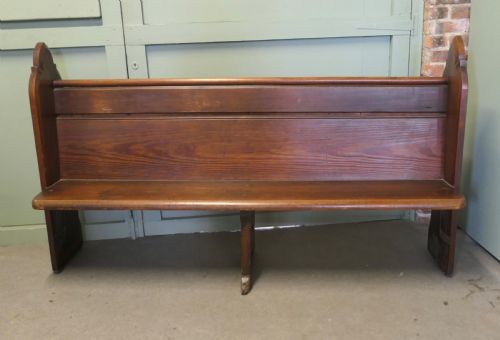
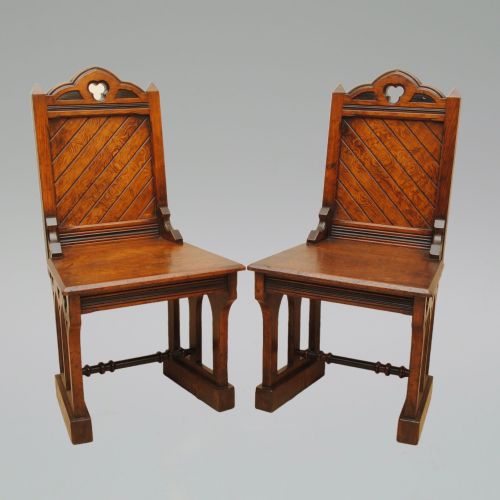
You are most likely to meet armchairs, hall chairs, benches, and side chairs on this page. These forms often carry Gothic Revival, Victorian Gothic, or Arts and Crafts stylistic influences, ranging from simple rustic country seating to elaborate ecclesiastical throne chairs.
The assortment includes single pieces alongside matched pairs and sets of three, frequently displaying structural turned legs or panelled backs. Their origins lie in domestic, workshop, and church settings, making them practical items with distinct historic character.
How they were made
Makers utilised pitch pine timber for its exceptional density and striking grain pattern, often leaving the wood unpainted to display its natural resinous growth rings. Joinery methods included traditional pegged or jointed construction suitable for heavy institutional and domestic demands.
Selected examples incorporate contrasting materials such as brass, metal studs, and upholstery fabric to add functional or decorative detail. Stick back construction and turned legs appear alongside framed panels and carved Gothic tracery.
Pitch Pine Chair Retail Price Guide 2026
Typical asking prices for pitch pine chair among the pieces listed under this phrase on Sellingantiques today, from the lower quarter to the upper quarter. They describe what is for sale here now, not the wider market.
Church pews and throne chairs on this page prove that timber intended for divine contemplation doubles nicely as a hallway seat for changing boots.
What varies in quality
The distinction between standard examples and superior pieces rests on the intricacy of the carving and the presence of deliberate stylistic details such as Gothic Revival motifs or ecclesiastical throne proportions. Selection of the timber itself also plays a part, with tighter, more dramatic grain patterns marking out finer items.
Construction methods dictate durability, distinguishing robust joinery from simpler forms. Hardware additions like brass and metal studs further differentiate workshop output.
The Pitch Pine Chair Glossary
- Pitch Pine
- A dense, resinous softwood with a prominent grain pattern. It was widely utilised during the nineteenth century for furniture and architectural joinery.
- Gothic Revival
- An architectural and decorative style drawing on medieval forms. Pieces in this taste feature pointed arches, tracery, and vertical emphasis.
- Glastonbury Chair
- A specific nineteenth-century armchair design with an X-framed base and sloped armrests. It often carries ecclesiastical associations.
- Stick Back
- A chair construction method where turned spindles are inserted directly into a solid seat or rail. This technique provides sturdy support with minimal timber bulk.
- Hall Chair
- A tall, upright wooden seat intended for an entrance hall or corridor. These pieces usually feature panelled or carved backs and un-upholstered seats.
Pitch Pine Chair: Frequently Asked Questions
What is a pitch pine chair?
A pitch pine chair is a piece of wooden seating fashioned from a heavy, resinous softwood that gained popularity during the Victorian era. These items range from domestic hall chairs to imposing ecclesiastical thrones.
They are defined by the distinct grain of the timber and frequently display revivalist architectural styles.
How were pitch pine chairs used?
These chairs served various functional roles in domestic interiors, churches, and public buildings. Hall chairs provided sturdy seating for entryways, while larger armchairs and benches furnished reception rooms or ecclesiastical spaces.
Their robust construction suited heavy daily use in both domestic and institutional settings.
How do I live with a pitch pine chair?
Living with these chairs involves placing them where their architectural lines and prominent grain can be appreciated. They suit rustic, traditional, or eclectic interiors as statement seating.
Maintenance requires simple dusting and protection from extreme humidity changes to preserve the timber and any fabric or metal elements.
How do I tell periods apart?
Differentiating periods relies on observing stylistic markers and construction methods. Mid-nineteenth-century examples often lean heavily into Gothic Revival and Victorian ecclesiastical aesthetics.
Pieces from the turn of the twentieth century or 1920 sometimes show simpler Arts and Crafts influences or cleaner stick back forms.