

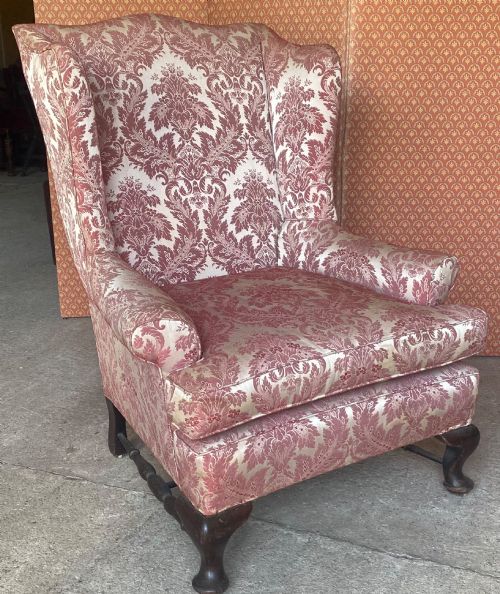
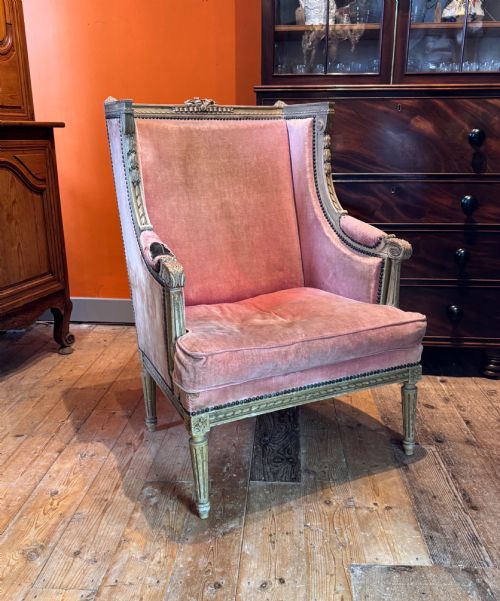
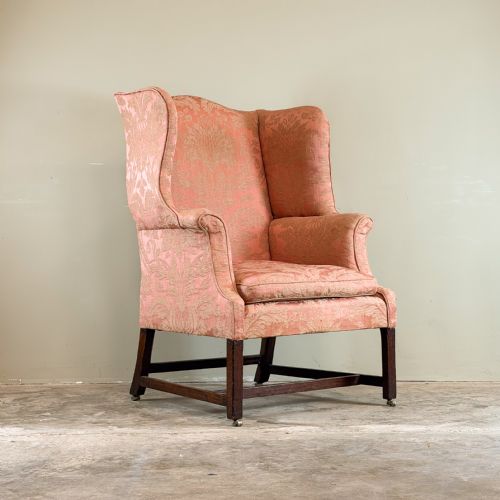
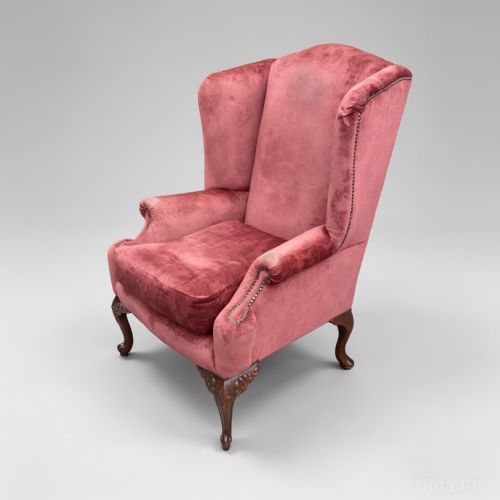


Pink Wingback Armchair
A pink wingback armchair brings warmth and traditional shelter to a room, offering high sides that keep out the draughts.
Pink Wingback Armchair
A pink wingback armchair combines a traditional sheltered seating form with upholstery in various shades of pink, ranging from soft rose to deeper tones. These seats appear across multiple periods, including the eighteenth century, the nineteenth century, and the Edwardian era.
The selection includes distinct revival pieces, such as Georgian style, George III style, Chippendale revival, and Queen Anne style frames. Buyers encounter various forms, from standard wing chairs to high back upholstered armchairs and fireside seats.
Origins and frameworks vary across the inventory, featuring timber structures like mahogany and walnut alongside painted surfaces. Certain pieces originate from continental contexts, such as French chateaux, while others reflect classic English country house aesthetics.
Materials and construction
The foundational frames utilise solid hardwoods such as mahogany and walnut, providing structural stability for the substantial upholstered bodies. Timber components often exhibit period-specific carving on the legs and stretchers, aligned with revival styles.
Upholstery treatments employ textiles like velvet, damask, tapestry, and general fabric, sometimes incorporating deep buttoned back designs. Detail work includes brass elements and, in specific continental examples, original paint finishes on the wooden frames.
Pink Wingback Armchair Retail Price Guide 2026
Typical asking prices for pink wingback armchair among the pieces listed under this phrase on Sellingantiques today, from the lower quarter to the upper quarter. They describe what is for sale here now, not the wider market.
Frame styles span Edwardian, Georgian Revival, Louis XVI, and Queen Anne aesthetics, encompassing standard wing chairs and barrel backs.
Distinguishing quality
Quality rests upon the integrity of the wooden frame and the precision of the period style execution, whether interpreting Georgian, Louis XVI, or Queen Anne forms. Finer examples display harmonious proportions in the wings and backrest, alongside well-executed timber joinery.
The standard of upholstery and the choice of textile material significantly shape the character of each piece. Superior items maintain integrity in both the internal construction and the exterior fabric covering, reflecting the craftsmanship of their respective eras.
The Pink Wingback Armchair Glossary
- Wingback
- A traditional chair design featuring projecting side panels designed to shield the occupant from draughts. These wings connect directly to the armrests.
- Damask
- A reversible figured fabric woven on a jacquard loom, frequently utilised for formal upholstery. It displays patterns created by contrasting warp and weft satin weaves.
- Cabriole leg
- A furniture leg that curves out and then in, resembling the leg of an animal. This form appears frequently on eighteenth-century and revival seating.
- Deep buttoned
- An upholstery technique where buttons are pulled tight through the padding to create a diamond pattern. This method secures the filling and adds texture.
Pink Wingback Armchair: Frequently Asked Questions
What periods do these armchairs come from?
The pieces span several eras, including the eighteenth century, the nineteenth century, the Edwardian period, and the early twentieth century.
Revival designs also draw inspiration from distinct historical aesthetics, such as Georgian, Louis XVI, and Queen Anne styles.
How were these chairs used historically?
Wingback chairs were originally placed near firesides to protect sitters from cold draughts in large rooms. The high back and wings trapped heat around the occupant.
They functioned as comfortable reading or resting seats in drawing rooms, studies, and country house parlours.
What wood types are used in the frames?
Makers utilised sturdy hardwoods, predominantly mahogany and walnut, to construct the underlying structural frames. These timbers supported heavy upholstery and allowed for detailed carving.
Some continental examples feature painted wooden frames rather than exposed polished timber.
What fabrics cover these armchairs?
Upholstery materials include velvet, damask, tapestry, and various woven fabrics selected for durability and texture. Certain pieces incorporate deep buttoned back detailing.
Textiles often reflect later reupholstery or retain traditional period characteristics depending on the individual chair's history.