

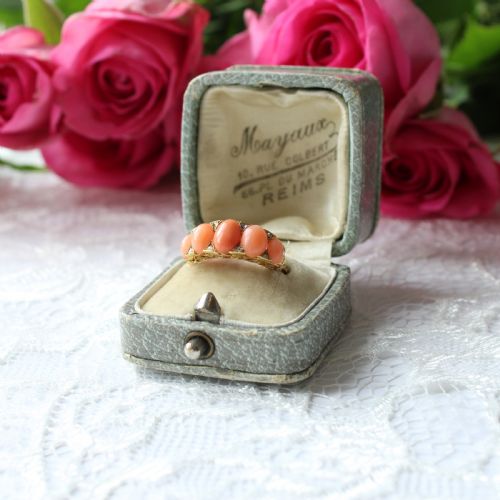


Pink Stone Jewellery
Pink stone jewellery brings together soft rose quartz, vivid pink sapphire and tourmaline across eras from Victorian work to mid-century design.
Pink Stone Jewellery
Pink stone jewellery comprises rings, earrings, pendants, necklaces and decorative boxes set with pink gems. When searching for pink stone jewellery, buyers encounter pieces spanning the Victorian period through the Edwardian era, the 1920s Art Deco movement and mid-century modernism.
The selections on this page rely heavily on rings and earrings, supplemented by pendants and trinket boxes. These forms utilise precious metals including platinum, 18ct gold, 15ct gold, 9ct gold and silver to frame coloured stones.
Stones range from natural pink sapphires, spinels and tourmalines to coral, rose quartz and paste. Pieces emerge from distinct stylistic periods, reflecting the shifting tastes of Victorian, Edwardian and twentieth-century makers.
How they were made
Metalsmiths constructed settings in platinum, yellow gold, rose gold and silver, often combining metals within a single piece to highlight specific gems. Stones received various cuts including brilliant, baguette, oval and rose cut.
Goldsmiths secured gems using claw settings, bezel mounts and cluster arrangements, sometimes pairing pink stones with diamonds, pearls or contrasting blue sapphires. Craftspeople incorporated structural elements like screwback findings on earrings and box hinges on trinket containers.
Pink Stone Jewellery Retail Price Guide 2026
Typical asking prices for pink stone jewellery among the pieces listed under this phrase on Sellingantiques today, from the lower quarter to the upper quarter. They describe what is for sale here now, not the wider market.
Listings combine platinum and gold settings with pink stones including sapphire, spinel, tourmaline, coral and rose quartz.
What varies in quality
Quality rests in the material composition, gemstone origin and the precision of the goldsmith's work. Natural untreated gems and higher carat gold or platinum settings distinguish finer examples from base metal or paste creations.
Design sophistication also sets pieces apart, as seen in the architectural lines of Art Deco platinum work or the distinct modernist vision of signed studio pieces. Intact original boxes and documented provenance elevate certain items above standard production.
Andrew Grima
The Pink Stone Jewellery Glossary
- Trinket box
- A small decorative container used for storing jewellery or small personal items. These boxes often feature stone inlay or mounted mineral panels.
- Trilogy ring
- A ring set with three principal stones, frequently representing the past, present and future. In antique examples, these often combine a central pink sapphire or ruby with flanking diamonds.
- Screwback earrings
- An early form of non-pierced earring fastening that uses a threaded screw mechanism to secure the lobe. They are commonly found on Edwardian and mid-century pairs.
- Mahenge spinel
- A variety of spinel originating from the Mahenge region in Tanzania, known for vibrant pink or red saturation. These stones appear in mid-century coloured gem jewellery.
- Rose cut
- An antique gemstone cutting style featuring a flat base and a domed crown faceted with triangular planes. This cut predates the modern brilliant cut.
Pink Stone Jewellery: Frequently Asked Questions
What periods do these pieces date from?
The collection spans multiple eras, beginning with late Victorian and Edwardian items from the nineteenth and early twentieth centuries. It continues through Art Deco pieces from the 1920s and 1930s into mid-century modern designs from the 1950s and 1960s.
Each period utilises distinct metal choices and mounting styles that help identify the date of manufacture.
What metals are used in these settings?
Makers utilised a variety of precious metals depending on the era and style. Platinum appears frequently in Art Deco pieces, while yellow gold is found in Victorian, Edwardian and mid-century examples.
Lower carat golds such as 9ct, alongside 15ct and 18ct gold, feature across different rings and earrings. Silver is also utilised, occasionally combined with gold or base metal components.
How should I care for antique rings?
Antique and vintage rings require gentle handling due to their age and delicate settings. Softer stones like rose quartz and coral benefit from removal during physical work or household tasks.
Cleaning should be done with mild soap and warm water rather than ultrasonic machines, which can damage treated or softer gems and weaken old settings.