






Pink Kerosene Lamp
A pink kerosene lamp brings a soft, warm glow to a room through coloured glass and traditional Victorian design.
Pink Kerosene Lamp
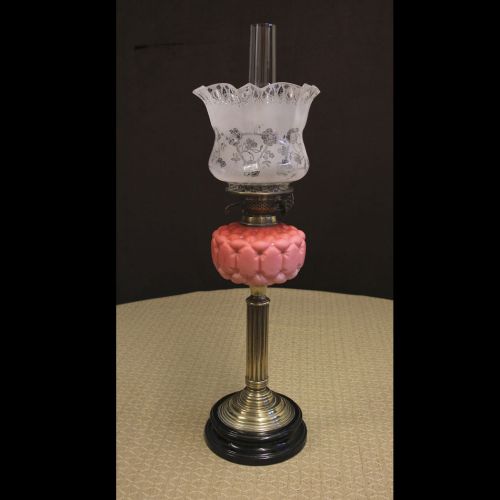
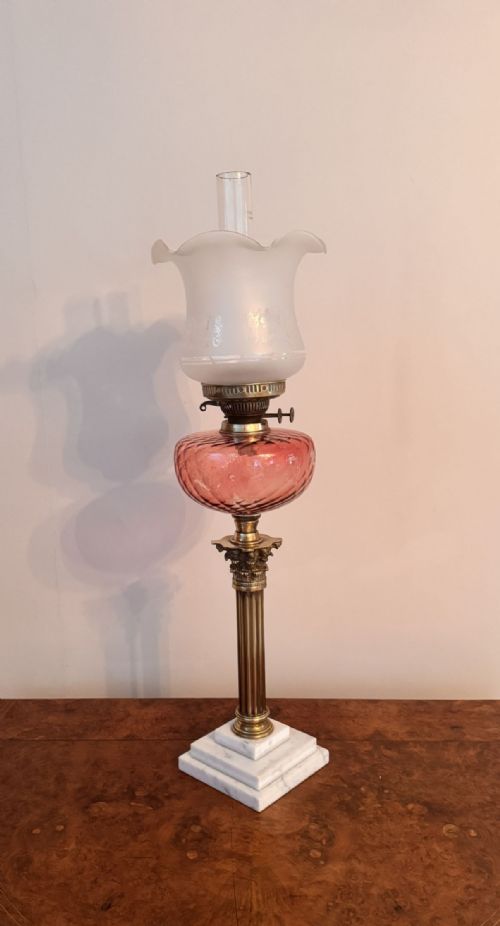
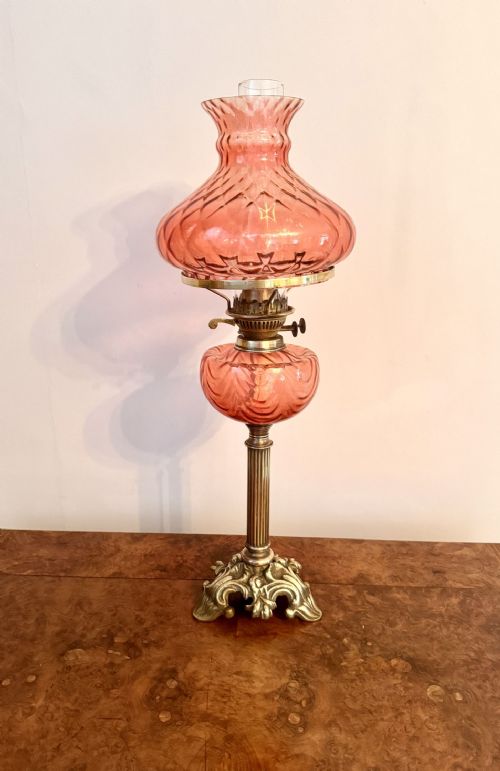
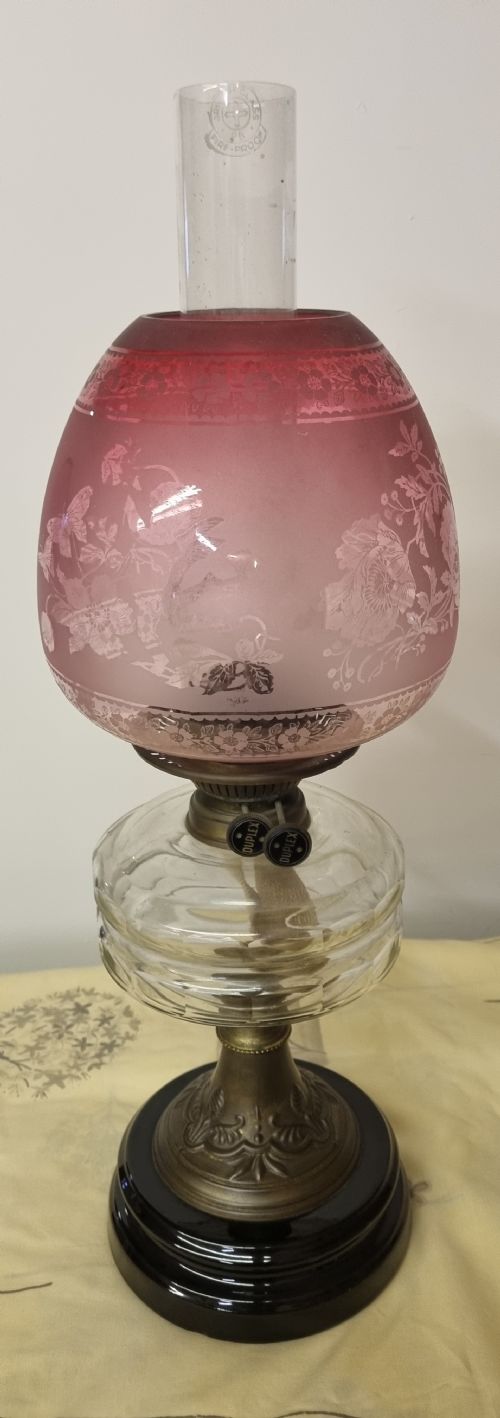
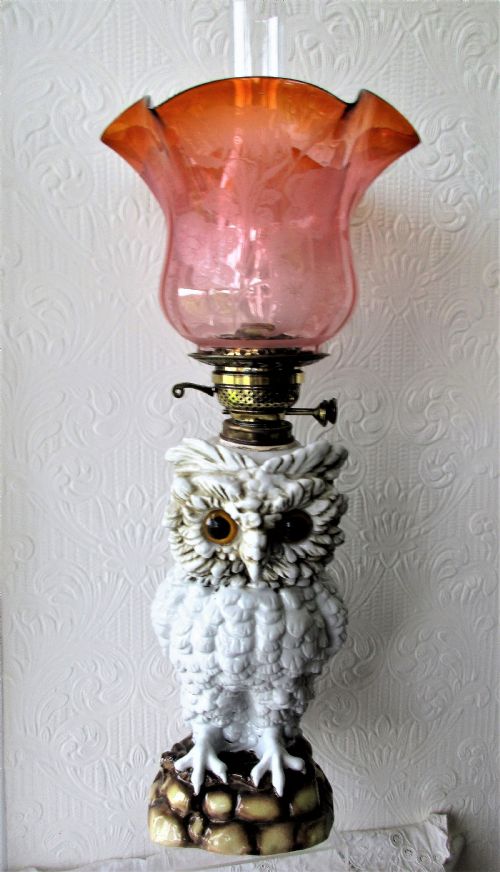
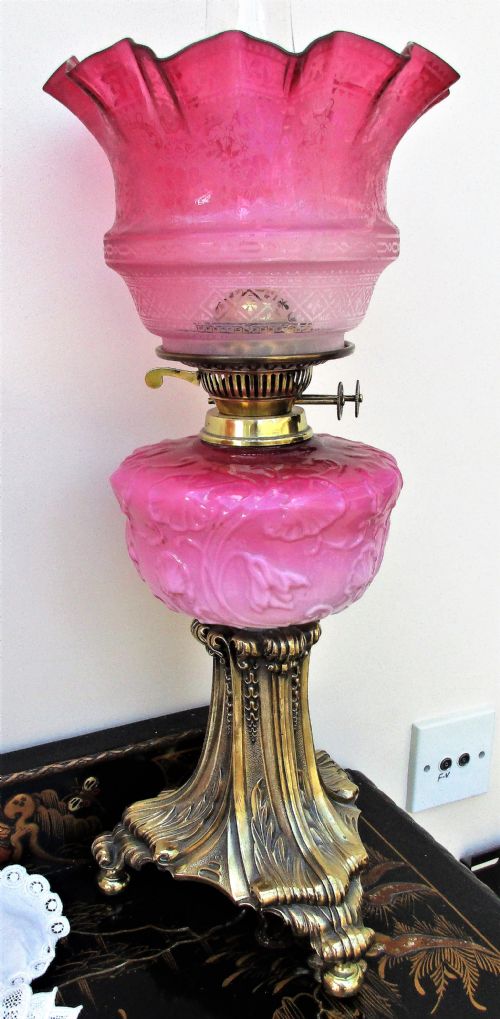
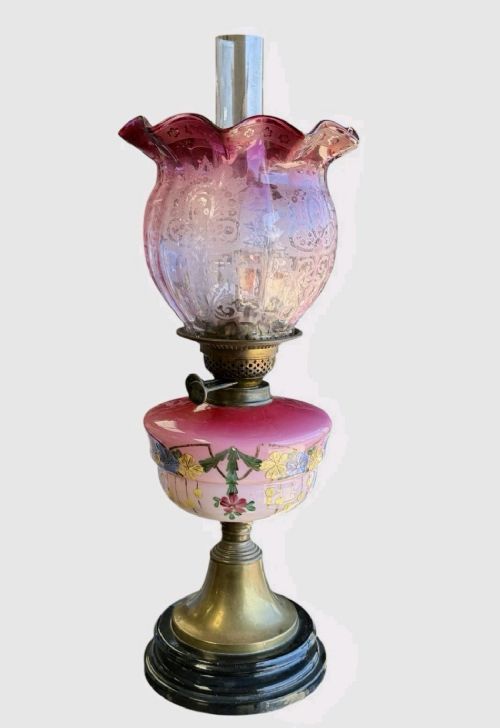
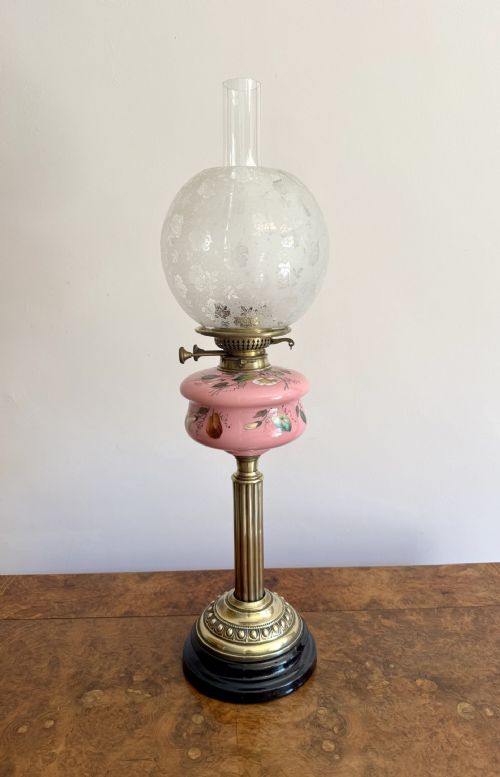
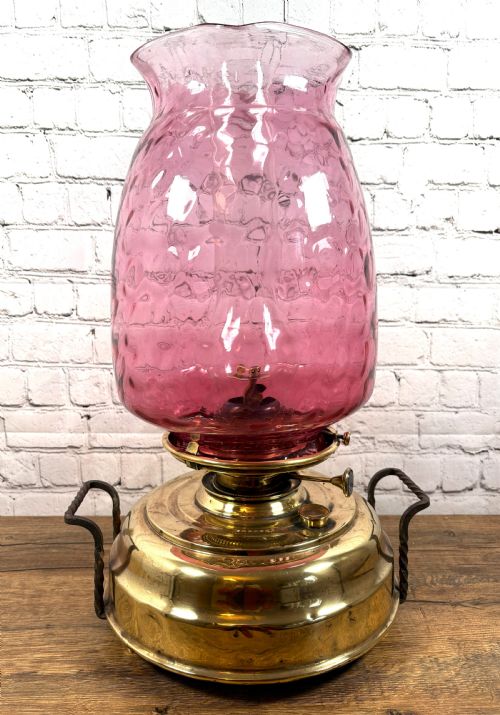
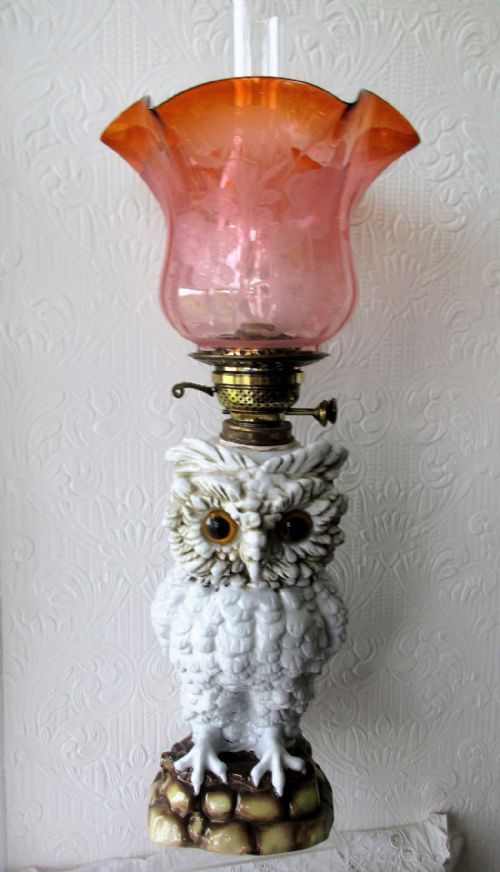
A pink kerosene lamp is an antique lighting piece typically featuring a glass font or shade in shades of pink or cranberry, often paired with brass or marble columns. These domestic items illuminate historical interiors and survive as decorative table lamps from the nineteenth and early twentieth centuries.
The selections available here span the Victorian and Edwardian eras, encompassing both plain glass vessels and more ornate hand-painted porcelain bodies. You will frequently encounter tall column styles and table lamps incorporating cut glass or crystal details alongside the characteristic pink tones.
How they were made
Manufacturers combined blown and pressed glass with cast brass and carved marble to build the structure of each piece. Cranberry and pink glass achieved their distinct hues through mineral additions during the melting process, whilst fonts and shades often received hand-painted enamel or gilt decoration.
Metal components such as brass columns and burners were turned and assembled to support the heavy glass reservoirs securely. The construction reflects standard domestic manufacturing techniques of the Victorian period, relying on fitted collars and threaded connectors to join glass to metal.
Pink Kerosene Lamp Retail Price Guide 2026
Typical asking prices for pink kerosene lamp among the pieces listed under this phrase on Sellingantiques today, from the lower quarter to the upper quarter. They describe what is for sale here now, not the wider market.
The object forms recorded on this page range from simple table fonts to tall column oil lamps with decorated glass shades.
What varies in quality
The distinction between ordinary and superior pieces rests on the weight and clarity of the glass, the crispness of the brass casting, and the presence of hand-painted detailing on the font or shade. Finer examples integrate multiple materials like marble and brass with balanced proportions.
Artisanal execution separates standard factory production from exceptional workshop output, particularly in moulded porcelain figures or intricate glass etching. The refinement of the metal fittings and the depth of the pink coloration dictate the overall calibre of the lamp.
Sitzendorf
The Pink Kerosene Lamp Glossary
- Font
- The oil reservoir of the lamp, usually made of glass, porcelain, or metal, positioned beneath the burner. It holds the fuel required to feed the flame.
- Cranberry Glass
- A rich pinkish-red glass produced by adding gold chloride to the molten batch. It forms the most common coloured shade material in these selections.
- Burner
- The mechanical assembly mounted atop the font that controls the wick and flame. It generally incorporates brass thumbwheels and a gallery to hold the glass shade.
- Reeded Column
- A cylindrical lamp stem decorated with parallel convex moulding running vertically. This design detail adds textural contrast to polished brass columns.
Pink Kerosene Lamp: Frequently Asked Questions
How do I operate an antique oil lamp?
Operating these pieces requires filling the reservoir with a suitable lamp oil and allowing the wick to saturate completely before lighting. Adjust the thumbwheel to raise the wick slightly and apply a flame to the exposed tip.
Place the glass shade carefully back onto the gallery to stabilise the draft and protect the flame. Extinguish the lamp by turning the wick down until the flame dies out.
Can I convert these lamps for modern electricity?
Many people choose to convert these lamps into electric table fixtures to use them safely in modern homes. This process involves running a cord through the centre without altering the historic exterior.
Professional conversion preserves the brass and glass components whilst providing steady, dependable illumination. It keeps the visual character of the original Victorian design intact.
Where should I display my lamp?
These lamps suit placement on side tables, mantels, or sideboard surfaces where their coloured glass catches the natural light. They function well as decorative focal points in rooms styled with traditional or eclectic furnishings.
Position them away from heavy foot traffic to protect the delicate glass shades and tall chimneys from accidental knocks. A stable surface ensures the heavy brass and marble bases remain secure.
How do I identify a Victorian period lamp?
Victorian lamps often feature heavy brass columns, cranberry glass reservoirs, and intricate hand-painted floral motifs on the ceramic or glass bodies. The materials typically include cast brass, marble bases, and heavy moulded glass characteristic of the nineteenth century.
Later Edwardian versions tend to display lighter brass work and softer pastel shades, whilst mid-nineteenth-century examples favour robust columns and deep cranberry tones.