



Pink Daybed
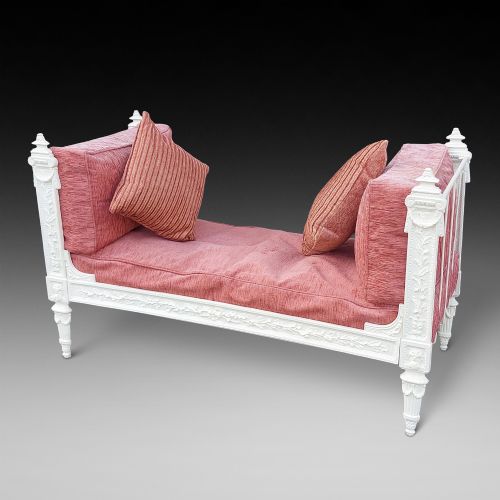
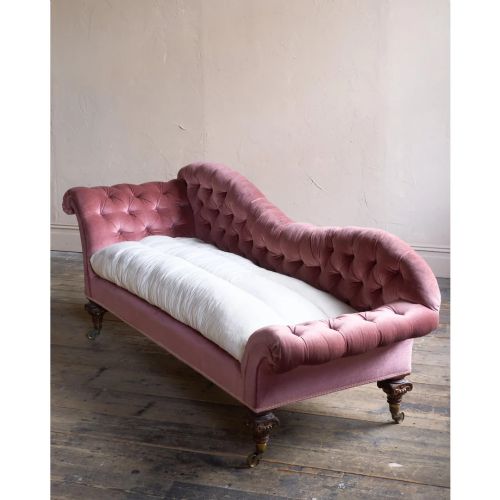
A pink daybed brings a softer colour and a long, low silhouette into a room, offering a place for daytime rest.
Pink Daybed
A pink daybed sits within a tradition of extended seating that includes chaise longues, sofas, and window seats from the nineteenth century. These forms span Victorian, Regency, and William IV periods, alongside French Chateau and French Empire styles.
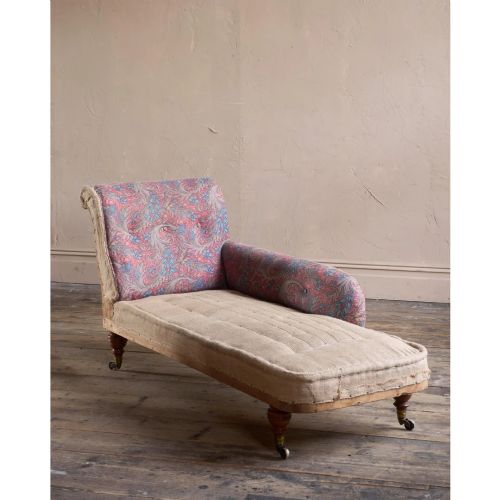
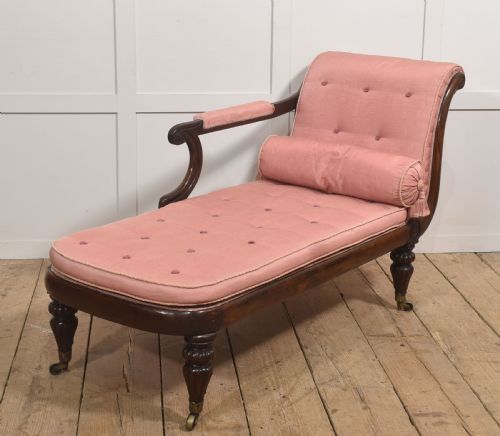
Most examples you encounter on this page take the form of nineteenth-century chaise longues, daybeds, and scroll-end sofas upholstered in fabrics such as velvet, silk, hessian, and general fabric.
Makers and makers' workshops of the era, such as Howard and Sons and Holland and Sons, produced variations that influenced the development of these reclining forms.
How they were made
Timber frames formed the structural core of these pieces, utilising woods such as walnut, mahogany, rosewood, ebony, and ebonised finishes. Selected pieces also incorporated sturdy cast iron and brass elements.
Upholstery techniques brought together traditional materials like fabric, velvet, silk, and hessian over shaped padding to create the characteristic rolling headrests and scroll ends.
Pink Daybed Retail Price Guide 2026
Typical asking prices for pink daybed among the pieces listed under this phrase on Sellingantiques today, from the lower quarter to the upper quarter. They describe what is for sale here now, not the wider market.
Nineteenth-century makers ensured that even when you were simply lying down to read, your elbows rested against hand-carved walnut scrolls.
What varies in quality
The choice of primary timber and secondary framing materials dictates the structural integrity of each piece. Hardwoods like walnut and mahogany contrast with simpler cast iron constructions.
The refinement of the carved details, scroll ends, and column legs separates standard workshop production from pieces bearing the stamps of established makers.
Howard and Sons·Holland and Sons·Thomas Hope
The Pink Daybed Glossary
- Chaise longue
- A long reclining chair that combines the characteristics of a chair and a sofa. It allows a person to sit with their legs outstretched.
- Scroll-end
- A decorative furniture terminal shaped like a rolled scroll. It frequently appears at one or both ends of nineteenth-century sofas and daybeds.
- Ebonised
- Wood finished with a dark stain or paint to imitate ebony. This technique was popular for nineteenth-century seating frames.
- Ionic column legs
- Architectural furniture supports modelled after the ancient Greek Ionic order. They feature characteristic scroll capitals.
- Hessian
- A coarse woven fabric typically used as a sturdy foundation layer in traditional upholstery. It provides support beneath finer top covers.
Pink Daybed: Frequently Asked Questions
What is a pink daybed used for?
A pink daybed serves as a versatile piece for reclining, reading, and resting during the daytime hours. It functions as a hybrid between a chair and a sofa.
These pieces were traditionally placed in parlours, bedrooms, or drawing rooms where daytime lounging took place. Their long frames accommodate a recumbent posture without requiring a full bed.
How do I identify a Victorian daybed?
Victorian daybeds often display heavy timber frames in walnut, mahogany, or rosewood, combined with button-tufted upholstery or scroll ends. They reflect the eclectic revival styles popular during the nineteenth century.
Look for structural details such as cast iron elements, turned legs, or maker stamps from firms active during the Victorian era. The transition from Regency forms to more heavily padded Victorian designs helps date the piece.
Where did daybeds go in the house?
Historical daybeds and chaise longues typically resided in public reception rooms, private boudoirs, or large dressing rooms. They provided comfortable seating for daytime relaxation.
In modern rooms, they work well against a wall, near a window, or at the foot of a bed. Their low profiles maintain sightlines across a space.