



Pink Ceiling Light
A pink ceiling light brings genuine warmth to a room, offering a soft glow through tinted glass and crystal that lifts an interior instantly.
Pink Ceiling Light
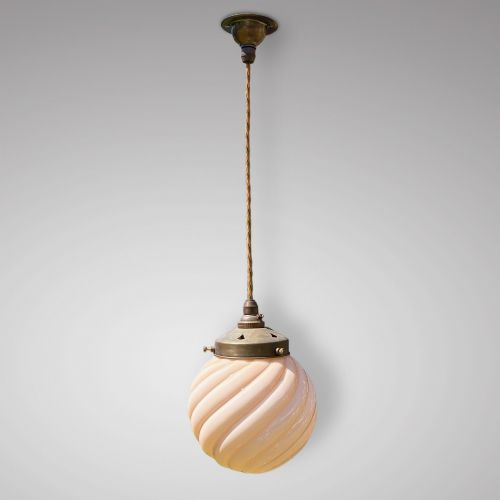
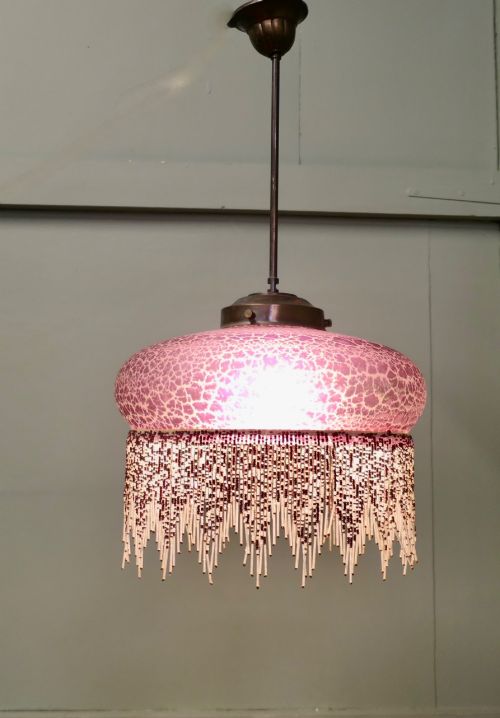
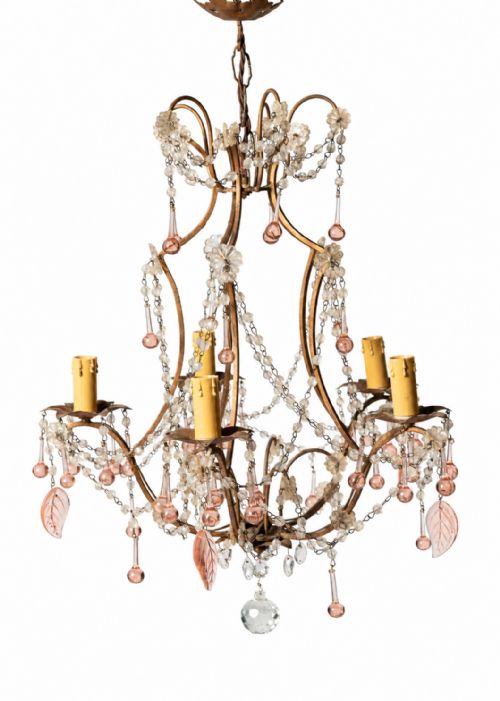
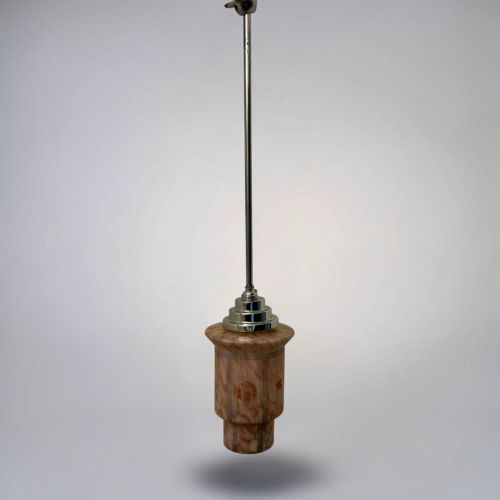
A pink ceiling light covers an array of antique fixtures from the nineteenth century up to the 1930s, taking the form of grand chandeliers, multi-branch fittings, and single pendant lights. The examples seen here range from French and Italian workshops to ornate Victorian designs.
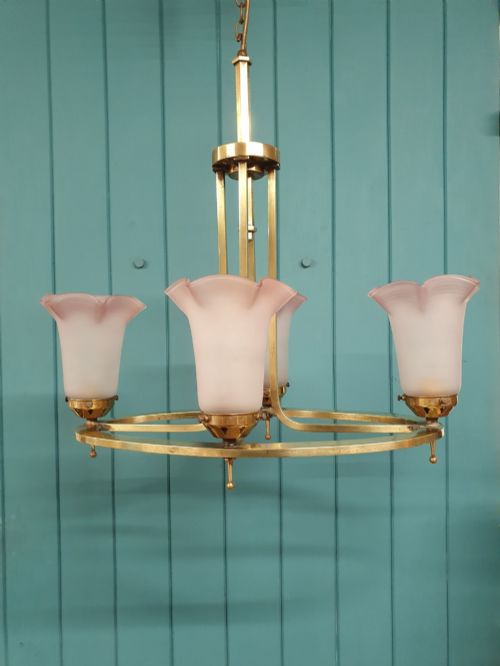
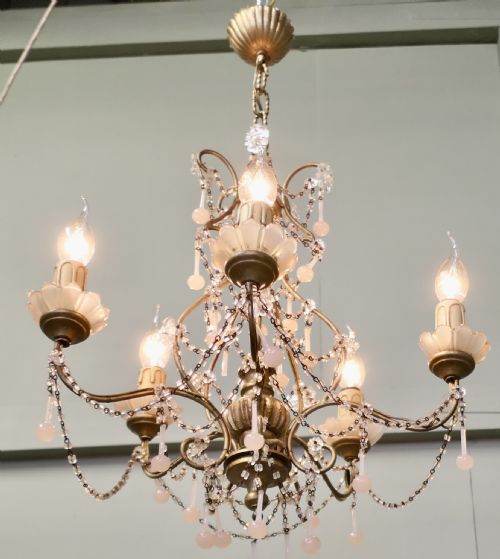
The most frequent versions on this page are Art Deco pieces and early twentieth-century French chandeliers featuring glass drops or opaline shades. Brass and gilt metal frameworks hold together the pink glass components, creating distinct silhouettes from various European traditions.
How they were made
Makers utilised brass and gilt metal to build the structural frames of these chandeliers and pendant lights, often combining them with fabric flex for suspension. The metal armatures provide sturdy support for multiple light branches and heavy glass elements.
The decorative impact relies on specialised glasswork, specifically pink glass, cranberry glass, and opaline glass. Artisans shaped these materials into crimped shades, faceted drops, and coloured crystal components to diffuse the light.
Pink Ceiling Light Retail Price Guide 2026
Typical asking prices for pink ceiling light among the pieces listed under this phrase on Sellingantiques today, from the lower quarter to the upper quarter. They describe what is for sale here now, not the wider market.
Some fixtures feature crimped pink glass shades that resemble delicate flowers frozen mid-bloom beneath the ceiling.
What varies in quality
The standard of a fixture rests upon the complexity of its metal framework, distinguishing simple brass fittings from elaborate gilt metal or multi-branch creations. Richer designs incorporate detailed casting and numerous light points.
Quality also appears in the glass components, separating standard pressed shades from finely worked cranberry glass drops and opaline elements. The clarity and depth of colour within the pink glass dictate the visual presence of the piece.
The Pink Ceiling Light Glossary
- Opaline glass
- A pale, translucent glass type that diffuses light softly across a room. It became popular in decorative lighting during the early twentieth century.
- Cranberry glass
- A deep pinkish-red glass created by adding gold chloride to the molten mixture during production. This technique produces rich colour variations across shades and drops.
- Gilt metal
- Metal that has been given a thin gold-coloured coating or wash to enhance its appearance. It provides a bright finish on chandelier frames from the Art Deco period.
- Pendant light
- A single light fixture suspended from the ceiling by a cord, chain, or flex. These tend to focus illumination directly downward rather than spreading it across multiple branches.
Pink Ceiling Light: Frequently Asked Questions
What periods do these pink ceiling lights come from?
The pieces span from the nineteenth century through the 1900s, 1920s, and 1930s. This covers Victorian, Art Nouveau, and Art Deco design movements.
Each era brings distinct characteristics to the metalwork and glass shades, reflecting the aesthetic preferences of European makers at the time.
How do I identify an Art Deco pink ceiling light?
Art Deco fixtures from the 1920s and 1930s typically feature geometric brass frames and clean lines. Venetian examples often employ six branches.
They rely on opaline or pink glass to create streamlined forms that contrast with the more ornate Victorian styles.
Where were these glass chandeliers traditionally used?
Grand multi-branch chandeliers were placed in principal reception rooms to provide both illumination and a decorative focal point. Smaller pendant lights suited more intimate spaces.
The coloured glass and crystal drops were chosen to cast a warm, flattering tone across the interior.
What materials make up these antique fittings?
The primary structural metals are brass and gilt metal, which support the weight of the glass components. Wiring is often supported by fabric flex.
The decorative elements consist of pink glass, cranberry glass, opaline glass, and coloured crystal drops.