

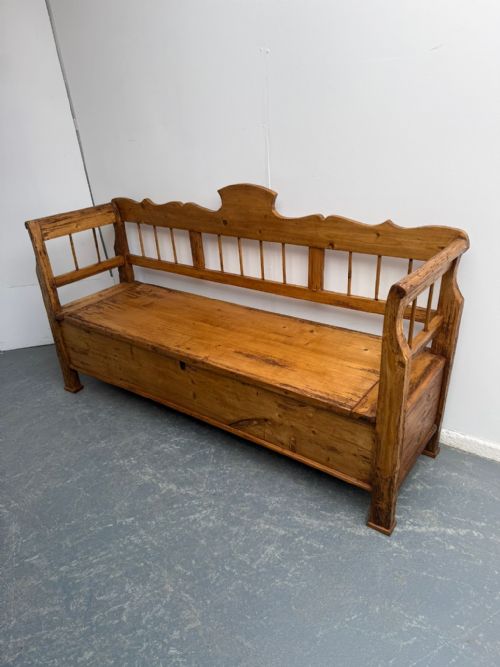


Pine Spindle Bench
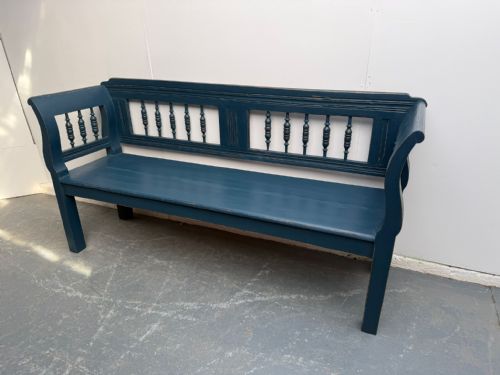
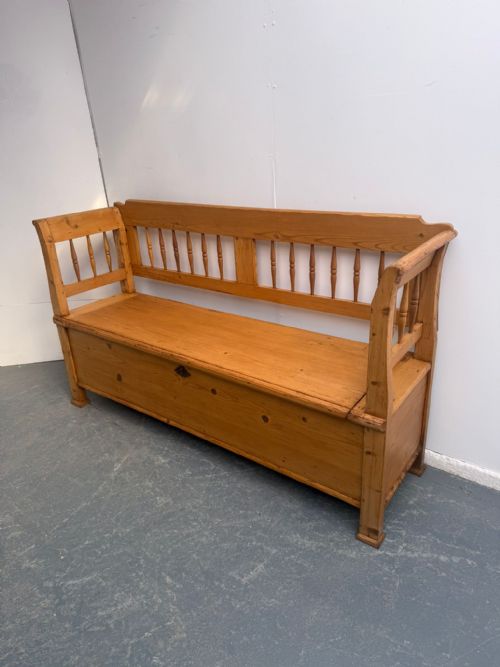
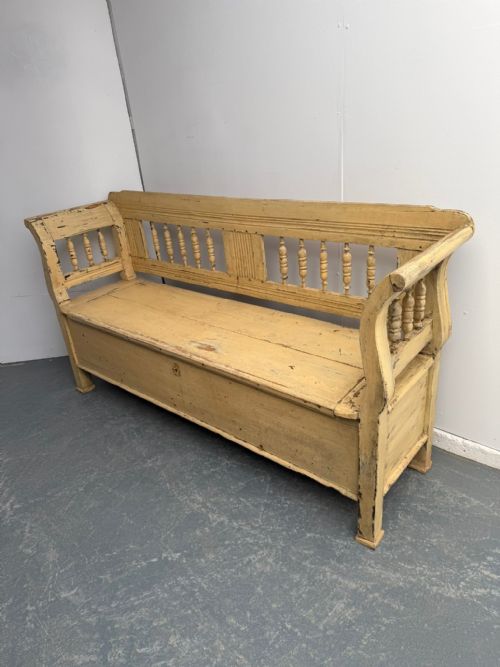
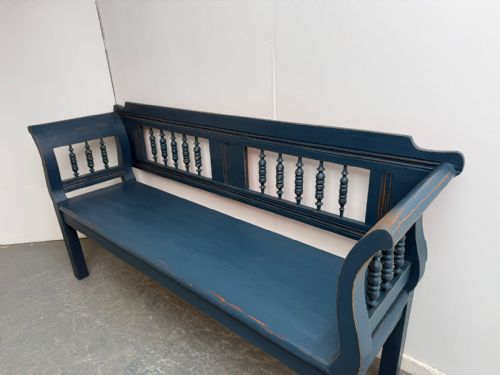
These pine spindle bench examples are robust country seats that bring practical vernacular seating and useful storage into a home.
Pine Spindle Bench
A pine spindle bench provides practical seating with traditional country character, taking the form of settles and long benches originating from various European regions. Buyers seeking a pine spindle bench will encounter pieces spanning the eighteenth and nineteenth centuries, including Georgian vernacular works and continental folk art examples.
The selections available here lean heavily toward Hungarian and Austrian folk art pieces alongside Swedish country seating, often constructed with integrated box settle bases or tall spindled backs. These items range from eighteenth-century origins to mid-nineteenth-century items dated around eighteen seventy.
Most entries function as three-seater benches or enclosed box settles designed to maximise utility in domestic spaces. The predominant construction relies on pine, complemented by painted surfaces and waxed finishes.
Materials and construction
Makers utilised solid pine as the primary timber, building sturdy frames designed to withstand heavy daily use in farmhouse kitchens and domestic halls. Iron fixings occasionally reinforced the joinery of these vernacular forms.
Surfaces were frequently finished with natural wax to highlight the grain of the wood or coated in traditional paint finishes, such as blue and cream pigments. These paint layers often show weathering accumulated over generations of domestic service.
Pine Spindle Bench Retail Price Guide 2026
Typical asking prices for pine spindle bench among the pieces listed under this phrase on Sellingantiques today, from the lower quarter to the upper quarter. They describe what is for sale here now, not the wider market.
Regional styles include Scandinavian country, Hungarian folk art, and Georgian vernacular forms.
Assessing quality
Quality rests upon the preservation of original painted surfaces versus later overpainting, as well as the structural integrity of the spindle work and joinery. Pieces retaining their early or original factory pigment command greater interest among traditional collectors.
The Pine Spindle Bench Glossary
- Box settle
- A traditional wooden bench featuring a high back, solid armrests, and an enclosed box compartment beneath the seat for storage. This form kept drafts away from occupants seated near open hearths.
- Vernacular
- Everyday objects built by local craftspeople using regional traditions and readily available materials rather than following formal academic design rules. These items reflect the practical needs of rural communities.
- Spindle
- A turned wooden rod used decoratively or structurally in the backs and sides of chairs and benches. They provide lightweight strength to otherwise heavy wooden furniture.
- Pine
- A softwood commonly used in European country furniture due to its abundance and ease of working. It accepts paint and wax finishes readily.
Pine Spindle Bench: Frequently Asked Questions
What rooms suit a pine spindle bench?
These benches sit comfortably in hallways, kitchens, and large living spaces where their robust proportions and storage capacity can be fully utilised. Their country character grounds modern or traditional interior schemes alike.
Positioning them away from direct heat sources helps protect the aged pine timbers and historic paint layers from drying out or splitting.
How do box settles differ from standard benches?
Box settles include an integrated compartment beneath the seat lid, historically used for storing blankets or household goods. Standard benches provide open seating without the enclosed storage base.
Both types often incorporate spindled backs to lighten their visual weight in a room.
How should painted pine surfaces be maintained?
Maintenance requires gentle dusting with a dry cloth and avoiding harsh chemical cleaners that might strip historic paint layers. Keeping the room at a stable humidity level protects the underlying pine.
Waxed examples benefit from occasional applications of traditional beeswax to nourish the timber.
Where did these continental country pieces originate?
The available examples originate from various European regions, including Hungary, Sweden, and Austria. Each area developed distinct vernacular styles in painting and spindle turning.
Folk art traditions heavily influenced the bright blue and cream paintwork found on these continental items.