



Pine Office Furniture
Pine office furniture brings sturdy utility and honest grain to a workspace, offering practical storage and writing surfaces built to last.
Pine Office Furniture
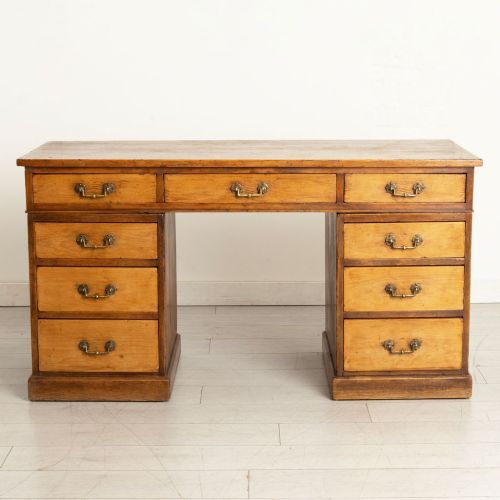
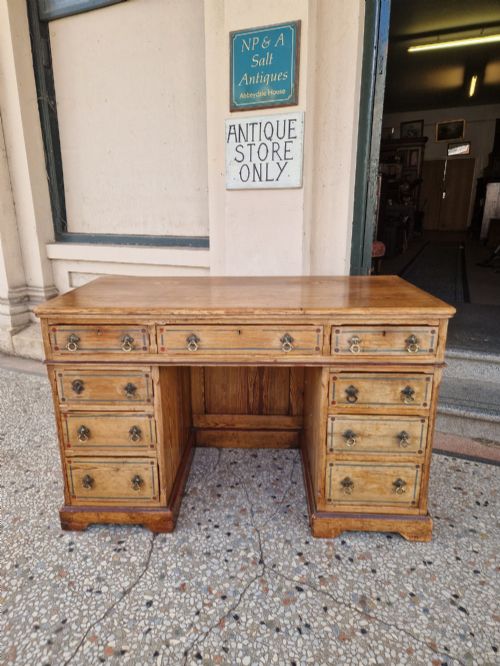
Buyers seeking pine office furniture encounter a range of utilitarian pieces spanning the Georgian, Victorian, and Edwardian eras, through to the 1930s. These pieces include pedestals desks, kneehole desks, chests, and storage units designed for daily work.
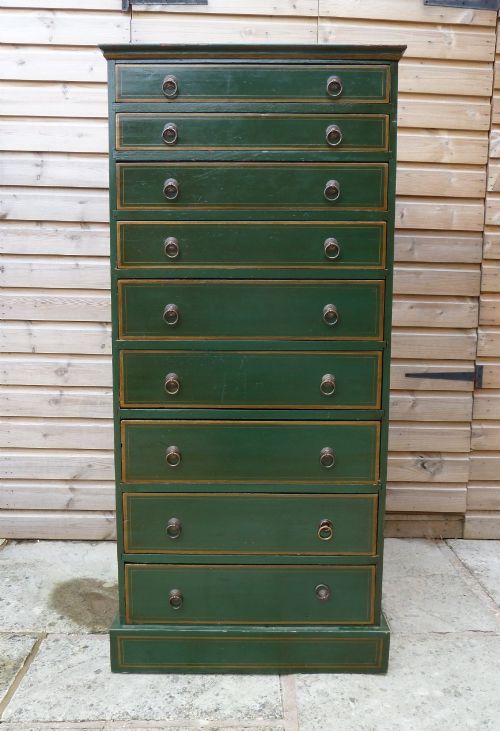
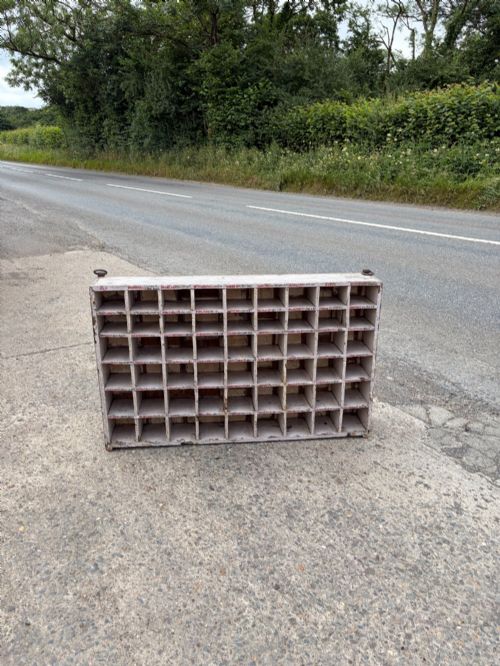
The most common forms on this page are pedestals desks in pine and pitch pine, alongside organizational pigeon holes and institutional cupboards. Pieces reflect styles from Arts and Crafts simplicity to industrial practicality and British institutional design.
Origins span straightforward domestic items to institutional school cupboards and workplace storage, showing how timber was utilised for durability. The selection provides working surfaces and filing solutions shaped by the functional demands of past offices.
How they were made
Construction relies heavily on solid pine and dense pitch pine, chosen for strength and resilience in a busy office environment. Sycamore occasionally appears in secondary elements, while timber boards are joined to handle heavy daily use.
Metal hardware such as brass handles and iron fittings provide functional contrast to the wooden carcases. Painted finishes also occur, showing how surfaces were sometimes sealed or updated for institutional settings.
Pine Office Furniture Retail Price Guide 2026
Typical asking prices for pine office furniture among the pieces listed under this phrase on Sellingantiques today, from the lower quarter to the upper quarter. They describe what is for sale here now, not the wider market.
Listings feature items spanning the Georgian period, Victorian era, Edwardian years, and the 1930s.
What varies in quality
Quality rests in the density and selection of the timber, where heavier pitch pine framing indicates a more substantial build than standard softwood. Construction depth in pedestal desks and the solidity of internal pigeon hole dividers separate standard utility items from superior pieces.
The integrity of original brass and iron hardware influences the character of a piece, alongside how cleanly the joints and drawers were executed. Institutional examples from schools often show robust construction designed to withstand heavy generational use.
The Pine Office Furniture Glossary
- Pitch pine
- A dense, resinous variety of pine timber known for its durability and strong grain pattern. It was frequently utilised for heavy-duty office furniture and institutional desks.
- Pedestal desk
- A writing table supported by two banks of drawers or cupboards on either side. This form provides substantial storage beneath the main working surface.
- Pigeon holes
- A set of small, open compartments stacked within a frame for sorting correspondence and papers. They are commonly found in early office cabinets and above desks.
- Kneehole desk
- A desk with a recessed space in the centre for the user's legs, flanked by pedestals. It offers a compact layout for administrative work.
- Institutional
- Describes items built for public bodies, schools, or offices with an emphasis on utilitarian strength. These pieces often feature robust pine construction and straightforward forms.
Pine Office Furniture: Frequently Asked Questions
What is pine office furniture?
Pine office furniture comprises desks, storage units, and pigeon holes built primarily from softwood timbers during the Georgian, Victorian, and Edwardian periods.
These pieces were designed for practical administrative work, featuring straightforward construction and functional storage layouts.
How do I date a pine desk?
Dating relies on observing construction methods, hardware styles, and the overall design characteristics associated with specific periods like the Victorian era or the 1930s.
Heavier pitch pine builds and specific drawer construction often point towards late nineteenth or early twentieth-century manufacture.
How do I live with antique pine?
Live with these pieces by integrating them into modern workspaces where their honest timber grain provides a warm, tactile contrast to contemporary electronics.
Regular dusting and avoiding excessive direct sunlight will help maintain the finish of the softwood surfaces over time.
Are pigeon holes still useful?
Pigeon holes offer practical vertical storage for letters, notebooks, and stationery in a home study or office environment.
Their open compartments keep frequently used papers visible and organised without taking up excessive desk space.