

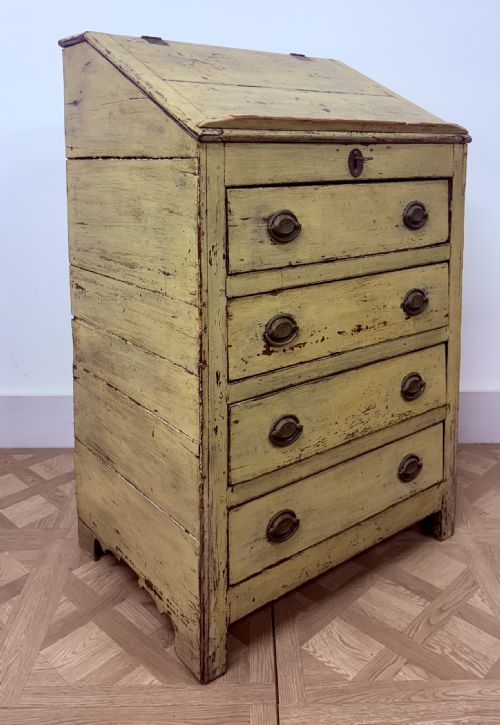


Pine Bureau Desk
Pine bureau desks combine practical writing slopes with concealed compartments, offering a robust and functional workspace rooted in centuries of country craftsmanship.
Pine Bureau Desk
When buyers search for a pine bureau desk, they encounter an array of forms ranging from compact Victorian make up chests to large 18th century English and continental bureau bookcases. These pieces primarily serve as functional writing spaces that double as storage units through integrated drawers, drop fronts, or secretaire compartments.
The selection on this page draws heavily from rural and provincial traditions, including Scandinavian country, Swedish Gustavian, and rustic farmhouse styles. Pieces vary significantly in scale, from tall glazed bureau cabinets down to neat side writing desks.
Origins span Georgian, Victorian, and later periods up to 1920, with finishes that shift between natural wood, painted surfaces, and faux mahogany treatments. The most common manifestations on this page balance utility with provincial charm, utilising durable pine timbers shaped for domestic work.
Materials and construction methods
Construction relies primarily on solid pine and pitch pine timbers, often paired with secondary woods to form the carcases, writing slopes, and internal secret drawers. These surfaces frequently receive painted finishes, ranging from traditional Scandinavian pigments to later decorative coats.
Hardware details incorporate functional brass and iron elements, securing drop-front desks and internal compartments. Glazed sections in larger bureau bookcases utilise fitted glass panes to protect enclosed shelving.
Pine Bureau Desk Retail Price Guide 2026
Typical asking prices for pine bureau desk among the pieces listed under this phrase on Sellingantiques today, from the lower quarter to the upper quarter. They describe what is for sale here now, not the wider market.
Listings span multiple eras from the 18th century to 1920, incorporating pine, paint, glass, brass, and iron across various European regional styles.
Assessing quality and character
Quality in these desks is measured by the integrity of the timber joinery and the cleverness of internal arrangements, such as secret drawers housed within the secretaire compartments. Superior examples maintain smooth operation of drop fronts and deep drawers without sagging.
Surface treatment heavily influences the character of each piece, distinguishing simple utility items from finely finished provincial or Gustavian pieces with original painted schemes.
The Pine Bureau Desk Glossary
- Secretaire
- A piece of furniture containing a writing drawer or a fold-down writing flap that conceals small compartments and pigeonholes. This term frequently overlaps with bureau in period listings.
- Bureau Cabinet
- A tall case furniture piece combining a writing desk compartment with upper shelving enclosed by doors. These often feature glazed panels to display books or collections.
- Gustavian
- A Swedish neoclassical style popular during the late 18th century and referenced in later 19th-century pieces. It is characterised by restrained ornamentation and pale painted finishes.
- Writing Slope
- An inclined desktop surface designed to provide an ergonomic angle for handwriting. In many bureaus, this surface is hinged to fold down and reveal internal storage.
Pine Bureau Desk: Frequently Asked Questions
What is a pine bureau desk?
A pine bureau desk is a utilitarian writing cabinet made primarily of pine timber, featuring a hinged writing flap or slope. They often include internal secret drawers and lower storage drawers.
These pieces emerged across various centuries to serve domestic and provincial administrative needs, blending sturdy softwood construction with functional cabinetry.
Were these desks painted originally?
Many continental and Scandinavian pieces, particularly Swedish Gustavian or country examples, were finished with paint from the outset. Paintwork protected the softwood and contributed to the domestic aesthetic.
Later pieces and English variants often display natural pine, faux mahogany treatments, or surfaces intended for subsequent waxing or painting.
How do I use a bureau desk at home?
The fold-down slope provides a dedicated surface for writing or laptop use, while internal pigeonholes and secret drawers help organise stationery. Lower drawers offer practical storage for household items.
Their compact footprints make them suitable for studies, living rooms, or bedrooms where workspace and storage are required simultaneously.