

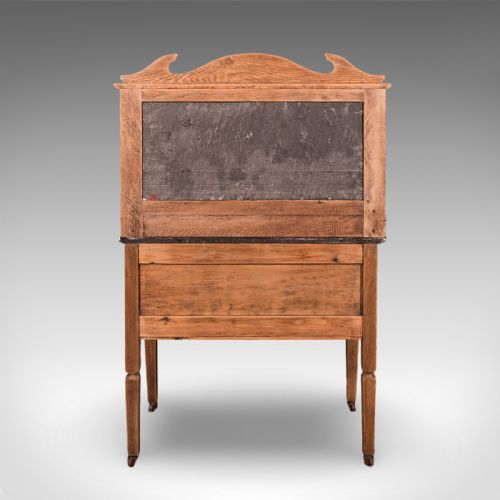


Pine Bedroom Vanity
These pine bedroom vanity pieces combine the utility of a washstand with the mirrored grace of a dressing table, bringing sturdy domestic craft straight into your home.
Pine Bedroom Vanity
A pine bedroom vanity brings together practical timber furniture designed for personal grooming and morning hygiene in the home. Most examples on this page date from the Victorian and Edwardian periods, including pieces from around eighteen ninety and nineteen ten.
The primary forms you will encounter are dressing tables, dressing chests, and washstands. Many feature integrated mirrors, while others incorporate drawers or cupboard space for storage.
Originating largely from English country houses and domestic settings, these pieces range from simple stencilled designs to elaborate faux bamboo styles. They offer a direct link to nineteenth and early twentieth-century bedroom utility.
How they were made
Makers constructed these pieces primarily using solid pine, often applying paint or stencilling to the timber surface for decorative effect. The construction relies on traditional joinery techniques suited to sturdy household furniture.
Hardware and fittings frequently include brass handles and glass mirrors, whilst washstand variants incorporate ceramic or marble tops to resist water and daily wear. Metal accents and slate details appear occasionally across the listed examples.
Pine Bedroom Vanity Retail Price Guide 2026
Typical asking prices for pine bedroom vanity among the pieces listed under this phrase on Sellingantiques today, from the lower quarter to the upper quarter. They describe what is for sale here now, not the wider market.
The listings here span the Victorian and Edwardian periods, featuring pine alongside materials such as glass, brass, marble, and ceramic.
What varies in quality
Quality reveals itself in the choice of timber and the precision of the construction, distinguishing straightforward utilitarian washstands from finer pedestal dressing tables. The presence of original glass, brass hardware, and intact ceramic or marble elements elevates the integrity of a piece.
Decorative execution also sets examples apart, such as the skill behind stencilled pine surfaces or the detailed shaping found in Victorian faux bamboo styles. Simpler painted items represent a more straightforward domestic aesthetic rather than an inferior standard of build.
The Pine Bedroom Vanity Glossary
- Pine
- A softwood commonly utilised for nineteenth-century domestic furniture due to its availability and workability. It accepts paint and stencilling well.
- Washstand
- A piece of bedroom furniture designed to hold a basin and jug for washing, frequently featuring a marble or ceramic top.
- Dressing table
- A low table fitted with one or more mirrors and drawers, used for personal grooming and storing cosmetics or brushes.
- Faux bamboo
- A decorative style where pine or other timbers are carved to imitate the segmented stalks of bamboo, popular during the Victorian era.
- Edwardian
- A stylistic period spanning the reign of King Edward VII, noted in these listings for simpler lines compared to earlier Victorian excesses.
Pine Bedroom Vanity: Frequently Asked Questions
What is a pine bedroom vanity?
It is a piece of nineteenth or early twentieth-century wooden furniture designed for the bedroom, functioning either as a dressing table with a mirror or a washstand.
These items range from simple stencilled chests to elaborate pedestal dressing tables made primarily of pine.
How do I date a pine vanity?
Dating relies on stylistic markers and construction methods associated with the Victorian and Edwardian eras, such as faux bamboo carving or specific hardware.
Reference dates in the listings typically point to the eighteen sixties, eighteen nineties, or early nineteen hundreds.
Were these used for washing or grooming?
They served both purposes depending on the specific form, with washstands built for morning hygiene and dressing tables equipped for hair and cosmetics.
Many survivors combine these functions or share similar architectural layouts within the bedroom.
Are mirrors original to the dressing tables?
Many dressing tables retain their original glass mirrors, often mounted on pivoting frames supported by small side chests or upright arms.
Examining the fixings and the silvering on the glass helps determine whether the mirror has stayed with the base since manufacture.