







Pine Apothecary Drawers
Pine apothecary drawers are multi-drawer storage banks that bring utilitarian utility and modular warmth to a room.
Pine Apothecary Drawers
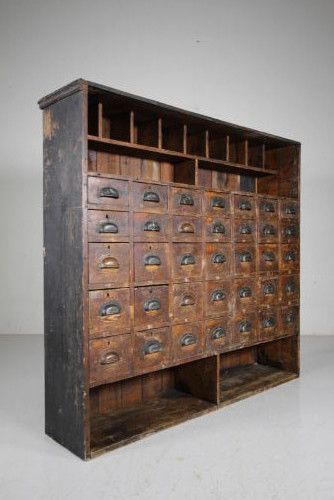
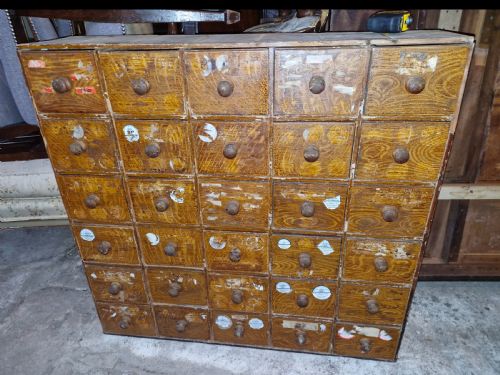
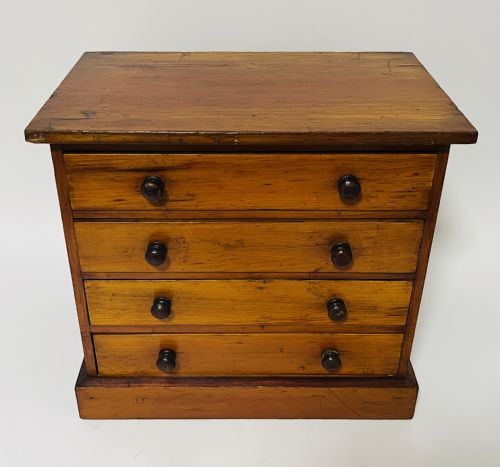
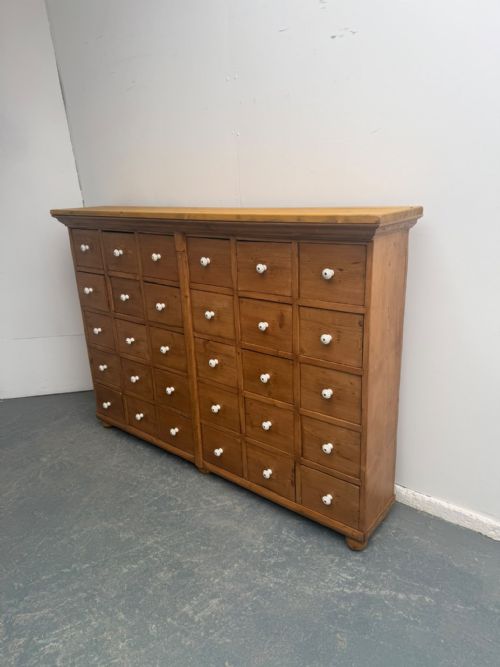
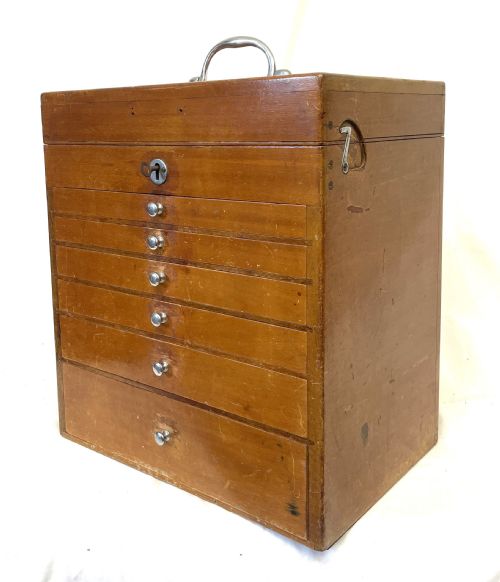
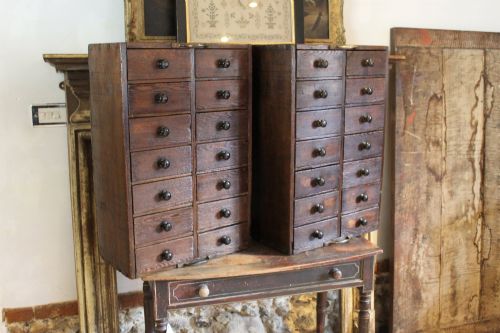
Pine apothecary drawers encompass banks of small drawers, shop fittings, and collectors' cabinets originally used in pharmacies, dispensaries, and retail premises. These pieces range from compact wall-hung spice boxes and small specimen chests to substantial multi-drawer shop counters containing twenty or fifty drawers.
The versions most commonly met on this page date from the nineteenth century and the Edwardian era, spanning Victorian utilitarian styles and rustic country workshops. They frequently feature original painted surfaces in white, cream, light green, or unpainted stained deal and pine.
Buyers choose these storage units for their numerous small compartments, which suit modern organisational needs while retaining a distinct industrial and country aesthetic. Their origins span English, French, and Hungarian workshops, reflecting diverse commercial storage traditions.
Construction and materials
Carpenters built these storage banks primarily using solid pine and deal, often paired with oak for structural elements or drawer linings. Workshops combined simple tongue-and-groove joinery with robust carcase construction to withstand daily commercial use in shops and surgeries.
Hardware played an essential functional role, utilising brass and iron handles, drawer pulls, and label holders. Many surfaces received protective coats of paint or stain, with several surviving examples retaining their original white, cream, or green painted finishes.
Pine Apothecary Drawers Retail Price Guide 2026
Typical asking prices for pine apothecary drawers among the pieces listed under this phrase on Sellingantiques today, from the lower quarter to the upper quarter. They describe what is for sale here now, not the wider market.
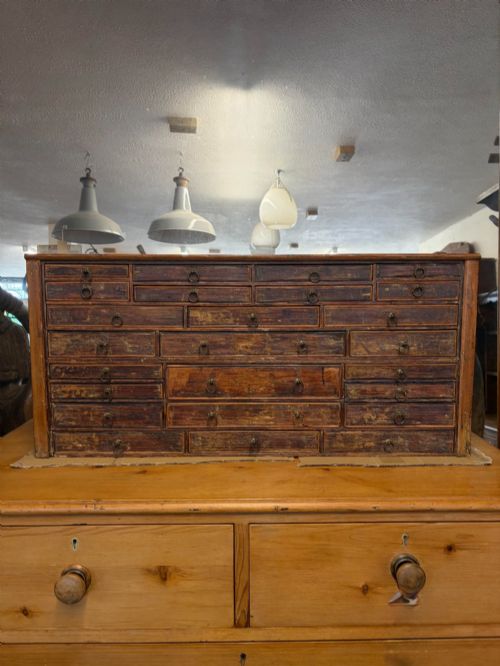
Recorded forms include wall-hanging spice boxes, shop counters, tall watchmaker drawer banks, and large specimen cabinets housing up to fifty drawers.
Judging quality and character
Quality rests in the scale of the drawer bank and the intact survival of original surface finishes, such as historic paint layers or patinated deal. Substantial configurations with twenty, twenty-five, or fifty drawers demonstrate higher commercial ambition than smaller domestic spice boxes.
The integrity of the original hardware - including brass pulls, iron handles, and small label frames - distinguishes superior examples. Surviving provenance linking a piece to specific provincial businesses or makers adds historical weight to the construction.
Luxmore's of Ilfracombe·D Napier and Sons
The Pine Apothecary Drawers Glossary
- Deal
- Fir or pine timber commonly used in British furniture and shop fittings during the eighteenth and nineteenth centuries. It provided an affordable and workable surface for utilitarian cabinetry.
- Shop fitting
- Custom furniture built specifically for commercial retail premises, including counters, drawer banks, and shelving units. These pieces were designed for heavy daily use.
- Specimen cabinet
- A small-drawer cabinet originally intended for storing natural history samples, botanical collections, or geological specimens. They feature numerous shallow drawers for organised categorisation.
- Homeopathic chest
- A compact wooden box or small set of drawers created to hold medicinal remedies and phials. They often incorporate internal divisions to keep glass bottles secure.
- Bank of drawers
- A large multi-drawer unit designed for high-density storage in workshops, offices, and retail stores. They maximise vertical storage capacity through rows of identical small drawers.
Pine Apothecary Drawers: Frequently Asked Questions
What were pine apothecary drawers originally used for?
These multi-drawer units served in pharmacies, apothecary shops, and medical dispensaries to store herbs, dry ingredients, and medicinal remedies.
Commercial premises and merchants also utilised similar drawer banks as shop fittings to organise small hardware, seeds, or trade goods.
How do I date a set of apothecary drawers?
Dating relies on examining construction methods, timber choice, and the style of the drawer fronts and handles. Nineteenth-century examples often feature hand-cut dovetails and vernacular deal or pine construction.
Paint layers and hardware styles also offer clear chronological clues, shifting from simple iron pulls to standardised brass framing towards the Edwardian period.
Are these drawer units suitable for modern kitchens?
The numerous small drawers make them ideal for organising cutlery, dry goods, spice jars, and kitchen utensils. Their narrow footprints allow them to sit comfortably against walls or function as compact islands.
Placing them in a modern interior adds rustic texture while providing practical modular storage solutions.
What is the difference between a spice box and a shop counter?
Spice boxes are smaller, wall-hung or tabletop cabinets with a handful of drawers designed for domestic culinary use. They require minimal floor space and often feature decorative backplates.
Shop counters and banks of drawers are substantial, freestanding floor-standing units containing dozens of drawers built to withstand heavy retail operations.