
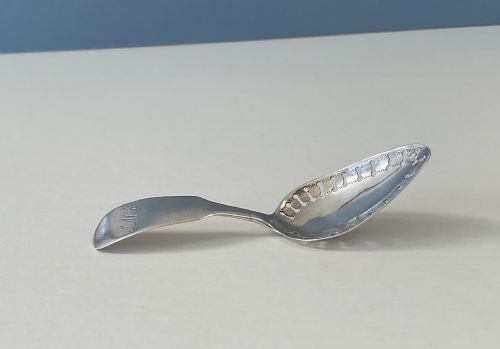


Pierced Sterling Silver Spoon
A pierced sterling silver spoon brings intricate metalwork and bright table service together, offering both decorative charm and historic function for the dining room.
Pierced Sterling Silver Spoon
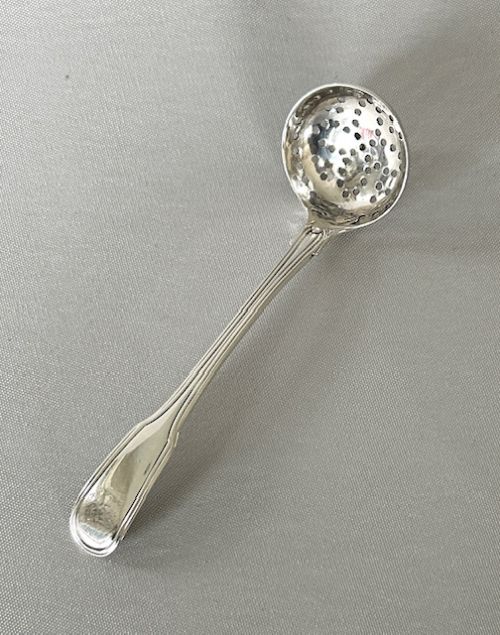
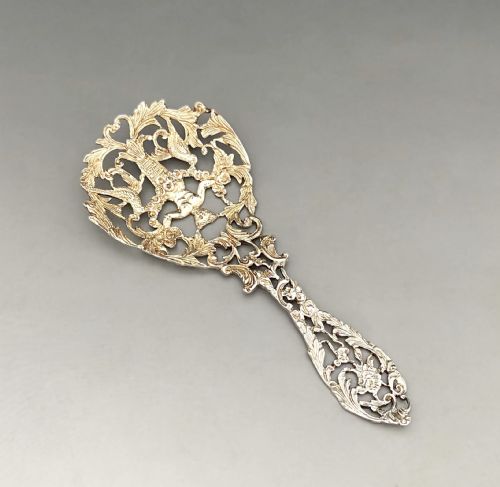
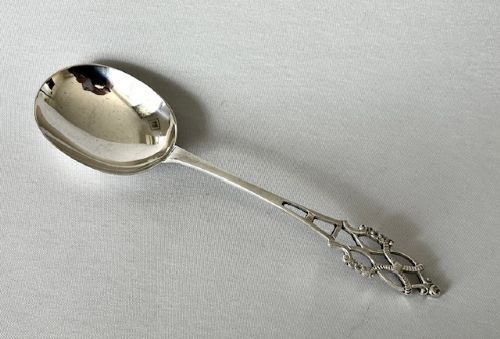
A pierced sterling silver spoon represents a diverse category of antique tableware designed for specific culinary tasks, ranging from fine tea service to condiment and dessert use. When searching for a pierced sterling silver spoon, buyers encounter various forms including caddy spoons, spice sifters, sugar spoons, and serving ladles dating from the mid-eighteenth century through the early twentieth century. Styles span from restrained Georgian designs and ornate Victorian cast work to distinctive Arts and Crafts examples.
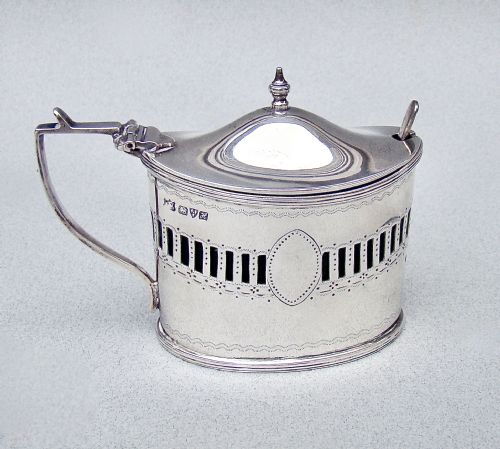
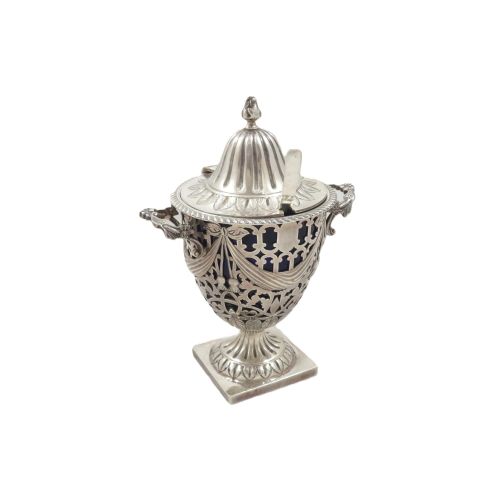
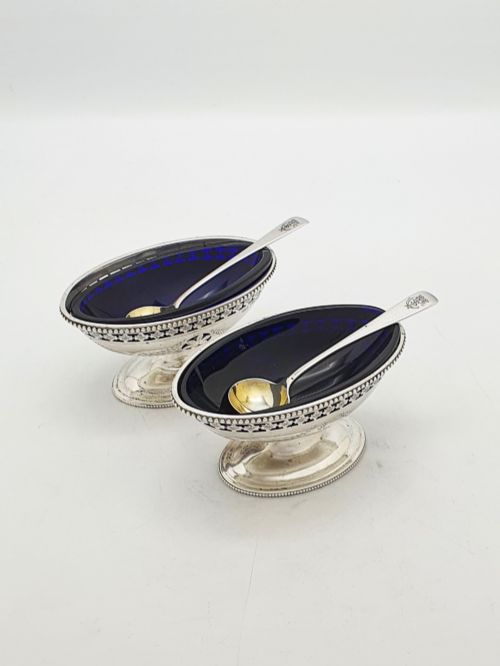
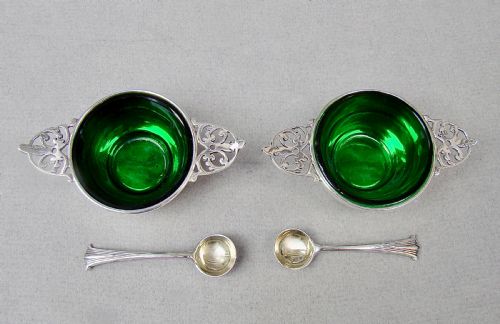
The selection here encompasses multiple related serving pieces made of sterling silver, often accompanied by coloured glass liners or housed in fitted presentation cases. While formal serving spoons and sifter spoons dominate, related items like mustard pots and salt cellars frequently appear alongside them. These objects originate from provincial English makers, Scottish assay offices, and London workshops, reflecting regional silversmithing traditions across distinct historical periods.
How they were made
Silversmiths constructed these pieces primarily from solid sterling silver, shaping bowls and handles through hammering, casting, and pressing techniques. Piercing was executed by hand using fine saws or piercing tools to create delicate apertures, floral motifs, or geometric latticework across the bowl or handle. Engraving and chasing often added surface texture and detail to complement the cut-out patterns.
Many items incorporate contrasting elements such as cobalt blue, ruby red, or green glass liners held securely within pierced silver frames or mustard pots. Makers utilised fitted velvet linings inside presentation cases to protect fragile cased sets and matched serving utensils during storage and transport.
Listings feature items spanning the eighteenth, nineteenth, and twentieth centuries, including Georgian, Victorian, Edwardian, and Arts and Crafts examples.
What varies in quality
Quality in these items depends heavily on the crispness of the piercing work and the precision of the hand-cut details within the silver bowl. Superior examples feature balanced proportions, crisp hallmarks, and deeply struck maker's marks that remain clear despite generations of polishing.
The integrity of the structural design separates standard utilitarian pieces from exceptional collector items. Thicker gauge silver resists bending during daily service, while intact original components, such as matching coloured glass inserts or fitted presentation boxes, elevate the integrity of the piece.
Alfred Marston·Josiah Williams and Co·William Comyns·Jeremiah Lee·Charles Stuart Harris·Omar Ramsden·Amy Sandheim·Plucknett
The Pierced Sterling Silver Spoon Glossary
- Sterling silver
- An alloy consisting of ninety-two point five percent silver by mass and seven point five percent other metals, usually copper. This standard composition provides the durability required for functional tableware.
- Mote spoon
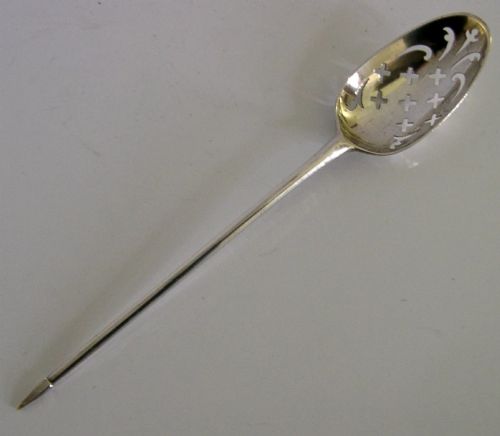
- A specialised slender spoon featuring a pierced bowl used for skimming tea leaves from cups during the eighteenth century. The tapered stem often terminates in a small point for clearing tea strainer spouts.
- Caddy spoon
- A short-handled spoon designed specifically for measuring loose tea leaves from a caddy into a teapot. These pieces frequently exhibit inventive bowl shapes and decorative handle designs.
- Assay office
- An official body responsible for testing the purity of precious metal items and stamping them with hallmark symbols. Towns such as London, Chester, and Birmingham maintained active offices for certifying silver.
- Sifter spoon
- A utensil featuring a perforated bowl intended for dusting sugar or spices over food items. The piercing patterns often form symmetrical floral or geometric arrangements.
Pierced Sterling Silver Spoon: Frequently Asked Questions
What were mote spoons used for?
Mote spoons served a dual purpose during tea drinking in the eighteenth century. The pierced bowl strained floating tea leaves from the cup while the pointed terminal cleared blocked spouts.
These slender utensils represent a fascinating bygone era of formal tea service before the widespread adoption of built-in pot strainers.
Are caddy spoons safe to use?
Most antique caddy spoons remain entirely functional for measuring dry goods like tea or coffee. Solid silver possesses natural antimicrobial properties suitable for food contact.
Inspect the hinge or handle attachment on older items to ensure structural stability before regular handling.
How do I identify silver hallmarks?
British silver hallmarks typically include a standard mark indicating purity, a town mark showing the assay office, and a date letter signifying the specific year of testing.
Reference guides help match these stamped symbols to specific makers and production periods across English, Scottish, and Irish assay records.