



Pierced Silver Wine Holder
These pierced silver wine holder pieces protect the dining table and present the bottle with traditional British craftsmanship.
Pierced Silver Wine Holder
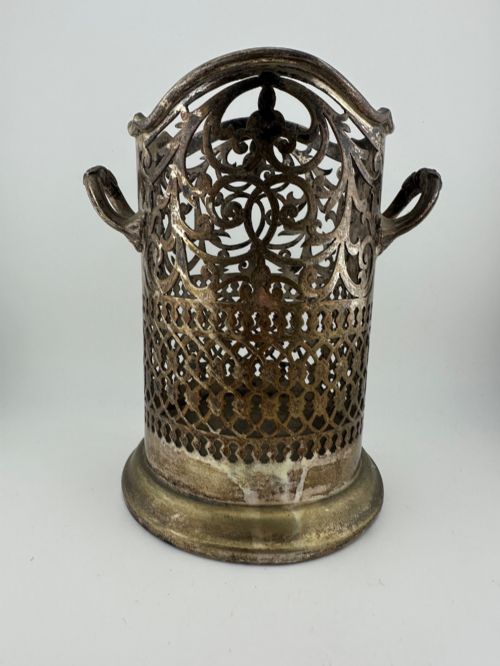
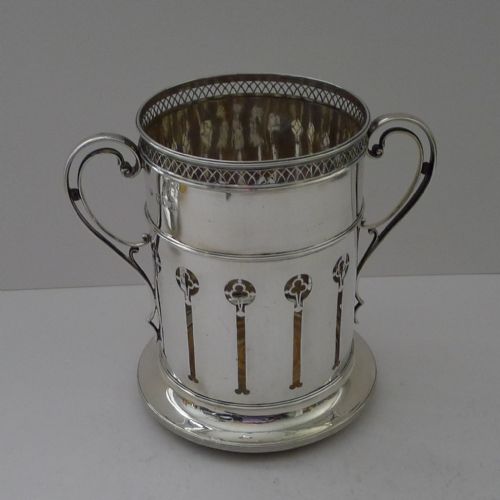
A pierced silver wine holder serves to cradle a bottle upon the dining table while allowing the material of the vessel or label to remain visible through openwork metal. These decorative desk accessories and barware items appear in forms ranging from single coasters to multiple bottle carriers and large coolers.
Most examples encountered on this page date from the Edwardian era and the twentieth century, alongside older Victorian and Georgian specimens. Buyers will find variations including wooden bases inset into metal rims, cylindrical frames, and open lattices of silver plate or sterling silver.
How they were made
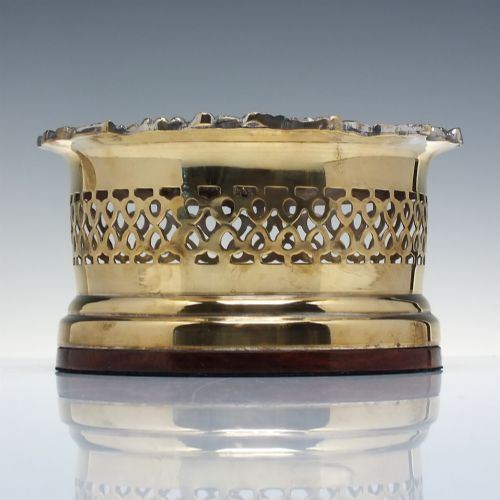
Craftsmen utilised sterling silver, silver plate, and Old Sheffield plate alongside secondary materials such as mahogany, wood, brass, copper, and felt. Bases frequently incorporated turned timber lined with baize or felt to prevent scratching the mahogany surface of a dining table.
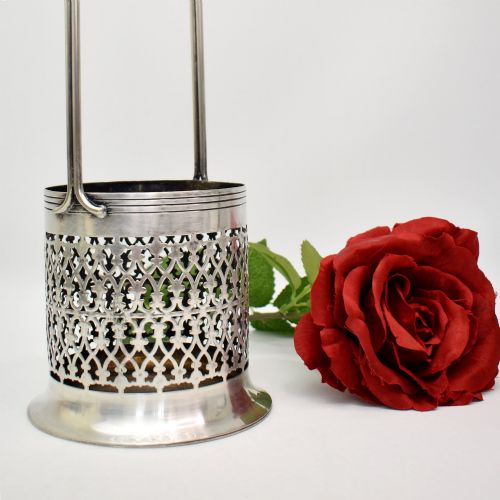
Metalwork involved piercing intricate patterns through sheet silver or plated metal, creating openwork galleries that encircled the bottle. Makers applied electroplating techniques to nickel silver or base metals during the nineteenth and twentieth centuries to achieve the appearance of solid silver at a different scale of production.
Pierced Silver Wine Holder Retail Price Guide 2026
Typical asking prices for pierced silver wine holder among the pieces listed under this phrase on Sellingantiques today, from the lower quarter to the upper quarter. They describe what is for sale here now, not the wider market.
Listings feature items from the Georgian period through the Edwardian era up to twentieth-century traditional designs.
What varies in quality
The distinction between standard production and superior work lies in the crispness of the pierced decoration and the weight of the metal used in the frame. Finer examples display cleanly cut apertures without distortion, substantial gauge silver or plate, and well-fitted wooden bases that sit flush within the metal gallery.
Makers such as Mappin & Webb or Brook & Son applied careful finishing to seams and mounts, whereas simpler commercial items show more utilitarian construction. The integration of materials, such as the join between silver plate and turned mahogany, demonstrates the skill of the original workshop.
Mappin & Webb·Brook & Son
The Pierced Silver Wine Holder Glossary
- Pierced silver
- Metalwork decorated by cutting open designs through the sheet. This technique lightens the object while creating decorative patterns around the bottle.
- Old Sheffield plate
- A composite material formed by fusing a thin sheet of silver to a thicker copper base. It is associated with eighteenth and nineteenth-century manufacturing.
- Electroplated nickel silver
- A base metal alloy of copper, nickel, and zinc coated with a layer of pure silver through an electrical process. This became common for barware in the Victorian period and later.
- Wine coaster
- A small tray or shallow basket designed to hold a bottle and slide across the polished wood of a dining table after dinner.
Pierced Silver Wine Holder: Frequently Asked Questions
How do I clean a silver wine holder?
Use a soft cloth and a specialised silver polish designed for plated or sterling surfaces. Avoid abrasive pads that might damage the delicate pierced metalwork.
Keep moisture away from any wooden bases or felt linings attached to the underside. Gentle upkeep preserves the original finish without wearing down the silver layer.
Can these hold champagne bottles?
Standard coasters suit normal wine bottles, while larger coolers and magnum buckets accommodate champagne and larger vessels. Check the internal diameter of the holder against the bottle size.
Multiple bottle holders handle several vessels at once for larger gatherings. Single frames remain restricted to standard table wine dimensions.
What is Old Sheffield plate?
Old Sheffield plate is an early form of plating where a sheet of silver is fused to a copper core. This method produces a distinct edge where the copper base metal becomes visible through wear.
Pieces made this way date earlier than standard electroplated nickel silver items. Collectors value the material for its historical manufacturing technique.
Why do some coasters have wooden bases?
Wooden bases provide a stable foundation for the bottle and protect the dining table from condensation. Mahogany was frequently turned and fitted inside the metal gallery.
Felt or baize on the underside ensures smooth sliding across the wood surface. This combination of timber and silver defined formal British dining traditions.