


Pierced Silver Wine Coasters
Pierced silver wine coasters are table accessories designed to hold bottles securely while protecting the cloth, prized for their intricate fretwork gallery sides.

What pierced silver wine coasters are
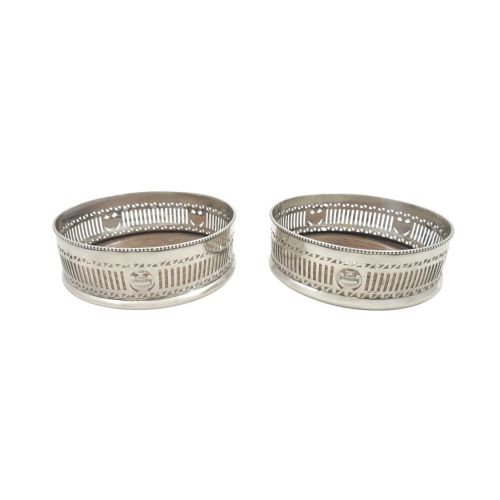
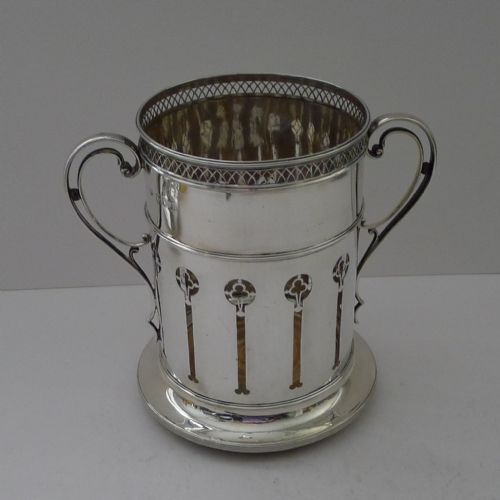
Pierced silver wine coasters appear on the market in pairs, taking the form of circular trays with openwork gallery walls designed to hold wine and decanter bottles. These table accessories protect dining linen from condensation and drips while allowing the bottle labels to remain visible through the cut-out metalwork.
The pieces on this page span the Edwardian period and the early twentieth century, alongside earlier nineteenth-century examples in the archive. Makers utilised sterling silver or silver plate, frequently pairing the metallic pierced galleries with turned wooden bases.
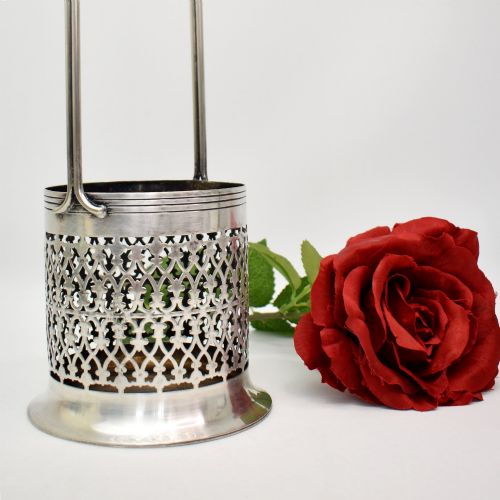
Forming the core of these listings are smaller sterling silver pairs alongside larger silver-plated variants. The designs often incorporate stylistic revivals, botanical motifs such as grapes and vines, or reticulated patterns across the circular walls.
How they were made
Makers constructed these coasters by piercing or reticulating sheets of silver or base metal to create openwork galleries. These decorative metal walls were then secured around turned wooden bases, which often featured central silver bosses or roundels for hallmarks.
Silver plating methods evolved from Old Sheffield Plate techniques on copper to later electroplating processes on base metal. Sterling silver versions utilised traditional silversmithing methods, incorporating rolled rims and applied cast or chased borders with motifs like grapes and vines.
The archive and current listings span materials including sterling silver, silver plate, and turned wood across the nineteenth and twentieth centuries.
What varies in quality
The distinction between standard production and superior examples lies in the crispness of the piercing and the weight of the metal. Heavier gauge silver and deeply chased botanical motifs indicate more careful workshop execution than thin, stamped metalwork.
The quality of the turned wooden base and the integration between the metal gallery and the wood determine the longevity of the piece. Fine pairings feature dense turned timber securely fitted to substantial gallery walls without visible distortion.
Asprey·Mappin & Webb·James Dixon and Son
The Pierced Silver Wine Coasters Glossary
- Reticulated
- Describes metalwork patterned with a network of fine interlacing lines or net-like piercings. It creates an airy, lace-like effect across the silver surface.
- Turned wooden base
- The circular wooden insert fitted to the bottom of the coaster, shaped on a lathe. These bases are frequently made of mahogany and sometimes hold a hallmarked silver centre.
- Old Sheffield Plate
- A composite material made by fusing a thin sheet of silver to a thicker copper ingot before rolling. This technique was largely superseded by electroplating in the nineteenth century.
- Silver plate
- Base metal coated with a thin layer of silver through electroplating or earlier fusing methods. It offers the visual appearance of solid silver at a different cost.
Frequently Asked Questions
What are pierced silver wine coasters used for?
These items hold wine bottles and decanters on the dining table, preventing moisture and condensation from marking polished wood surfaces or table linen.
The openwork gallery design keeps the bottle upright while displaying the glass and wine labels through the decorative metal patterns.
How do you care for silver plated wine coasters?
Maintenance involves gentle cleaning with a specialised silver cloth or mild polish to preserve the plated surface without wearing away the underlying metal.
Care must be taken around the turned wooden bases, keeping moisture away from the timber and any central silver roundels during cleaning.
Are these coasters sold individually or in pairs?
The listings and historical archive for these items predominantly feature pairs, reflecting their original use at opposite ends of a dining table or to accompany multiple bottles.
Finding matched pairs remains a key feature for collectors seeking complete table settings from the nineteenth and early twentieth centuries.
What materials are used in these wine coasters?
Construction involves sterling silver, silver plate, or Old Sheffield Plate for the pierced walls and galleries, frequently combined with turned wooden bases made from timbers such as mahogany.
Some examples feature solid silver central bosses inset into the wooden floor, which often bear the maker marks and hallmarks.