
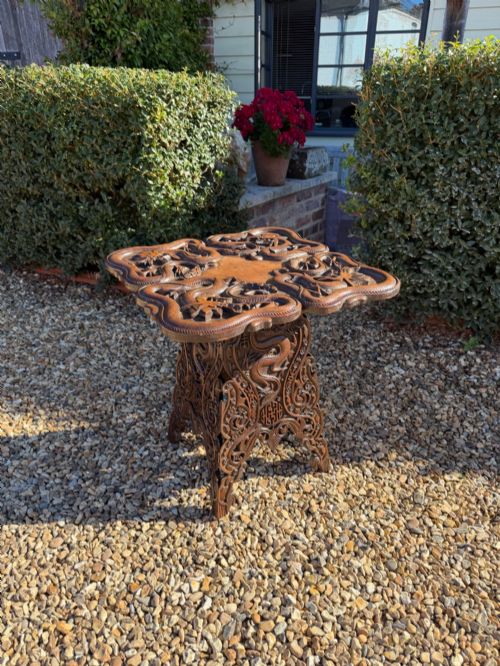
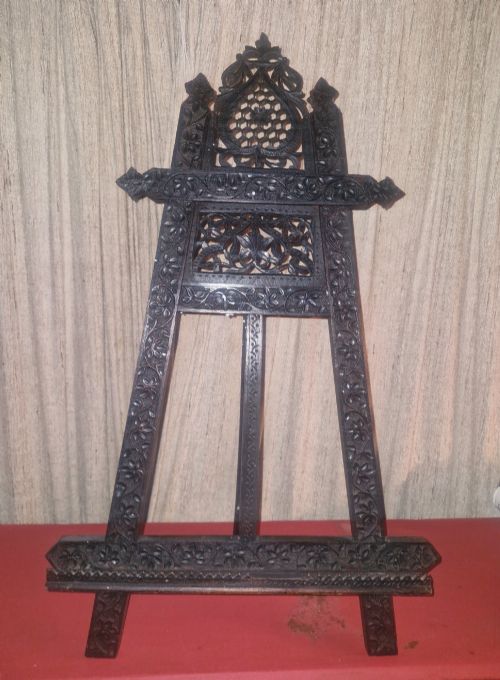
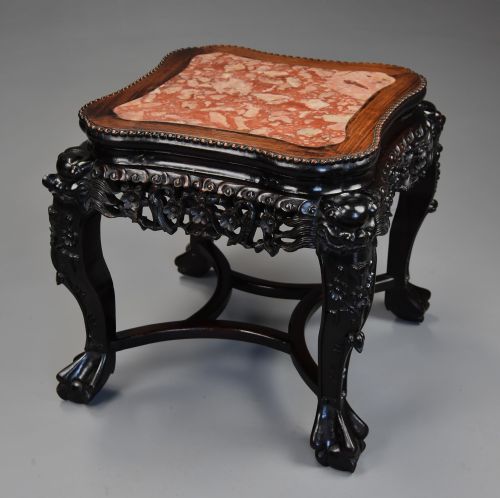


Pierced Hardwood Display Stand
These pierced hardwood display stand pieces lift porcelain, marble and bronze to give a room vertical interest and historical depth.
Pierced Hardwood Display Stand
A pierced hardwood display stand brings intricate carving and solid timber structure together to elevate decorative objects within a room. When you search for this phrase, you encounter forms that range from low pot stands and vase supports to picture display easels and occasional tables.
The pieces on this page span the nineteenth century, the Edwardian era, and the year 1890, reflecting diverse origins from Chinese export workshops to Kashmiri and Anglo-Indian makers. You will most frequently meet compact table forms and carved vase stands featuring traditional motifs.
Makers utilised dense timbers such as rosewood, teak, walnut, and padouk to construct these sturdy supports. Many examples incorporate inset marble tops or pierced aprons that frame the negative space beneath a treasured vessel.
How they were made
Artisans employed dense timbers like rosewood, padouk, and walnut, selecting them for their natural weight and ability to hold fine detail under chisels. These woods were joined using traditional framing techniques that accommodated the expansion and contraction of timber over decades.
The characteristic pierced work involves meticulous hand-carving through the thickness of the hardwood to create openwork lattice, floral scrolls, and geometric patterns. In several instances, smooth stone or marble sections are set directly into the wooden frame to provide a stable, cool surface for heavy vessels.
The listings on this site record items spanning the nineteenth century, 1880, 1890, 1910, and the Edwardian period.
What varies in quality
The crispness and depth of the manual carving dictate the visual impact of each stand, separating routine workshop output from pieces with exceptional sculptural definition. Deeply undercut foliage and clean negative spaces demand greater technical skill from the carver than shallow, machine-roughed patterns.
The choice of timber and the structural integrity of the joints also define the standard of a piece, with select hardwoods showing rich, natural grain patination rather than obscuring surface finishes. Furthermore, the integration of stone elements, such as fitted marble inset tops, reveals the precision applied during original assembly.
The Pierced Hardwood Display Stand Glossary
- Hardwood
- Dense, durable timber derived from deciduous trees, chosen for furniture and stands that require structural strength and fine carving capability. Rosewood, teak, and walnut fall into this category.
- Marble
- Metamorphic rock with a crystalline structure, often cut into thin slabs and inset into table and stand tops to provide a heat-resistant and decorative surface. It contrasts sharply with the dark timber surrounding it.
- Padouk
- A heavy, durable tropical timber known for its rich reddish-brown colour and stability, frequently utilised in traditional Chinese furniture and stands.
- Pot stand
- A low platform or small table designed specifically to elevate ceramic vessels, jardinières, or bronze objects off the floor or main furniture surface. These often feature shaped aprons and short legs.
- Pierced work
- A decorative technique where material is cut entirely through from the front to the back to create openwork designs and intricate silhouettes. This method lightens heavy timber structures visually.
Pierced Hardwood Display Stand: Frequently Asked Questions
What were pierced hardwood display stands used for originally?
These stands served to elevate prized decorative objects, vases, and scholarly items within traditional interiors, lifting them above floor drafts and dust.
By raising these items, makers allowed light to pass through the pierced aprons, highlighting both the stand and the object placed upon it.
How do I care for antique hardwood furniture?
Maintain these pieces by keeping them away from direct heat sources and extreme humidity fluctuations, which can cause timber to split.
Apply a light application of appropriate wax polish occasionally to nourish the grain without building up heavy surface residues.
How can I tell the difference between Chinese and Indian stands?
Chinese examples often incorporate Qing Dynasty motifs, stepped or shaped marble insets, and dense padouk or rosewood construction.
Indian and Kashmiri pieces frequently display distinct walnut carving styles, intricate overall floral relief, and regional joinery methods.
Can these stands support heavy porcelain vases?
Solid hardwood and stable inset marble tops provide robust platforms capable of bearing considerable weight from ceramic and bronze vessels.
Ensure the base of your object sits flat across the centre of the stand to distribute the weight evenly over the legs.