




Piecrust Coffee Table
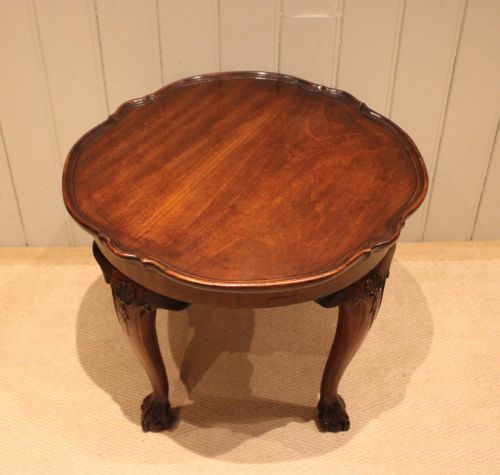
A piecrust coffee table brings the carved dignity of formal dining furniture down to the hearth, offering a raised edge that keeps your books secure.
Piecrust Coffee Table
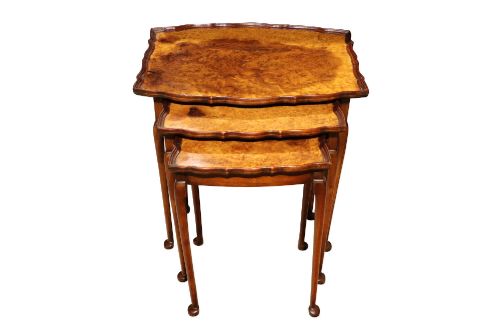
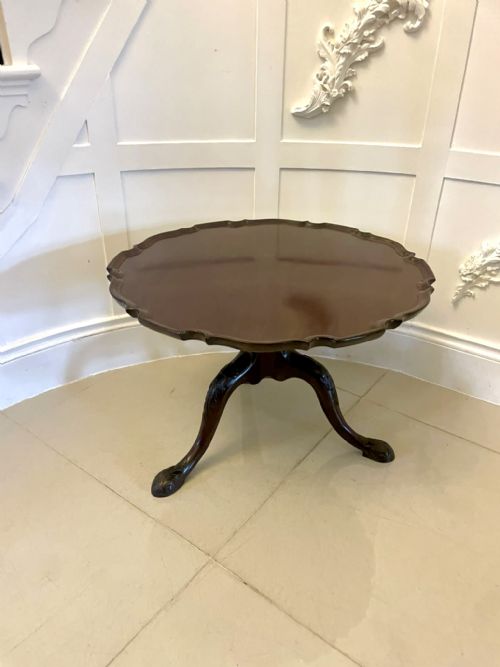
A piecrust coffee table is a low surface characterised by its distinctively scalloped and moulded rim, echoing the pastry edge of traditional baking. These pieces appear in forms ranging from compact circular occasional tables to nests and low lamp stands.
The versions you meet most frequently on this page date from the twentieth century, specifically the nineteen-twenties and thirties, when revival aesthetics brought earlier cabinetmaking traditions into modern domestic settings.
Originating in spirit from Georgian and George III craftsmanship, these later interpretations adapt eighteenth-century silhouettes for informal sitting room use without losing their traditional timber surfaces.
Materials and construction
Makers utilised rich hardwoods such as mahogany, oak, and yew wood, often selecting veneer surfaces like burr walnut to showcase intricate grain patterns across the top. The characteristic raised rim requires careful shaping from solid timber or precise edge moulding.
Structural framing relies on traditional joinery methods appropriate for each period, from the substantial timbers of earlier centuries to the lighter built standards of revival pieces.
Listings feature mahogany, burr walnut, and yew wood, spanning periods from Georgian origins to nineteen-twenties and thirties revivals.
Judging quality and finish
Quality rests in the crispness of the moulded rim and the selection of timber veneers, where superior examples display symmetrical grain matching and smooth, flowing curves without awkward transitions.
The integrity of the construction, from the stability of the legs to the flush fit of joints, distinguishes a sturdy domestic table from a purely decorative piece.
The Piecrust Coffee Table Glossary
- Piecrust edge
- A raised, scalloped perimeter carved or moulded in imitation of pastry crimping. This detail prevents small items from rolling off the surface.
- Burr walnut
- Timber taken from the wart-like growths on walnut trees, yielding highly ornamental swirling grain patterns. Cabinetmakers prize it for tabletops.
- Veneer
- A thin slice of decorative wood glued over a secondary timber foundation. This technique allows craftsmen to display costly grain patterns economically.
- Queen Anne style
- A decorative movement featuring cabriole legs and pad feet, heavily referenced in tables from the early twentieth century.
- Occasional table
- A small, movable stand designed for specific, temporary use in a principal room. These formats adapt well to modern coffee table heights.
Piecrust Coffee Table: Frequently Asked Questions
What is a piecrust table?
A piecrust table is an occasional or coffee table featuring a distinctive raised, scalloped edge carved to resemble pastry work. This decorative and practical border prevents items placed on the surface from sliding off.
Most examples you encounter today date from the early twentieth century revival periods, adapting eighteenth-century dining and tea table forms for modern domestic rooms.
Are these tables original Georgian pieces?
While the design originates in the eighteenth century under George III and Queen Anne influences, many tables on this page date from the nineteen-twenties and thirties. These revival pieces capture the historical silhouette using timber and construction methods of their own era.
Examining the wood species, underside construction, and overall wear helps determine whether a table belongs to the Georgian period or later decades.
What timbers were used?
Makers constructed these tables from a variety of traditional hardwoods, with mahogany being particularly common for formal revival styles. Other variations utilise oak, yew wood, and walnut.
Many decorative tops feature burr walnut or exotic veneers applied over a stable secondary wood base to create striking symmetrical patterns.
How do I style one at home?
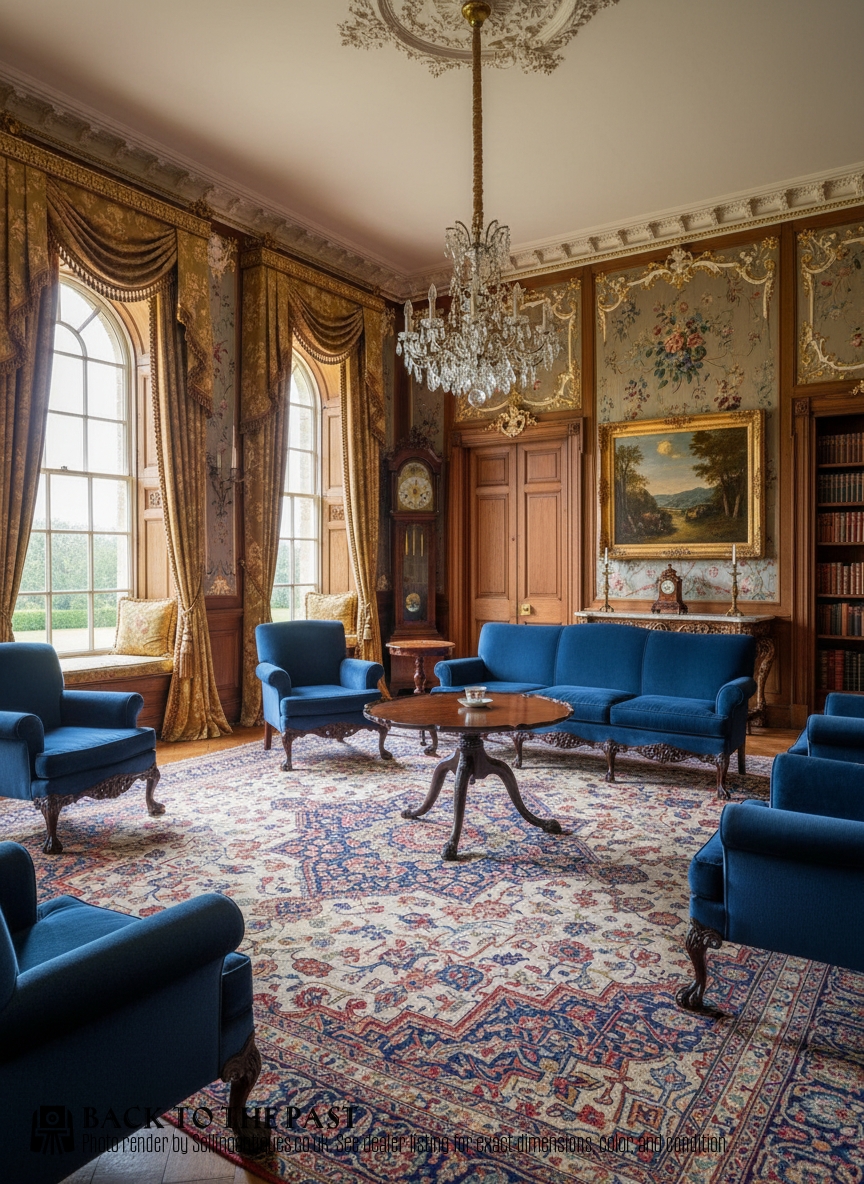
A piecrust coffee table serves as a natural focal point in a sitting room, providing a traditional silhouette that contrasts well against contemporary seating. The raised rim makes it well suited for displaying books or small decorative objects.
Keep the surrounding space clear to let the carved edge and timber grain remain visible as a primary decorative feature.