
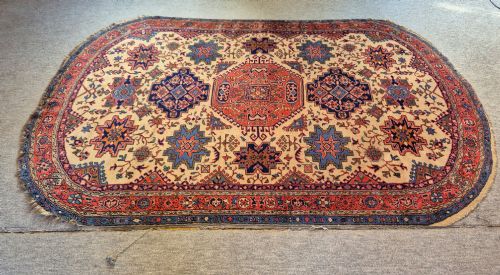
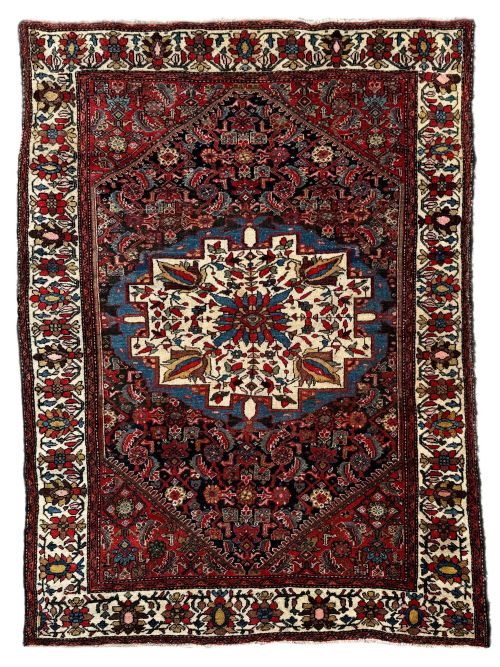


Persian Bijar Carpet
These heavy, durable Persian Bijar carpets come from West Persia, offering dense weaves and robust structures that endure generations of daily footfall.
Persian Bijar Carpet
When searching for a Persian bijar carpet, you encounter room size carpets, long kelleh formats, and smaller village rugs created across the nineteenth and early twentieth centuries. These woven works emerge from Kurdish tribal traditions in West Persia, frequently described through regional variations such as Bidjar or Kurdish styles.
You meet pieces ranging from compact formats around one metre in length up to large room sizes exceeding five metres. The selection includes flatwoven kilims and pile rugs featuring curve ended designs, floral patterns, and unusual lemon ground colours.
Village weavers produced these items using traditional methods, resulting in sturdy structures that distinguish them from finer city-made Persian counterparts. The pieces on this page span from the nineteenth century into the nineteen thirties, reflecting the enduring output of Kurdish weavers.
Assessing quality in weaving and condition
The fineness of the knot density and the crispness of the design execution set the higher grades apart from standard village work. Superior examples demonstrate exceptional balance in their floral or medallion layouts alongside evenly beaten piles.
The condition of the wool pile and the integrity of the original selvedges and ends dictate the preservation standard. Intact dimensions and original kilim ends add significant merit to older nineteenth-century examples.
Listings feature items dated from the nineteenth century through to the nineteen thirties, encompassing both wool pile rugs and flatwoven kilims.
The Persian Bijar Carpet Glossary
- Kelleh
- A long, rectangular format carpet, narrower than a standard room size, often used in hallways or large reception spaces.
- Kilim
- A flatwoven textile produced without a pile, utilised both as a rug and a runner across various West Persian villages.
- Kurdish
- Pertaining to the tribal groups of West Persia who traditionally wove these durable carpets and kilims.
- Selvedge
- The finished side edges of a carpet, bound tightly to prevent the horizontal weft threads from unravelling.
Persian Bijar Carpet: Frequently Asked Questions
What makes a Bijar carpet different from other Persian rugs?
These carpets earn the iron rug reputation through an exceptionally dense knotting technique where weavers hammer the weft threads down firmly.
This process creates a rigid, heavy structure that stands up to heavy wear far longer than standard city carpets.
How do I know the age of my carpet?
Dating relies on examining the types of wool, the structure of the foundation, and the complexity of the natural dye palette.
Pieces from the nineteenth century often display hand-spun wool and specific tribal motifs that evolved into more commercial patterns by the nineteen thirties.
Where were these carpets originally made?
Kurdish weavers produced these textiles in the town of Bijar and surrounding villages throughout the West Persia region.
Local tribal traditions heavily influenced the geometric and floral designs woven into these rural workshops.
Can I use a large carpet in a high traffic hallway?
The dense wool pile and sturdy cotton foundations make these runner and kelleh formats well suited for busy areas.
The heavy structure resists compression and wear from frequent footsteps better than finer, more delicate weaves.