

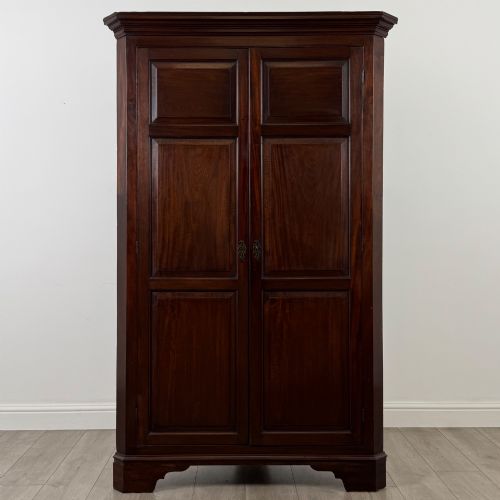
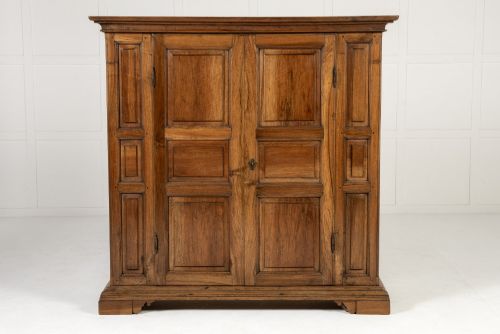


Period Wooden Press
These period wooden press and cabinet pieces are substantial storage forms built from oak, mahogany, and walnut that anchor a room with serious historic presence.
Period Wooden Press
When you search for period wooden press, you encounter large storage furniture that spans centuries of British, European, and Asian cabinet-making. The examples on this page range from modest oak court cupboards to towering linen presses and wardrobe combinations.
The selection leans heavily on mahogany and oak, with forms that include Georgian corner cabinets, Regency linen presses, and seventeenth-century court cupboards. Buyers searching this term often want a commanding architectural storage piece for a hall, bedroom, or principal reception room.
How they were made
Cabinet-makers relied on dense native and imported timbers, utilising solid oak for seventeenth-century pieces and rich mahogany or walnut for eighteenth and nineteenth-century examples. Burr amboyna veneer and lacquered finishes appear on select high-status forms, applied over sturdy carcases.
Construction techniques involve traditional joinery such as pegged framing for earlier court cupboards and finely dovetailed drawer construction for later Regency linen presses. Iron and brass fittings, from hinges to lock plates, secure the heavy timber doors and panelled sections.
Period Wooden Press Retail Price Guide 2026
Typical asking prices for period wooden press among the pieces listed under this phrase on Sellingantiques today, from the lower quarter to the upper quarter. They describe what is for sale here now, not the wider market.
The current selection spans five distinct centuries, featuring oak, mahogany, walnut, and exotic veneers across wardrobes, court cupboards, and linen presses.
What varies in quality
Quality reveals itself in the selection of timber figures, such as flame mahogany or burr amboyna, and the crispness of carved mouldings rather than mere age. The harmony of proportions across large wardrobes and linen presses dictates whether a piece commands a space or feels heavy.
Internal arrangement and the retention of original brass hardware elevate certain cabinets above standard utility pieces. The integrity of the timber movement and the depth of the polished finish separate workshop masterpieces from utilitarian storage.
The Period Wooden Press Glossary
- Linen Press
- A tall piece of case furniture featuring upper sliding trays for folded textiles and lower drawers for hanging garments. These forms dominated domestic storage before the universal adoption of the fitted wardrobe.
- Court Cupboard
- An early oak storage form, usually featuring an upper recessed cabinet supported by pillars above a lower cupboard section. These seventeenth-century pieces display robust joined construction and carved decoration.
- Cabinet on Chest
- A two-part storage form comprising an upper display or storage cabinet mounted upon a lower chest of drawers. This architectural arrangement became popular during the late seventeenth and eighteenth centuries.
- Veneer
- A thin layer of fine timber applied over a secondary wood carcase to create decorative patterned surfaces. Burr amboyna and flame mahogany frequently appear in this format on luxury cabinets.
Period Wooden Press: Frequently Asked Questions
What is a period wooden press used for?
These large timber pieces serve as primary storage furniture for household linens, folded garments, and hanging clothing. Their deep proportions and internal shelving or trays accommodate bulky textiles that standard modern wardrobes struggle to hold.
Beyond utilitarian storage, they act as focal architectural elements within a room. Their presence brings both historical texture and heavy functional capacity to domestic interiors.
How do I date a wooden linen press?
Dating relies on identifying the primary timber, construction methods, and stylistic vocabulary of the mouldings. Oak dominates the seventeenth-century examples, while mahogany and walnut define the Georgian and Regency periods.
Examining the drawer construction, backboards, and secondary timbers inside the carcase provides further chronological clues. Earlier pieces use hand-split boards and pegged joinery, whereas later nineteenth-century pieces show more standardised machine preparation.
Where should I place a large wooden cabinet?
These substantial pieces require solid walls and adequate floor space to sit comfortably without dominating the proportions of a modest room. Hallways, large bedrooms, and high-ceilinged dining rooms provide the ideal architectural scale for court cupboards and double wardrobes.
Positioning them away from direct sunlight and strong heat sources protects the polished timber and delicate veneers from drying out or splitting over time.
What distinguishes a court cupboard from a standard cabinet?
A court cupboard is a specific seventeenth-century oak form characterised by a recessed upper tier supported on short columns above a base cupboard. This architectural stepped profile separates it from flat-fronted cupboards and simple armoires.
They often display carved strapwork, panelled doors, and heavy turned stiles typical of Jacobean and William and Mary joinery. Their construction is resolutely solid and pegged, unlike the later veneered carcases of the Georgian era.