



Period Tripod Tea Table
A period tripod tea table provides a stable, elegant surface on three legs, perfectly suited for serving tea or displaying prized objects in a traditional interior.
Period Tripod Tea Table
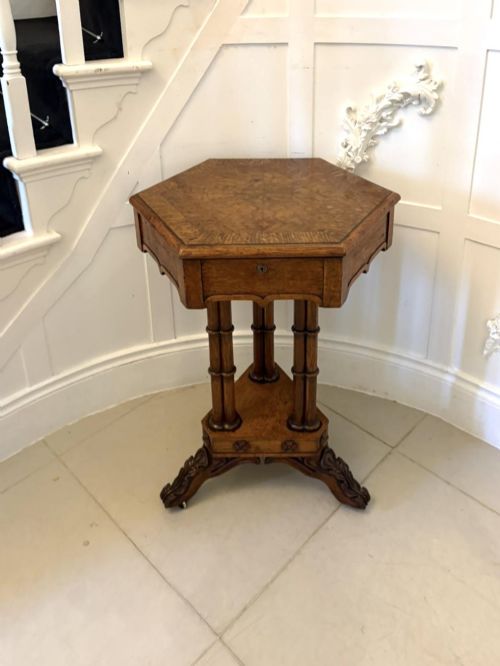
When searching for a period tripod tea table, buyers encounter a specific form of small occasional table supported by a central pillar and three legs, historically designed to be easily moved around a room. The selections span the eighteenth and nineteenth centuries, taking in periods such as the Georgian, Regency, and Victorian eras.
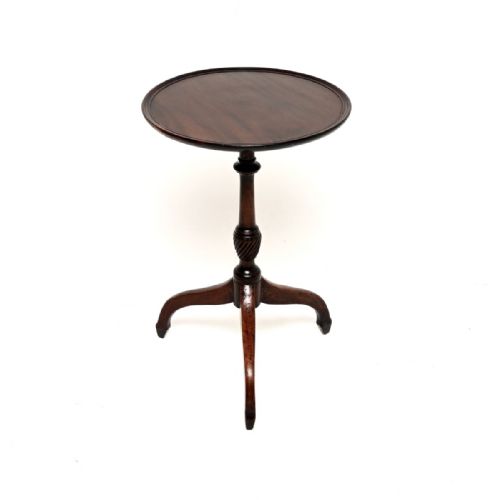
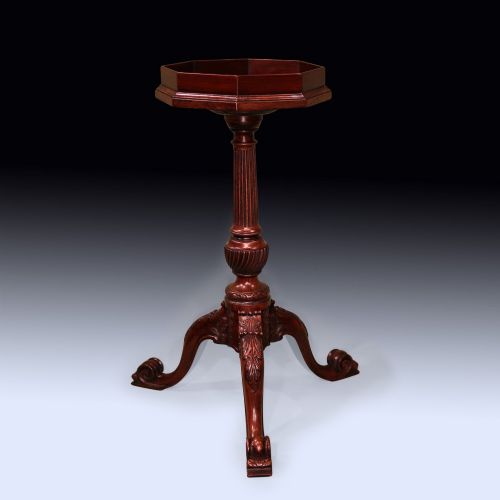
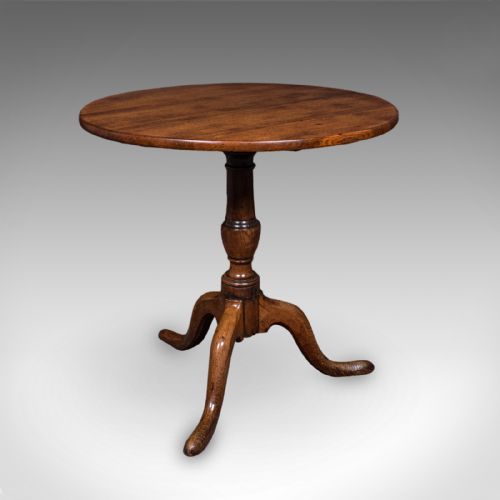
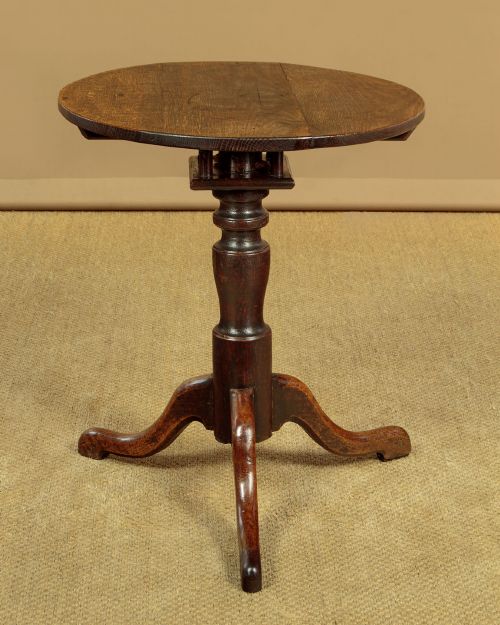
The most common version met on this page is the George III mahogany tilt-top table, often featuring a circular or snap top that folds vertically when not in use. Simpler vernacular oak examples and more compact kettle stands also appear frequently alongside these mahogany pieces.
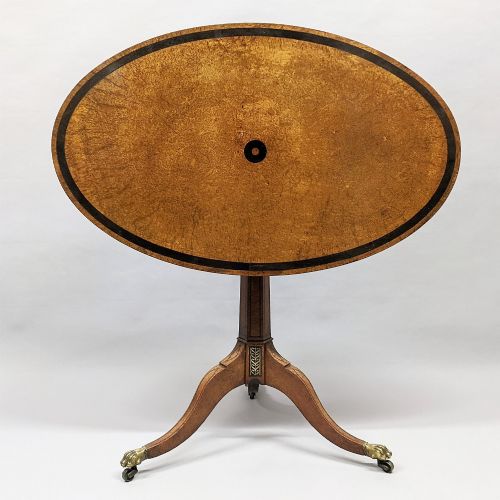
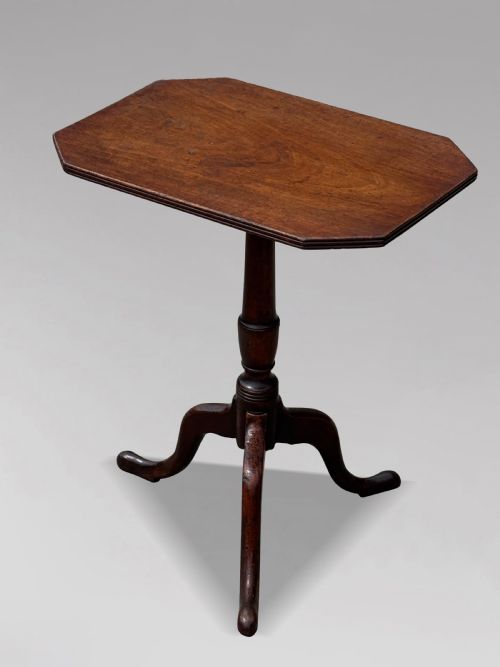
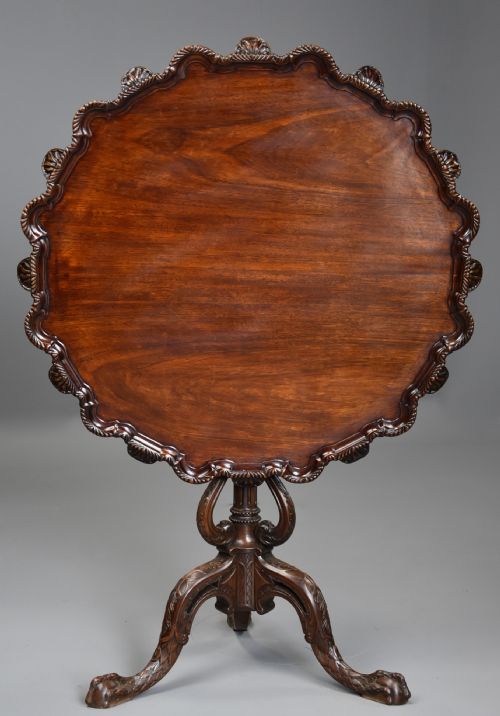
Makers utilised a variety of top designs, ranging from plain circular boards to pie-crust edges, square tops, and occasional inlaid panels of amboyna or ebony. Alongside standard occasional tables, the selection extends to specialised forms like lamp tables, drum tables, and French Restauration gueridons.
Materials and construction
Cabinetmakers relied heavily on timber selection, predominantly employing mahogany for formal eighteenth-century and Regency pieces, alongside oak for earlier vernacular or Georgian country items. Secondary woods such as beech appear in the structural framing and leg assemblies beneath the tops.
Exotic timbers like pollard oak, amboyna, and ebony feature as decorative veneers or contrasting elements on later nineteenth-century examples. Brass fittings and marble insets occasionally supplement the timber construction on specific continental or decorative tables.
The characteristic mechanism involves a birdcage or snap-top action, allowing the top to pivot and lock horizontally or fold flat against the central pillar. Turned and carved columns descend into tripod leg bases, which frequently terminate in pad feet, tripod scroll feet, or carved cabriole supports.
Period Tripod Tea Table Retail Price Guide 2026
Typical asking prices for period tripod tea table among the pieces listed under this phrase on Sellingantiques today, from the lower quarter to the upper quarter. They describe what is for sale here now, not the wider market.
Tilt tops were originally designed so servants could fold them flat against the wall, proving that historical room tidying is ancient.
Factors that distinguish quality
The distinction between ordinary and superior examples rests in the crispness of the carving on the pillar and the three legs. Fine pieces display deep, sharply defined acanthus or scroll work, whereas lesser items rely on simpler, flatter turned profiles.
Timber selection dictates the visual depth of the piece, with dense, well-figured mahogany or richly patterned pollard oak elevating the status of the table. The integrity of the tilt-top mechanism and the snugness of the fit when the top locks horizontally also mark the standard of workshop execution.
Proportion and balance define the top tier of these items, ensuring the three legs project sufficiently to support the top securely without appearing clumsy. The subtlety of edge treatments, such as a well-moulded pie-crust rim, separates standard occasional boards from distinguished cabinetwork.
The Period Tripod Tea Table Glossary
- Snap top
- A tabletop mounted on a spring catch and block, allowing it to tilt vertically when not in use. This mechanism saved valuable floor space in smaller period rooms.
- Tilt top
- An alternative descriptor for a top that pivots on its central pillar. It allows the table to be stored flat against a wall.
- Pie-crust edge
- A decorative raised tabletop edge carved with undulating scrolls and curves resembling pastry work. It appears primarily on finer eighteenth-century mahogany examples.
- Kettle stand
- A diminutive version of the tripod table designed specifically to hold a hot water kettle or tea urn. These pieces stand lower and possess smaller tops than standard tea tables.
- Vernacular
- Describing furniture made outside metropolitan cabinetmaking centres, often by local country joiners using regional timbers like oak and beech. These pieces emphasise utility and sturdy construction over high-style ornament.
- Gueridon
- A French term for a small support table or stand, often featuring decorative veneers or exotic woods. They originate from continental traditions distinct from standard English Georgian forms.
Period Tripod Tea Table: Frequently Asked Questions
What is a tilt top table used for?
These tables served primarily as mobile surfaces for serving tea, holding lanterns, or displaying decorative items in a drawing room.
Because the tops folded flat, servants could store them against the perimeter of the room to clear floor space for dancing or assemblies.
How do I tell an 18th century table from a 19th century one?
Eighteenth-century examples often rely on dense mahogany with restrained turned pillars and pad feet, reflecting Georgian proportions. Later nineteenth-century pieces, including revival styles, frequently incorporate contrasting exotic veneers like amboyna or ebony.
Construction methods also shift over time, with earlier frames showing greater hand-tool marking in the joinery beneath the central pillar.
Where should I place a tripod table in my home?
Their compact footprint makes these pieces versatile for filling empty corners, resting beside armchairs, or holding table lamps. Placing them where the tilt mechanism can be appreciated allows visitors to observe the historical function.
Avoid positioning them in direct sunlight or beside intense heat sources to protect the polished timber surfaces.
What is the difference between a tea table and a kettle stand?
Kettle stands are smaller in diameter and lower in height, specifically proportioned to support heavy metal urns near a fireplace or tea service. Standard tea tables feature wider tops designed to hold ceramic tea sets.
Both utilise the classic three-legged pillar support system common to the period.