



Period Tray Table
These period tray table examples offer portable serving surfaces raised on folding or fixed stands, prized for their dual utility and timber character.
Period Tray Table
A period tray table combines a removable or fixed serving tray with a supporting stand, originating largely in the eighteenth and nineteenth centuries. The form developed to allow domestic servants to clear tea or dining items efficiently without carrying heavy china directly from the room.
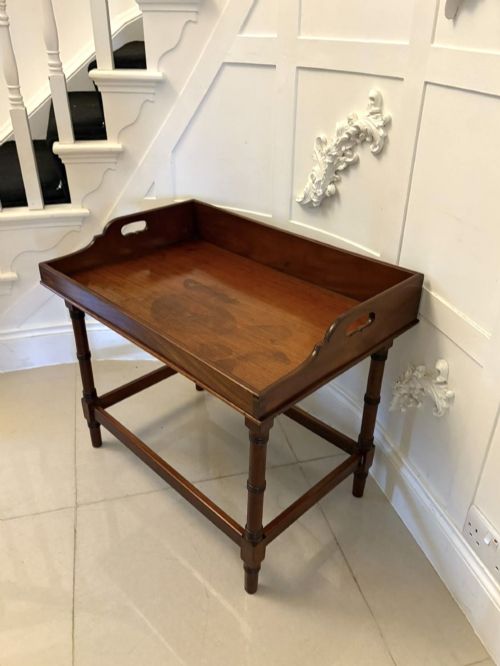
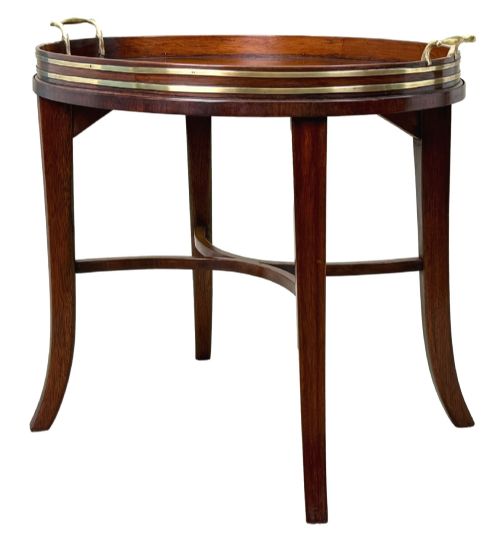
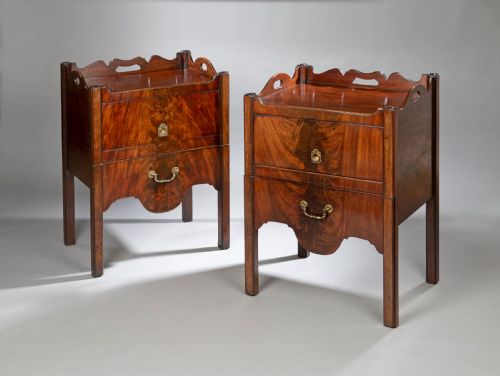
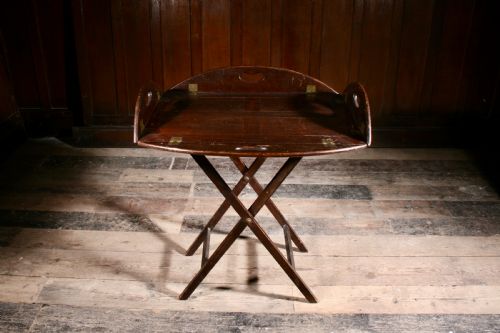
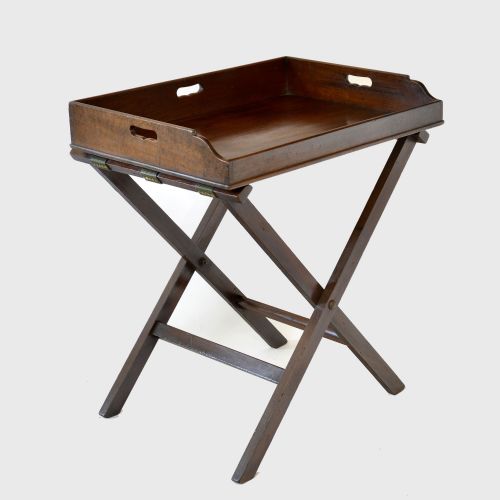
Most pieces seen here belong to the Georgian and Regency eras, constructed primarily in mahogany with oval or rectangular trays. Buyers frequently encounter butler trays fitted with hinged flaps that drop down to form a flat surface when supported.
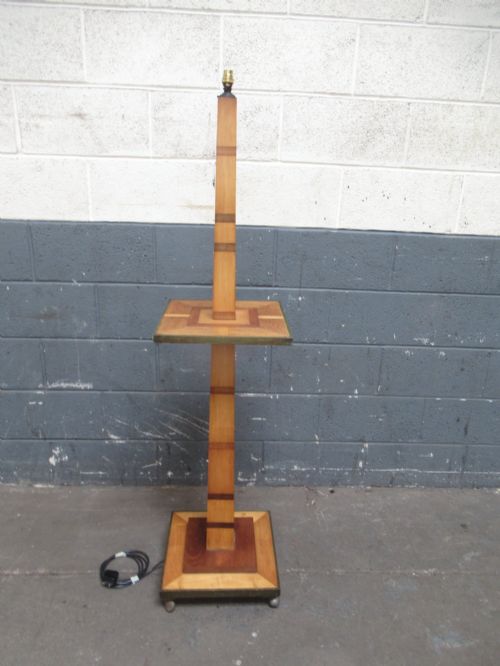
Makers adapted the design across multiple decades, producing occasional tables, bedside commodes, and dumb waiters that utilise the same raised rim principle. Examples range from simple oak candle stands to finely figured satinwood and brass bound specimens.
How they were made
Cabinetmakers relied heavily on solid mahogany and oak, often selecting timber with dense grain patterns for structural integrity. Trays required careful joinery at the corners, sometimes incorporating brass bound decoration or carved handles to withstand regular lifting.
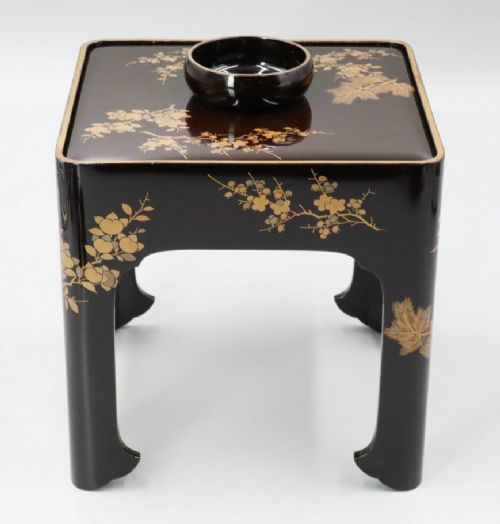
Stands were fashioned as folding stretchers or rigid tables, designed to hold the tray securely via shaped cutouts or moulded rims. Surface finishing involved polishing the timber to a deep lustre, while select pieces incorporated lacquerwork or gold leaf accents.
One exceptional nineteenth century offering pairs the timber tray form with delicate Japanese Meiji lacquer sake cups.
What varies in quality
Quality rests upon the selection of timber and the crispness of the hand-carved mouldings along the tray rim. Superior examples display consistent grain matching across the tray base and structural stability in the folding stand.
The refinement of brass carrying handles, dovetailed joints, and original patination elevate an ordinary utility piece into a work of fine cabinetmaking.
The Period Tray Table Glossary
- Butler's tray
- A portable wooden tray with a raised gallery edge, traditionally designed to lift off a folding wooden stand. These surfaces often feature hinged side flaps.
- Tray top
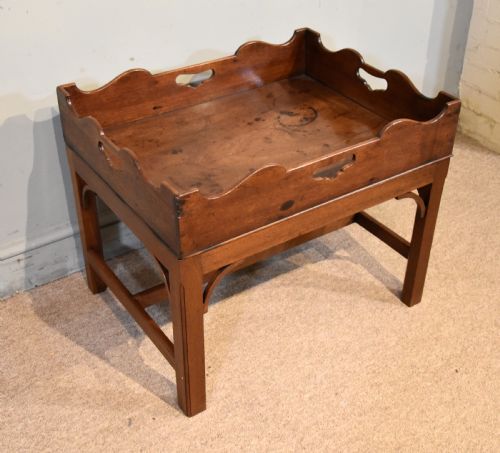
- A furniture top constructed with a raised moulded border to prevent items from sliding off during use. This design appears on commodes, bedside tables, and occasional stands.
- Dumb waiter
- A tiered piece of furniture featuring multiple revolving or stationary trays mounted on a central pillar. They assisted with dining room service by holding dishes without extra attendants.
- Commode
- A low cabinet or chest of drawers, which in earlier periods often incorporated a tray top or enclosed a chamber pot. Georgian iterations frequently doubled as bedside tables.
Period Tray Table: Frequently Asked Questions
Are butler trays fixed to their stands?
Most traditional butler trays lift entirely off their folding wooden stands to allow independent carrying of glassware and porcelain.
Some later or alternative configurations secure the tray to the base permanently, transforming the piece into a standard side table.
How do I clean a mahogany tray table?
Dust the timber regularly with a soft, dry cloth and avoid placing hot or wet items directly onto the polish.
Applying a traditional beeswax polish occasionally helps maintain the sheen without building up excessive residue on the carved edges.
What periods do these tables date from?
The listings span several centuries, with a strong concentration of Georgian and Regency pieces from the eighteenth and early nineteenth centuries.
Earlier examples from the seventeenth century and later Victorian interpretations also appear among the diverse timber forms.
Can I use a tray table for daily serving?
These pieces function well as permanent side tables or coffee tables within a modern living space.
Care should be taken with antique surfaces by using coasters and avoiding excessive moisture to protect the historic polish.