



Period Toilet Mirror
Period toilet mirror designs offer functional tabletop reflection, bringing mahogany, walnut and bronze craftsmanship directly to historical dressing spaces.
Period Toilet Mirror
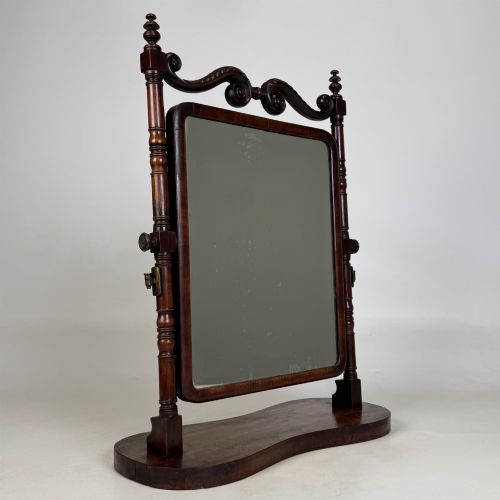
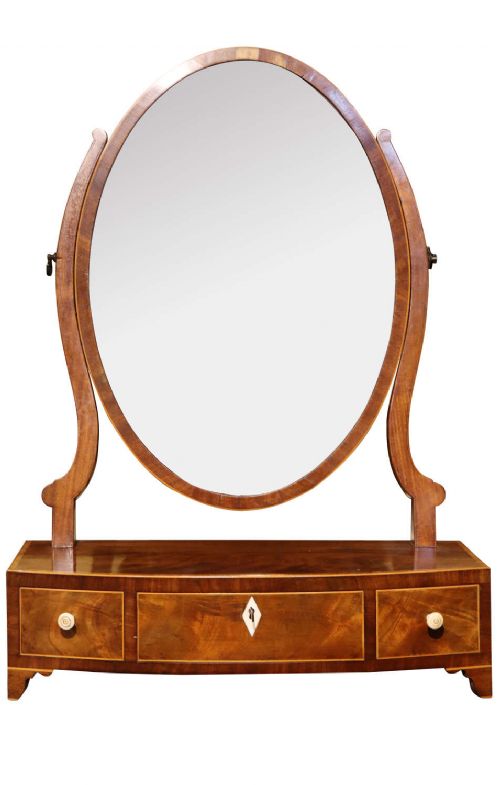
A period toilet mirror sits upon a table or chest, providing a portable glass surface for personal grooming and dressing in historical interiors. When you search for period toilet mirror, you encounter forms designed to angle the reflection using upright side supports.
The pieces on this page span Georgian, Regency, Victorian and 1880 eras, with mahogany and walnut forming the backbone of the selection. You find dressing tables alongside tabletop mirrors, box base toilet mirrors and hand-held double-sided examples.
Origin varies between British cabinet work and continental French Empire production in bronze, ormolu and marble. Simpler freestanding table mirrors appear alongside sophisticated crossbanded designs and skeleton frames.
Materials and construction methods
Cabinet makers utilised solid timbers like mahogany and walnut, frequently applying crossbanding to enhance the visual grain on box bases and upright supports. Joinery relies on traditional framing techniques to support the pivoting mirror plates securely between upright arms.
Metal components introduce contrasting elements through brass fittings, gilt bronze, ormolu and bronze, while bone details occasionally accent the woodwork. Original mirror glass sits within adjustable frames, sometimes paired with marble bases on continental pieces.
Listings feature woods including mahogany and walnut alongside metals such as brass, bronze, gilt bronze and ormolu.
Distinctions in quality and execution
Quality reveals itself in the crispness of carved wooden details, the precision of crossbanded veneers, and the harmonious proportions of the box base to the glass frame. Superior examples display thoughtful integration of brass hardware and balanced pivoting mechanisms that hold the glass firmly at any chosen angle.
Material selection further separates standard production from finer work, seen in the choice of dense, highly figured mahogany or walnut and the presence of original mirror plates. Finer pieces demonstrate meticulous attention to structural joints and secondary timbers.
The Period Toilet Mirror Glossary
- Crossbanding
- A decorative border of veneer laid across the grain of the primary wood panel. This technique frames the drawer fronts and box bases of dressing mirrors.
- Ormolu
- Gilt bronze applied to decorative mounts and feet on French Empire pieces. The material adds metallic lustre to marble and mahogany structures.
- Skeleton mirror
- An open framework design lacking a solid box base or drawers. This lighter construction relies on slender uprights and feet.
- Box base
- A rectangular wooden compartment beneath the mirror plate containing small drawers. It adds stability and storage to tabletop dressing glasses.
- Plate
- The actual glass surface used for reflection. Original plates often exhibit slight imperfections and ageing characteristic of historical manufacture.
Period Toilet Mirror: Frequently Asked Questions
What is a period toilet mirror?
A period toilet mirror is a tabletop or dressing table glass mounted on pivots between two upright supports, used historically for personal grooming and dressing.
These pieces range from simple hand-held designs to substantial box base versions equipped with small storage drawers.
How were toilet mirrors used?
They sat atop chests of drawers, dressing tables or dedicated washstands to provide an adjustable reflection for shaving, styling hair and applying makeup.
The pivoting frame allowed users to tilt the glass upward or downward depending on their height and lighting conditions.
How do I distinguish Georgian from Regency mirrors?
Georgian mirrors often feature rich walnut or figured mahogany with subtle carved details, block feet, and classic bracket bases.
Regency examples frequently incorporate bolder architectural lines, ebonised accents, or gilt metal mounts influenced by classical revival styles.
Where should I place a toilet mirror?
They fit naturally on top of modern dressing tables, chests of drawers or sideboards, providing both historical character and functional desktop reflection.
Ensure the surface is stable and level to support the weight of the wooden frame and pivoting glass safely.