



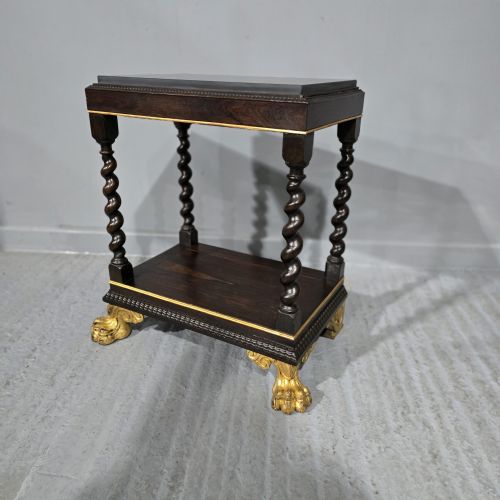


Period Tiered Table
A period tiered table brings multi-level display and practical surface space into a room, spanning forms from dumb waiters to etageres.
Period Tiered Table
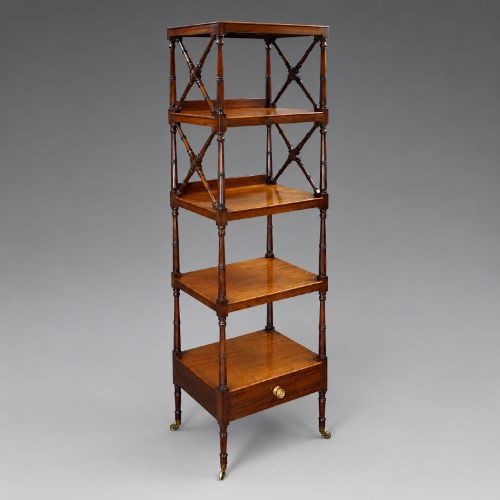
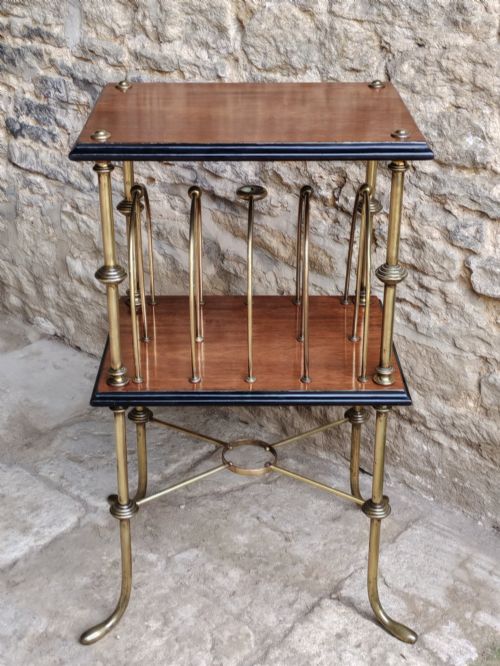
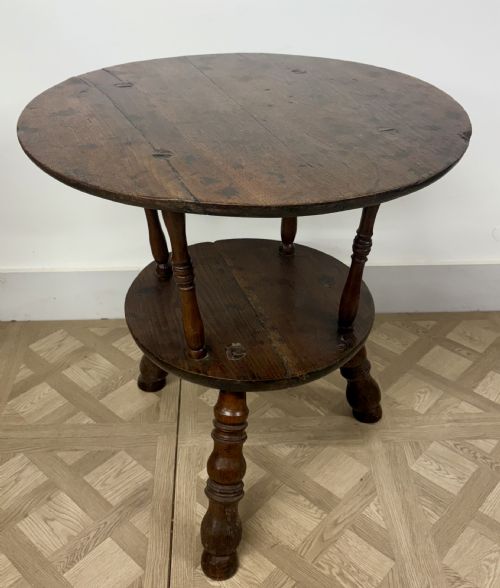
A period tiered table serves multiple functions across various forms, including dumb waiters, whatnots, etageres, and occasional tables with multiple levels. These pieces originate primarily from the eighteenth and nineteenth centuries, encompassing George III, Regency, William IV, and Victorian eras.
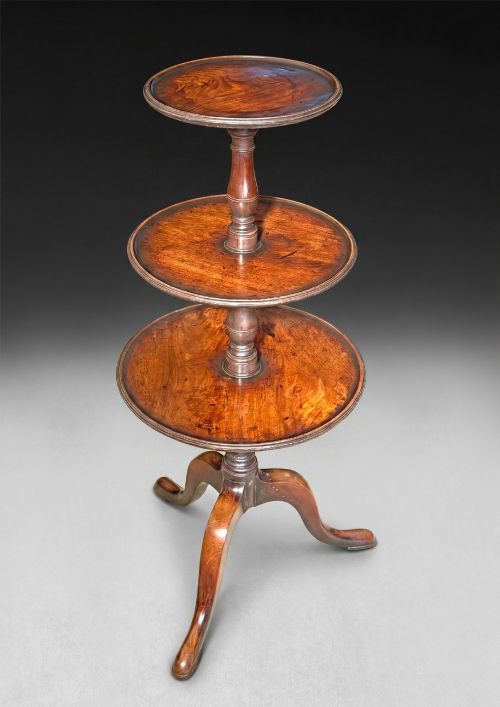
The most common examples on this page are three-tier mahogany dumb waiters and whatnots from the Georgian and Regency periods. These items offer stacked surfaces designed originally for dining rooms, libraries, and drawing rooms.
Makers and designers working in these styles utilised tiered construction to maximise display and storage within a compact footprint. Variations range from folding drop-leaf designs to revolving circular trays and stationary side stands.
Factors of quality
Quality rests on the selection of timber figures, such as dense flame mahogany or figured rosewood, combined with the crispness of turned columns and brass mounts. Superior examples demonstrate thoughtful proportion across multiple tiers rather than purely utilitarian stacking.
The integrity of moving parts, such as revolving tiers or folding drop-leaves, distinguishes finer workshops. Structural cleverness, such as unusual formats or scarce octagonal forms, elevates certain pieces above standard production.
Period Tiered Table Retail Price Guide 2026
Typical asking prices for period tiered table among the pieces listed under this phrase on Sellingantiques today, from the lower quarter to the upper quarter. They describe what is for sale here now, not the wider market.
Some tables fold flat like ambitious dining room origami.
Gillows·John MaClean·EW Godwin
The Period Tiered Table Glossary
- Dumb waiter
- A multi-tiered freestanding piece designed to hold food, utensils, or books without servant attendance. These typically feature two or three circular rotating or stationary shelves.
- Whatnot
- An open set of shelves used for displaying ornaments, books, or collections. This form became popular during the eighteenth and nineteenth centuries.
- Etagere
- A piece of furniture consisting of a sequence of open shelves for displaying small objects. The term shares close historic overlap with the whatnot.
- Bonheur du jour
- A light lady's writing desk featuring a small tiered cabinet or superstructure on the working surface. These occasionally appear in matched pairs from the Regency period.
- Marquetry
- The art and craft of applying pieces of veneer to a structure to form decorative patterns. This technique appears on French-taste tables alongside satinwood and kingwood.
Period Tiered Table: Frequently Asked Questions
What rooms suit a tiered table?
These tables adapt easily to sitting rooms, dining spaces, and hallways where extra surface area is useful. Their vertical design provides display space without taking up excessive floor area.
Historically, they served specific domestic roles near dining areas or drawing rooms. Today, they function well beside seating or as lamp stands.
What distinguishes a whatnot from an etagere?
Both terms describe open shelving units built with multiple tiers for display. Regional preferences and cabinetmaker terminology often determined which word was applied.
English makers frequently recorded them as whatnots during the Georgian era. French influences introduced etagere descriptions for similar multi-shelf stands.
How are different periods told apart?
Georgian and George III pieces generally display rich mahogany timbers and restrained classical turning. Regency examples often incorporate brass inlay, rosewood veneers, and bolder architectural supports.
Victorian and Aesthetic pieces introduce ebonised finishes and alternative structural proportions. Examining the joinery and secondary woods helps confirm the era of manufacture.