


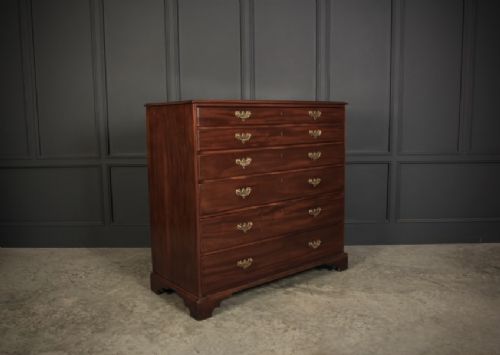


Period Tall Chest
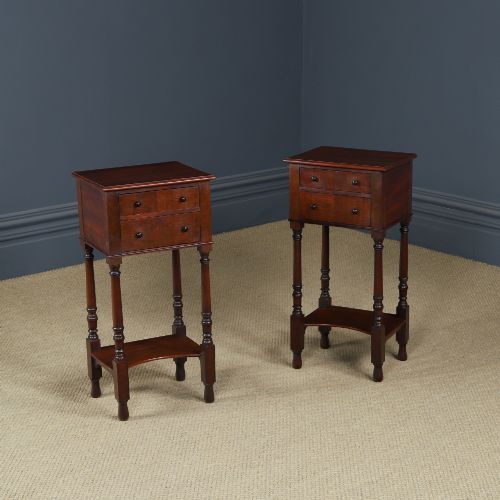
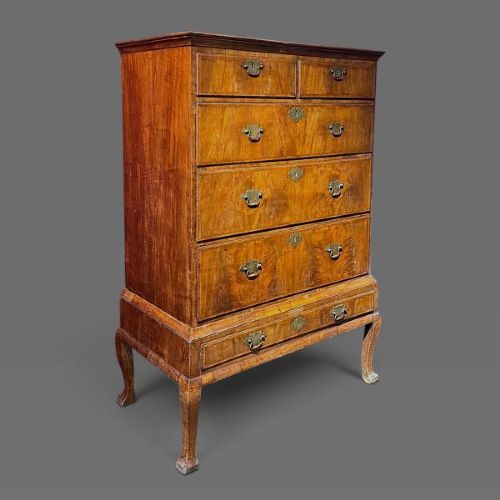
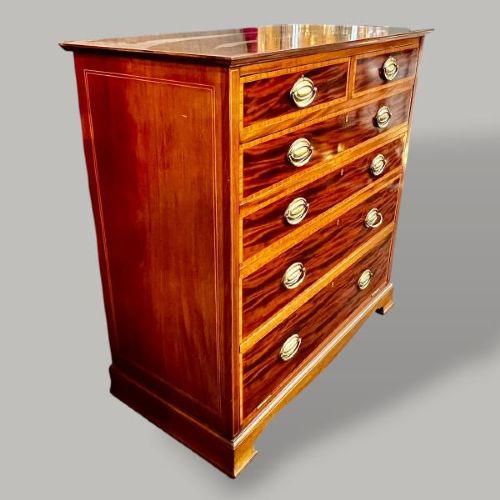
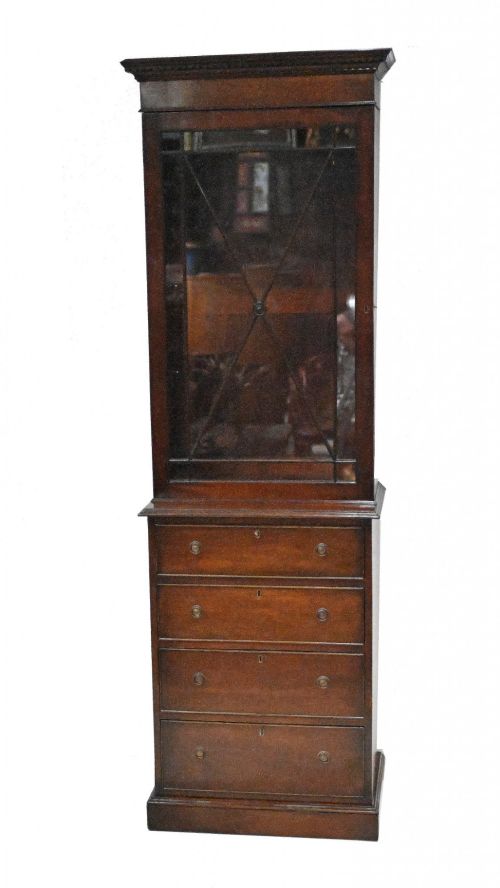
These period tall chest examples offer vertical storage in mahogany, oak, and walnut, bringing proportion and genuine historical craft to high-ceilinged rooms.
Period Tall Chest
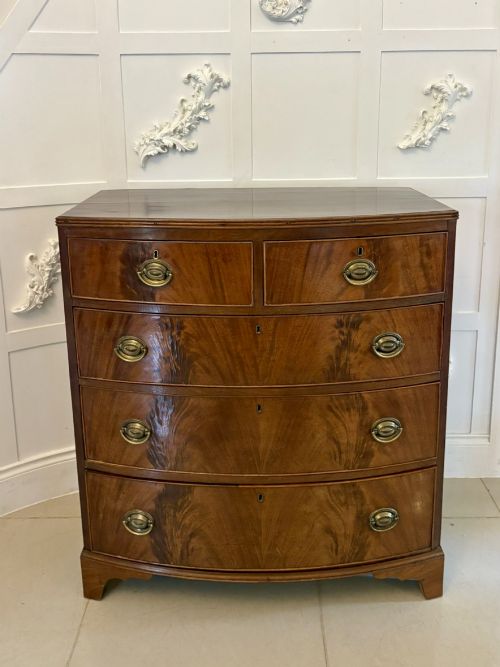
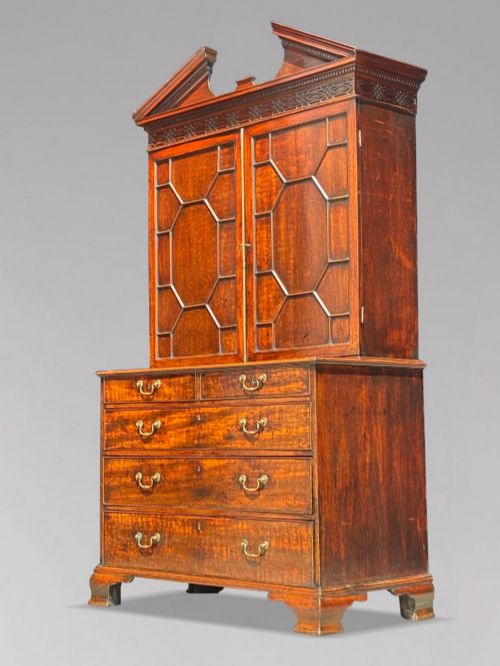
A period tall chest provides vertical storage by stacking multiple drawers in formats such as tallboys, chests on stands, and chests-on-chest. These pieces maximise floor space while offering substantial capacity for clothing and household goods.
The selections span the eighteenth century, the Regency era, and the Edwardian period, appearing in timbers like mahogany and oak. Buyers frequently encounter tall mahogany George III examples and dual-section chest-on-chest constructions.
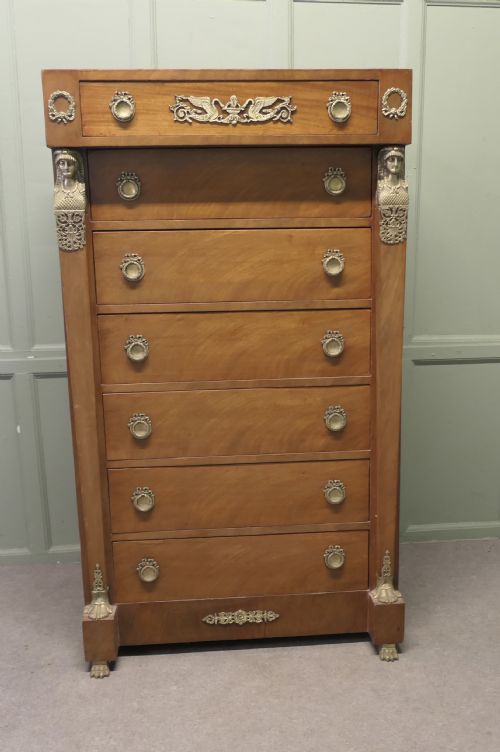
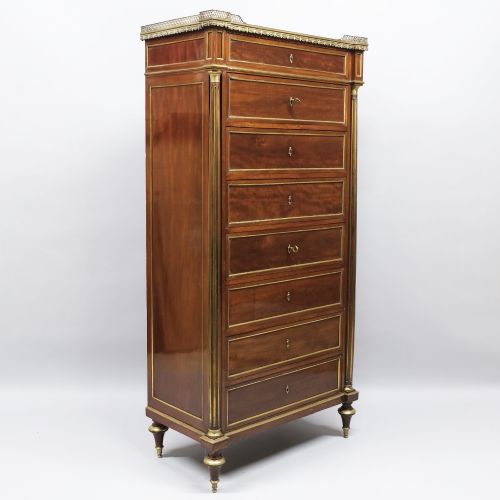
Makers designed these tall forms with narrow footprints, often incorporating secretaire drawers or tiered compartments. Their proportions suit period bedrooms and dressing rooms requiring significant storage without a wide footprint.
Timbers and construction
Cabinet makers utilised solid and veneered timbers including figured mahogany, oak, and walnut, often accentuating the grain with boxwood inlay. Brass hardware, such as drop handles and escutcheons, secured the drawer fronts.
Tall constructions required rigid joinery, particularly in two-part pieces like chests-on-chest and chests on stands, to support the weight of multiple stacked drawers. Frame and panel methods ensured the carcase remained stable across seasonal temperature shifts.
Period Tall Chest Retail Price Guide 2026
Typical asking prices for period tall chest among the pieces listed under this phrase on Sellingantiques today, from the lower quarter to the upper quarter. They describe what is for sale here now, not the wider market.
Current listings feature mahogany, oak, and walnut tall chests spanning the eighteenth, nineteenth, and early twentieth centuries.
Evaluating craftsmanship
The distinction between standard and superior pieces rests on the selection of timber veneers and the crispness of inlaid details like boxwood lines. Figured mahogany with strong grain patterns commands greater attention than plain stock.
Internal construction reveals the standard of work, particularly the dovetailing on drawer sides and the retention of original brass mounts. Pieces retaining their original stands or matching upper and lower sections hold greater historical integrity.
Thomas Chippendale
The Period Tall Chest Glossary
- Tallboy
- A tall chest of drawers, often constructed as a chest-on-chest or a chest on a stand. These units maximise vertical storage capacity.
- Chest-on-chest
- A two-part form where a slightly smaller chest sits directly atop a wider base chest. This stacked arrangement provides significant storage within a narrow footprint.
- Chest on stand
- A drawer unit raised on a separate frame with legs. This form lifts the storage compartment off the floor.
- Secretaire
- A desk drawer containing a writing surface and small compartments behind a drop-front flap. It integrates a workspace into the chest design.
- Boxwood inlay
- Narrow strips of pale wood embedded into the primary timber surface to create geometric borders. Cabinet makers used this technique to define drawer edges.
Period Tall Chest: Frequently Asked Questions
What is a tallboy chest?
A tallboy is a multi-drawer storage unit built vertically, frequently taking the form of a chest-on-chest or a chest mounted on a stand. It provides generous drawer space while occupying minimal floor area.
These pieces emerged to meet demands for bedroom storage in period homes. Their elevated design suits rooms with high ceilings.
How do I style a tall chest?
Place the unit against a solid wall in a bedroom or hallway where its vertical proportions can balance tall windows or high ceilings. Ensure adequate clearance for opening drawers fully.
Keep the top surface uncluttered to highlight the timber grain and moulding details. Pair the chest with complementary period seating or low tables.
Are these chests made of solid wood?
Makers constructed these pieces using primary solid timbers like oak and mahogany, often applying decorative veneers over secondary woods for drawer fronts. This combination prevented warping in large carcases.
Solid wood frames provided structural stability for stacked sections while veneers displayed figured grain patterns.
How do I date an antique tall chest?
Examine the construction methods of the drawer linings, timber choices, and overall hardware style to establish the period. Georgian pieces often feature oak linings and hand-cut dovetails, while Edwardian revivals display later manufacturing marks.
Stylistic cues such as bracket feet, cornice details, and inlay types help narrow the decade of manufacture.