




Period Style Sideboard
When you want a period style sideboard, you are looking at substantial timber server units built across centuries to anchor a dining room.
Period Style Sideboard
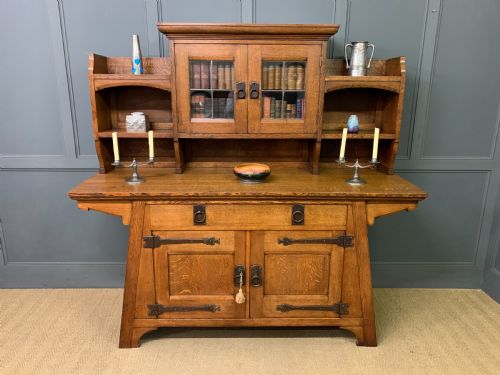
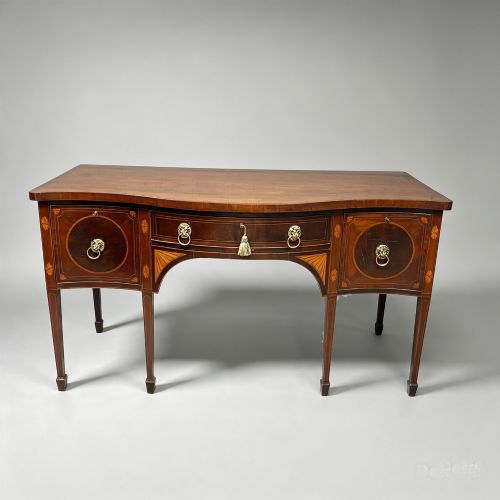
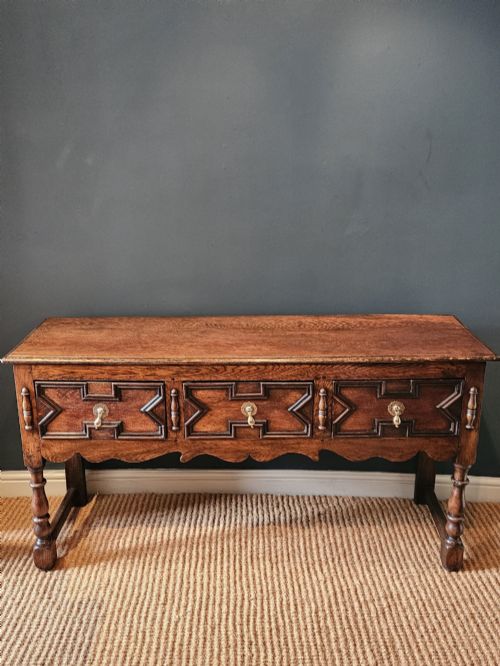
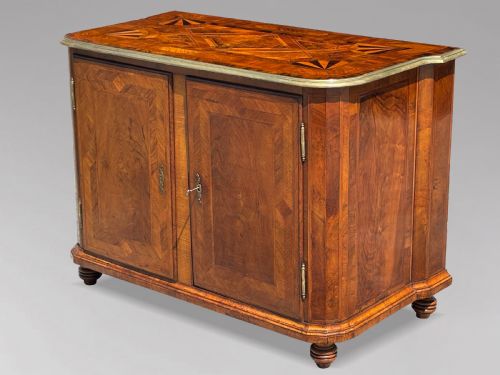
A period style sideboard covers large wooden serving tables, cupboards, dressers, and chiffoniers originating from the seventeenth century through to the Edwardian era. You will frequently meet mahogany serpentine sideboards from the Georgian period alongside oak dressers and Regency rosewood server units.
The objects served practical purposes for dining rooms and entertaining, holding silver, linens, and serving dishes upon their timber surfaces. Forms range from compact satinwood writing cupboards to broad George III servers with inlaid decoration.
How they were made
Cabinet makers utilised dense hardwoods including mahogany, oak, walnut, rosewood, and satinwood to construct the carcase and drawer structures. Timber selection dictated the structural stability and allowed craftsmen to shape serpentine outlines and geometric moulded drawer fronts.
Decorative surface work incorporated brass handles, iron hardware, mirror glass panels, and ormolu mounts to accent the timber grains. Cross-banding and detailed inlay work brought varied colour tones to the mahogany and satinwood surfaces.
Period Style Sideboard Retail Price Guide 2026
Typical asking prices for period style sideboard among the pieces listed under this phrase on Sellingantiques today, from the lower quarter to the upper quarter. They describe what is for sale here now, not the wider market.
Listings feature mahogany, oak, walnut, rosewood, and satinwood across pieces spanning the seventeenth century to the Edwardian era.
What varies in quality
Quality rests upon the precision of the timber matching and the execution of inlaid decoration across the curved or straight facades. Superior examples display carefully chosen grain patterns and balanced proportions without relying on heavy restoration.
The refinement of the hardware, drawer linings, and structural joinery separates standard cabinet work from pieces attributed to notable workshops. Original brass fittings and intact carcase timber maintain the integrity of the antique.
Gillows·Liberty and Co·S. Jamar
The Period Style Sideboard Glossary
- Serpentine
- A curved furniture front featuring a convex centre flanked by concave wings. This shape requires skilled carpentry to achieve smooth flowing lines on mahogany sideboards.
- Cross-banding
- A decorative border of veneer laid across the grain of the primary timber. It creates a contrasting frame around drawer fronts and table tops.
- Chiffonier
- A small sideboard or low cabinet typically fitted with shelves or drawers beneath. These pieces emerged during the Regency period for dining room storage.
- Ormolu
- Gilded bronze mounts applied to furniture for decoration. French and English cabinet makers utilised these metal ornaments on commodes and side cabinets.
- Satinwood
- A pale, hard timber with a natural sheen used for fine cabinet making and inlay work. It gives furniture a bright golden yellow appearance.
Period Style Sideboard: Frequently Asked Questions
What is a period style sideboard?
A period style sideboard is a wooden serving piece or cabinet originating from historical eras such as the Georgian, Regency, or Edwardian periods. These items provide surface space and internal storage for dining rooms.
They appear in various timber finishes including mahogany, oak, and rosewood, incorporating stylistic details like serpentine fronts or inlaid decoration.
How do I date an antique sideboard?
Dating relies on examining the timber species, construction methods, hardware types, and stylistic ornament. Georgian and Regency pieces show specific carcase proportions and decorative veneers characteristic of their decades.
Secondary woods inside drawers and the style of the brass handles offer further physical clues regarding the manufacturing era.
Where should I place a sideboard?
Sideboards suit dining rooms, hallways, and large living spaces where their long surfaces and storage compartments can function practically. Their substantial timber forms anchor a room and hold lamps or decorative objects.
Ensure the floor space accommodates the depth of the cabinet, particularly models with protruding serpentine or bow fronts.
How do I care for antique mahogany?
Maintain antique mahogany by keeping the timber away from direct heat sources and strong sunlight that can fade the finish. Dust regularly with a dry cloth and apply appropriate wax sparingly to nourish the wood.
Avoid liquid cleaners or silicone polishes which can penetrate open grain and alter the surface sheen over time.