




Period Serving Table
A period serving table brings the substance of earlier dining rooms into modern spaces through timber and proportion.
Period Serving Table
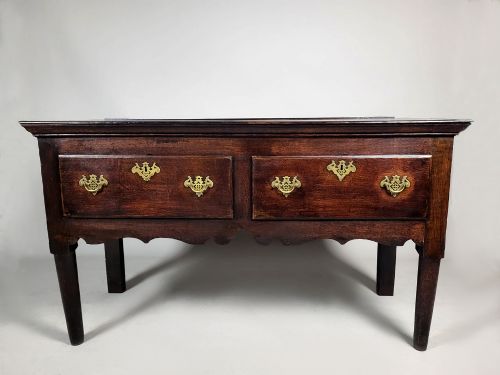
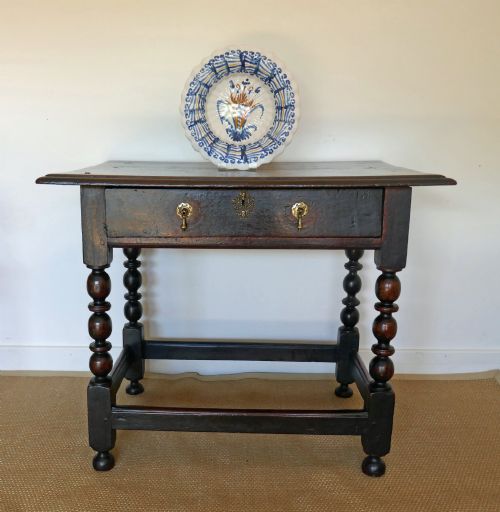
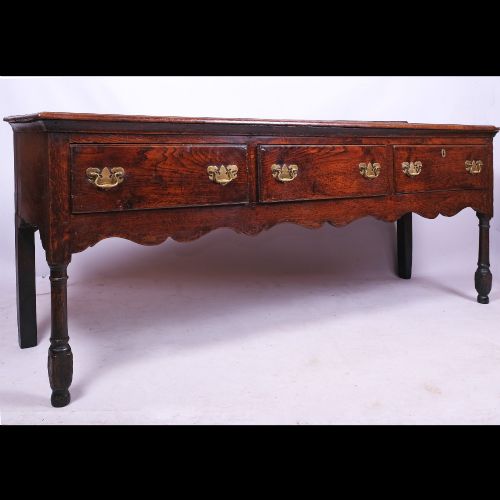
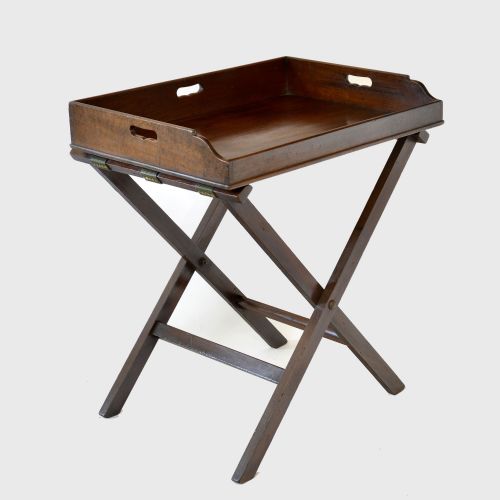
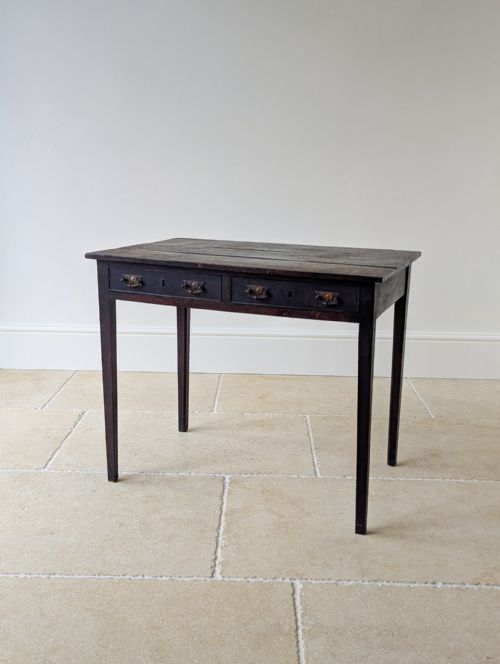
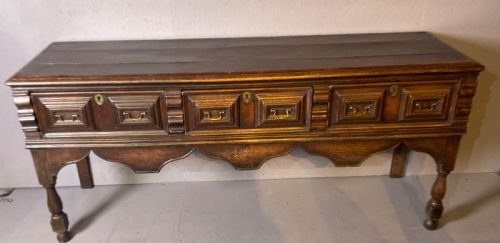
A period serving table encompasses large mahogany sideboard formats, oak dresser bases, and tiered dumb waiters from the seventeenth to nineteenth centuries. These forms served dining and hospitality functions in country houses and town residences.
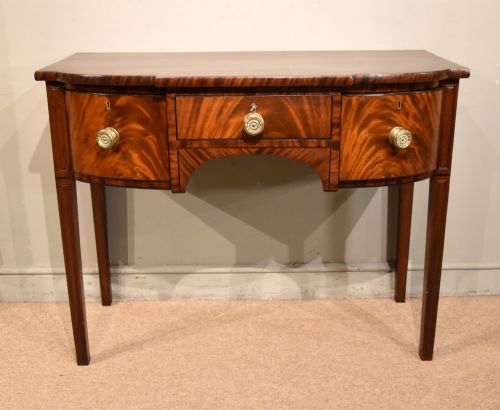
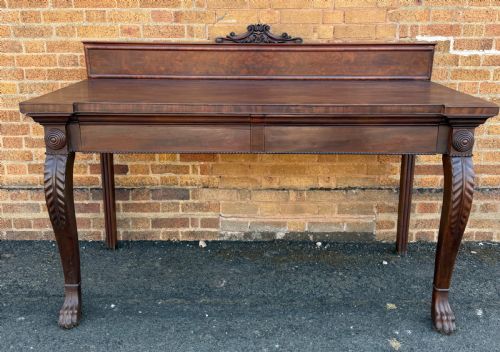
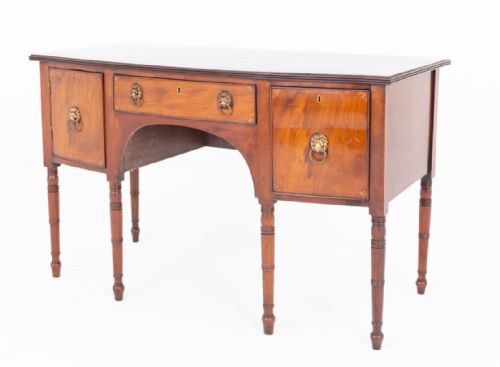
The version most frequently met on this page is the George III or Regency mahogany serving table, often featuring rectilinear or bowfront designs in solid timber and veneer.
Materials and construction
Cabinetmakers utilised dense timbers such as mahogany and oak, frequently applying flame mahogany veneer for decorative surface grain on top boards and drawer fronts.
Joinery combined traditional frame and panel construction with brass hardware and occasional boxwood stringing, supporting functional tiers and heavy drawers.
The listings span the seventeenth, eighteenth, and nineteenth centuries, featuring materials from native oak to imported rosewood and brass.
Indicators of quality
Quality rests in the selection of figured veneers and the crispness of carved mouldings, distinguishing restrained country pieces from grander urban commissions.
Proportion and structural integrity define the higher end, where timber selection and original brasses remain unaltered by later alterations.
Mack Williams And Gibton·Jennens And Bettridge·Gillows
The Period Serving Table Glossary
- Dumb waiter
- A tiered stand with rotating or fixed shelves designed to hold dishes beside a dining table without requiring servants. These pieces appear frequently in mahogany across the Georgian and Regency eras.
- Lowboy
- A small low table with drawers, typically constructed in oak during the seventeenth and eighteenth centuries. They functioned for storage and serving before larger sideboards became common.
- Sideboard
- A large dining room furniture form developed for holding plates and serving food. Regency and Georgian examples often combine deep drawers with pedestals or console supports.
- Bowfront
- A curved cabinet front that swells outward in the centre, common in late eighteenth century servers. This shape softens the corners of dining spaces and highlights figured mahogany veneers.
Period Serving Table: Frequently Asked Questions
What is a period serving table used for?
These tables supported dining rooms by holding dishes, platters, and silverware during large meals. They functioned as auxiliary surfaces when the main dining table was crowded.
Today, they serve equally well in hallways or living rooms as console surfaces and display areas.
How do I date a mahogany serving table?
Dating relies on stylistic shifts from eighteenth century straight lines to Regency curves and heavy nineteenth century proportions. Secondary timbers and brass fixings offer further clues to the decade of construction.
Comparing leg profiles, such as tapered legs versus sabre legs, narrows the chronological window.
Are oak serving tables earlier than mahogany ones?
Oak examples on this page typically date from the seventeenth and mid-eighteenth centuries, originating before mahogany became the dominant timber for formal dining furniture. These oak pieces often take the form of dresser bases or lowboys.
Mahogany items largely represent the later Georgian and Regency periods.
What is a dumb waiter table?
A dumb waiter is a multi-tiered serving stand, frequently circular with graduating shelves supported by a central pillar and tripod base. They allowed diners to help themselves to courses without staff present.
Examples listed here range from two to three tiers in mahogany.